Showing posts with label C.S. Lewis. Show all posts

Tuesday, July 9, 2013

Hope in the Shadowlands

Discouragers go about among men, and, by their gloomy, pessimistic words—they make life incalculably harder for them. They put out the lamps of cheer and hope which shine in men’s homes. They quench the very stars that burn in the sky above men’s heads. They take the gladness out of hearts. They see only the dark shadows of life, never the sunshine; and they prate wherever they go of gloom and doom. They never bring us a message of cheer. We are never stronger, braver, happier, or truer—for meeting them. –J.R. Miller, 1896

If you want to be Mr. Discourager you have plenty of material to work with.

We do, after all, live in what C.S. Lewis dubbed the Shadowlands. It is here that “the sun is always shining somewhere else. Round a bend in the road. Over the bough of a hill.” When you live in the Shadowlands it doesn’t take a work of grace to point out all of the dark shadows.

Grace sees beyond the shadow. Grace gives birth to hope. And hope sets its eye on the sunshine that is just over the horizon.

I want to be the guy that tells everyone, with a gleam in my eye, “Take heart, the sun is rising!” What value is there in pointing out dark shadows in a land of shadows? Nobody needs that preacher. What men and women need—what my own soul needs—is to be captivated by the hope of another land where the sun is always shining.

Take heart friends…we’ve only seen the cover and the title page. Some day we will “at last [begin] Chapter One of the Great Story which no one on earth has read:  which goes on forever:  in which every chapter is better than the one before.”

Tuesday, January 17, 2012

The Cost of Not Loving

Love anything, and your heart will certainly be wrung and possibly broken.  If you want to make sure of keeping it intact, you must give your heart to no one, not even to an animal.  Wrap it carefully round with hobbies and little luxuries, avoid all entanglements; lock it up safe in the casket or coffin of your selfishness.  But in that casket—safe, dark, motionless, airless—it will change.  It will not be broken; it will become unbreakable, impenetrable, irredeemable.  The alternative to tragedy, or at least to the risk of tragedy, is damnation.  --C.S. Lewis

In other words, coffins might keep the dirt out but eventually you’re going to lose sunshine, beauty, hugs, and even life itself. 

Monday, December 13, 2010

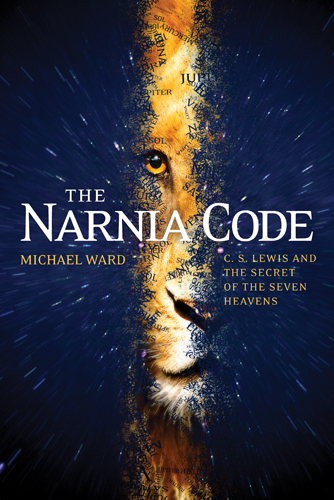
Review of The Narnia Code by Michael Ward

C.S. Lewis’ classic work Chronicles of Narnia has enchanted children for years.  Many of these children are all grown up now and they have questions lingering from their childhood.  Michael Ward is one of these.  He is a lifelong reader of Lewis, and as such he always had questions about the lack of coherence in the series.  E.g., what in the world is Father Christmas doing in Narnia? 

Narnia Code is the “accessible adaptation” of his more scholarly work Planet Narnia.  In this work (and the larger one) Ward shares his literary theory as to what holds the series together.  It may sound “un-Christian” but Ward believes that Lewis’ understanding of the “seven Heavens” is the key to understanding Narnia. 

This book is well written and was a delight to read.  I am by no means a Lewis scholar or a guru of all things Narnia.  In fact I have not read all of the books.  So, I am not qualified to really test Ward’s theory, but I found this book extremely enjoyable and I think all Narnia fans will love interacting with his theory. 

Even without having read all of the Narnia books I was able to follow his argument and was intrigued enough to start reading the series again.  Ward also points the reader to Christ and is faithful to Lewis’ Christian center.  The second chapter on “The Beam of Light” is helpful for any reader. 

If you are totally unfamiliar with Narnia, this may not be the place to start.  Perhaps those that have watched some of the movies may be captivated enough to start discovering Lewis’ meaning.  I hope one place they turn is this excellent book by Michael Ward. 

This is a highly recommended read for all Narnia fans.  You can buy it for under 10 bucks at Amazon.

Rating 4.5 out of 5 stars

I received this book free from Tyndale in exchange for a review.  I did not have to give it a positive review but I certainly want to! 

Monday, December 17, 2007

Burroughs--Contentment Comes from Subtraction Not Addition

Burroughs explains what he means by "contentment comes from subtraction instead of addition" when he says: "...not so much by adding to what he would have, or to what he has, not by adding more to his condition; but rather by subtracting from his desires, so as to make his desires and his circumstances even and equal." We are content when our hearts desire is equal to our circumstances. This, Burroughs posits, is why some men are happy with little and others miserable with much. We are rich when we have our desires fulfilled. Burroughs central point in this section (p15) is that, "a contented man has his desires satisfied, God satisfies them, that is, all considered, he is satisfied that his circumstances are for the present the best circumstances".

I agree with what Burroughs is saying. Yet, I would perhaps phrase it a little differently. As C.S. Lewis said:
Indeed, if we consider the unblushing promises of reward and the staggering nature of the rewards promised in the Gospels, it would seem that Our Lord finds our desires, not too strong, but too weak. We are half-hearted creatures, fooling about with drink and sex and ambition when infinite joy is offered us, like an ignorant child who wants to go on making mud pies in a slum because he cannot imagine what is meant by the offer of a holiday at the sea. We are far too easily pleased. (From The Weight of Glory, 1949)
I would say then that Burroughs is correct that contentment comes from having our desires met. As Burroughs has hinted at before; we as Christians are the most contented and at the same time most dissatisfied creatures. Therefore if we are to be contented it will come from having strong desires for the Lord and not having hearts entangled in the world. We will be content with whatever lot we have in the world because that is not where our heart is. Our heart has a much stronger affection and because of that we will not be dissatisfied by our circumstances, but rather we will be panting after the Lord. Satisfied, yet hungry! Burroughs, I believe, would agree with this. Yet I have chosen to word it a little differently than he does for the sake of clarity in the 21st century.

LinkWithin

Related Posts Plugin for WordPress, Blogger...