Showing posts with label joy. Show all posts

Tuesday, August 6, 2013

Pray For Your Wife: 31 Day Challenge—Day Six

Day Six: That she would find joy in the mundane

There is an evil that I have seen under the sun, and it lies heavy on mankind: a man to whom God gives wealth, possessions, and honor, so that he lacks nothing of all that he desires, yet God does not give him power to enjoy them, but a stranger enjoys them. This is vanity; it is a grievous evil. –Ecclesiastes 6:1-2

It is a terrible evil to not be able to enjoy the good gifts that God has given to us. There are many things that our wives do every day that are tedious and mundane. Consider all of the things that your wife does today, that she also did yesterday, and she will probably do tomorrow. It is a grace for her to find joy in these things. In the middle of her everyday work she can be tempted to let her mind wander to more exciting things and her heart to become dissatisfied. The only rescue from the “meaninglessness” of life under the sun is to find our ultimate meaning in Christ.
Then, and only then, is the humdrum able to be truly enjoyed.

Gracious God, I pray today that you help my wife to find joy in the mundane. I know it is a curse for us to have many of our hearts desires but not the ability to enjoy them. Lord, I know that ability comes from you. Capture my wife’s heart with a deep delight in the simple things of life. Help her to find joy in you as she does the dishes, tends to our children, cooks supper, and all of the other routine things that she does. Help her to enjoy the gift of life and to live in the life that Jesus has purchased for her. Amen.

---

Yes, it is the quiddity of redemption that we are praying for today.

Monday, July 15, 2013

How Jonathan Edwards Wrecked My Soul

That title is misleading. It needs to be more Edwardsean to be accurate. It should be titled How a Wrong-Headed Application of Jonathan Edwards Has Nearly Made Shipwreck of My Soul. Let me explain.

About seven years ago I read this Resolution of Jonathan Edwards:

5. Resolved, never to lose one moment of time; but improve it the most profitable way I possibly can.

Since that moment I have made it my ambition to not lose one moment of time for the glory of God. I have failed at this on numerous occasions. But one thing you could say about me is that I have been driven. I have been driven to take captive every moment in activity for God.

And it is wrecking my soul. Awe of God has been replaced by activity for God. I’m worn out and my joy in the Lord has faded. Activity for God, and even pursuing knowledge of Him, is not the same as savoring and treasuring Him.

What I failed to see is that Edwards’ prime resolution was this:

1. Resolved, that I will do whatsoever I think to be most to God’s glory, and my own good, profit and pleasure, in the whole of my duration, without any consideration of the time, whether now, or never so many myriad’s of ages hence. Resolved to do whatever I think to be my duty and most for the good and advantage of mankind in general. Resolved to do this, whatever difficulties I meet with, how many and how great soever.

For Edwards he wanted to take every moment captive to drink deeply of God. For me I wanted to take every moment captive to do stuff for God. There is a massive difference.

I wrote this on a notepad yesterday:

Maybe, smelling one rose and actually worshipping would do more for awe in my soul than a whole host of “doing great things for God”.

I’m slowly learning that the way to “improve every moment in the most profitable way I possibly can” is to find joy in God in whatever I am doing at any given moment. Edwards did not mean that we surrender joyous activity—like observing spiders—and get busy with “spiritual things” like Bible reading. What Edwards meant is that while we are doing things, like enjoying spider watching, we pursue joy in God. That’s how you improve a moment.

Last night I ate a bowl of grapes. They were really good. And I thought about how amazing it is that God would fill His creation with such tremendous things like grapes. And so I thanked God for giving us these little treasures. And I worshipped.

I think I’m learning.

Monday, February 11, 2013

The Devotional Side of Calvinism

“Real Calvinism is all about joy”, says Greg Forster. In his book of The Joy of Calvinism he hopes to defend that statement. He believes that Calvinism is a wonderful path to rejoice in the Lord always. Calvinists have gotten a bad rap and a good amount of that is our fault. But at it’s heart Calvinism is about joy.

I’ll review the book on Friday, but in the meantime I want to give you a taste.

The trouble is that people outside the Calvinistic tradition only hear the formulas and technicalities. They don’t hear what we say ‘within’ Calvinism; they only hear what we say about Calvinism. So while Calvinists produce reams of positive, spontaneous, and devotional religious writings, the outside world never knows. If it hears our devotional voices at all, it never associates that devotion with our Calvinism; it thinks we’re pious in spite of our Calvinism, not because of it. “Calvinism” to the outside world means only the formulas, technicalities, and negations.

I pray along with Forster that this changes. A good place to start is by giving this book a read. It’s actually on sale this week for under 5 bucks.

Monday, February 4, 2013

Baseball, Meaninglessness, and True Joy

Another stupid error.

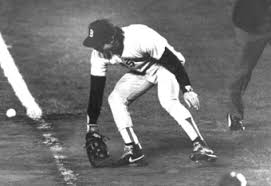
This was becoming one of the worst practices in history. I was sure to lose my starting position after all of these stupid errors. It was like the worst of Bill Buckner and Chuck Knoblauch had invaded my playing skills. I couldn’t throw to first base. I couldn’t catch a simple ground ball.

And so I did what every unsanctified high school boy does when he’s having a practice like that; I cursed and screamed out expletives while kicking the dirt. I was playing the game that I loved and I hated it.

Baseball had become my god and it was kicking my tail.

It started out as fun. A little boy sliding into bases; enjoying that feeling of getting all dirty and working hard. Diving after balls and making plays; hearing the crowd (all 12 of them) cheer. Running around the bases as fast as my little legs could carry me. Baseball was fun.

Then I got serious.

Many of the things around me seemed to be collapsing. But this was one thing that wasn’t. I was getting better and better at baseball and I was going to make something of myself. It would be hear that I would find life and meaning. Here I would become somebody. That’s why I cursed so violently on that day. Dreams were meeting reality.

Life and meaning cannot be found here.

The Cursing Boy is Changed

A few years after this dirt-kicking profanity-laced tirade something happened. Actually, it would be better to say Somebody happened. Jesus Christ captivated my heart. At the same time my baseball dreams were slowly coming to naught. I was 18 and could only muster playing softball in a YMCA league. That’s not quite the fast track to Major League Baseball.

As my chances to find life and meaning in baseball dwindled I started losing passion for the game. I was slowly discovering what Solomon did all those years ago; everything under the sun is “meaningless, meaningless, meaningless.” Baseball had such a stranglehold on my heart that I had to, for the most part, take a year or two off from the game.

During that year off Jesus had been working over all my idols. He was slowly grounding my identity in himself and causing many idols to topple.

After a brief hiatus I started playing baseball again. But this time it was different. I was only playing slow-pitch softball in a YMCA church league but I loved the game more than I ever did. No longer did I curse when I messed up. No longer did I feel like I had to have one of those “hard” faces even whenever I did something good. I could simply enjoy the game.

Ecclesiastes tells me why

And I commend joy, for man has no good thing under the sun but to eat and drink and be joyful, for this will go with him in his toil through the days of his life that God has given him under the sun. Ecclesiastes 8:15

You can read that statement two different ways.

You can read it as a depressed man at the end of his rope. In this case it’s as if he is saying, “Ah, forget the whole thing. There’s no point in anything anyways I’m just going to eat some ice cream, get drunk, and try to find a little happiness wherever it may be found.”

Or you can read it as a man that is now able to look through the shiny allure of all things under the sun and see them for what they really are. Solomon has found that the “end of the matter” is to “Fear God and keep his commandments”. In other words ultimate meaning isn’t to be found “under the sun”. Realizing this transforms life under the sun.

When I tried to find life and meaning in baseball it left me empty. Baseball—like sex, money, leisure, career—are meaningless gods. I cannot enjoy baseball when it is a functional savior. It was no longer enjoyable because I had strapped a weight on it that it cannot bear; namely, satisfying my soul.

As Yahweh captivated my heart baseball changed its meaning. It was no longer a god that I bowed down to. It was now a gift that I could enjoy. I could see it for what it really was a gift to be enjoyed under the sun. And I really did enjoy it. Finally, I enjoyed the game instead of worshipped it.

Solomon cries out to those of us that are searching for life and meaning, saying, “It isn’t found here under the sun”. Look elsewhere. And when you do, and you find life and meaning where it is truly to be found—in God Himself—something strange happens…

You start enjoying things under the sun.

Friday, February 1, 2013

How to Teach a Little Boy to Not Take Himself So Seriously

I watched this clip earlier today:

I’ve played Xbox with people like this before. Their joy is contagious. Their giddiness transcends the game itself and makes you want to enter into their happiness. I want to be this guy when I’m 84 (actually when I’m 34--which isn’t far away). And I want my son to be this guy too. That has me wondering what I can do not only in my own life but also in the life of my son to teach him not to take himself so seriously.

Here’s what I’ve come up with. To the veteran dads that have cultivated the grace of a good time in the life of their children I could use your help…

  1. Be that guy myself. Joy like that is caught better than taught. I’m guessing that if my children see me enjoying life that way they will join in on the fun.
  2. Ground his identity in Christ. I don’t know if this old dude is a believer or not. But I do know that this type of joy ultimately comes from Jesus. It comes from learning that our identity isn’t in video game performance or any other performance.
  3. Cultivate a culture of grace. When Isaiah gets upset at a video game the worse thing I could do is beat him over the head with the law because he doesn’t “get grace”. Grace conquers anger and pride not the law.
  4. Community help. In order to sustain joy like this in myself and also teach it to my son, I am convinced that it will come through a community of grace. Friends like my buddy Mike—who just loves to have fun—are vital in this.

Anything you’d like to add?

Thursday, October 11, 2012

6 Reasons We Don’t Rejoice With Those Who Rejoice or Mourn With Those Who Mourn

Last night I preached on Romans 12:15-16.  It’s a tremendous passage that if applied to our lives is a great barometer of our pride.  Seldom do we rejoice with those that rejoice and mourn with those who mourn.  In preparation for the sermon I found help from a sermon that John Piper preached on the same text.  Here he lists six reasons why we might not be rejoice with those who rejoice or weep with those who weep.  I thought you might benefit from them too:

  1. We are too wrapped up in ourselves to rejoice or weep with others. We are so self-oriented that what is happening in the hearts of others has no effect on us.
  2. We feel above the emotional life of the ordinary person. Children laugh. Women cry. I’m a man. Or it doesn’t have to be male arrogance. It may be merely high-brow arrogance. To laugh with them or to cry with them would put me down on their level and I have a certain refined, aristocratic, high-culture status to preserve.
  3. We are hypercritical and our main reaction when we see emotion is to analyze it and point out its distortions or excesses or bad tendencies or shallow roots. So our hypercritical analytical heart keeps us emotionally at a distance and prevents our hearts from empathy with others.
  4. We are resentful or envious they have joy and we don’t. We feel gypped, passed over, given a raw deal. So envy makes it impossible for us to rejoice in their joy.
  5. We are simply the kind of personality that doesn’t have a discernable emotional life. We don’t rejoice or weep over anything. And so we don’t weep or rejoice with others. It may be owing to parents. Or to a traumatic experience. Or to some physical condition.
  6. We may be depressed and temporarily numb in our own emotions.

Wednesday, September 26, 2012

Joy Robbers and Shallow Presidential Standards

President Obama is a fan of the NFL and is a very passionate fan of college basketball.  During these seasons he (or at least the autobot that puts together his tweets) has been known to throw out a few tweets about the NFL.  Here recently he tweeted about the MNF debacle and the replacement refs. 

To this I saw several snarky responses that implied the President’s priorities are all jacked up.  How is he worrying about football when we have a 16 trillion dollar debt?  How can he fill out a college basketball bracket when we are fighting for peace in foreign countries?  Bring the troops home and then tell us how you picked North Carolina. 

Now I do not care to comment on the President’s policies or his priorities in specific.  You can find a political blog to talk those points to death.  Here I want to reflect on how such an attitude can rob us of joy.  Furthermore, I want to see how such a joy is really detrimental to the life of a leader. 

The assumption behind those snarky responses is that caring about the poor, our debt, and world peace is somehow mutually exclusive to watching and commenting on a blown call on Monday Night Football.  It’s also a ridiculous double standard that these peeps would find the time to a comment on Twitter while people are starving to death around the world.  Why, dear sir, are you not turning off your computer and grilling some burgers for the homeless in your neck of the woods?  Your priorities are all jacked up.

The Jesus Way

It seems to me that Jesus was on occasion a befuddlement to people in his day because of this very issue.  If He is who He says He is, then why in the world is he having a party at a tax collectors house?  Why is he allowing expensive nard to be poured out upon him when that could have been spent on the poor?  Your priorities are messed up, Jesus. 

In Jared Wilson’s new book, Gospel Deeps, he says, “if holiness makes you a sourpuss, you’re doing it wrong.”  Reflecting on the power of the gospel to transform our joy and C.S. Lewis’ use of the term quiddity Wilson says,

If steak or wine or coffee or chocolate or anything else other than God is the highlight of my day or the ultimate joy of my heart, my joy is temporary, hollow, thin.  But if I believe in the gospel, I can finally enjoy the chocolate-ness of chocolate and the coffee-ness of coffee.  Only the gospel frees me to enjoy things as they truly now are and as they someday will be.  (Gospel Deeps, 91)

Yes, we continue to mourn the fact that we are under the weight of 16 trilion in debt, that wars happen, that people starve, etc.  The Lord is grieved by these things just as He was grieved by many things when he walked on the sands of this broken earth.  Yet, there was something about Jesus that was able to enjoy nard-soaked worship even while people were hungry.  I don’t know how that’s possible at times but I do know that it’s commanded.  And I know that an inability to enjoy a sunset is probably a reflection of a deeper-seated inability to dance in the accomplishments of the gospel.

Now please don’t hear me say that I believe President Obama is somehow following the Jesus Way and that he is able to watch college basketball because He has greater joy in Jesus.  That’s not my point.  My point isn’t to say that President Obama is correct—after all he may very well be fiddling while Rome burns—but my point is to say that the snarky rebukes aren’t necessarily correct either, in fact they are deadly to leaders.

For Leaders

If you are a leader that cannot find yourself commenting on a blown call on Monday Night Football because the world’s problems are too pressing it might be possible that you aren’t more holy but less holy.  It might be that you are convinced that you are the solution to the 16 trillion dollar debt and therefore how can you sleep.  Pastors can be tempted into thinking that they are the solution to the marital problems within their church, the financial troubles, the numbers issues, the lack of discipleship, etc.  But you aren’t.  Jesus is. 

To think that you are too important to enjoy a Monday Night Football game is arrogant.  And to imply that a world leader is flitting away his time because at 11:30 at night he turned on the television and ponders a blown call probably reveals either a subtle idolatry or a deep seated bitterness. 

Wednesday, September 19, 2012

Joy in the Midst of Hope Deferred

Have you ever had a really brilliant idea that was followed with enthusiasm and passion and almost overwhelming hope at the prospect of how much this new idea would further kingdom of Christ?  You absolutely knew that this was God’s will for your life.  He had given you this vision.  He has called and equipped you to accomplish this task. 

And then.

You fell flat on your face with your dream crashing on top of you. 

I imagine that is a little what Samuel Rutherford must have felt like.  In 1627 at the ripe old age of 27 Rutherford saw his dreams come true as he found a place for that fire within his bones to expend itself.  He had become the pastor at Anwoth, which was a rural parish where this new minister could give his heart to. 

Shortly after his arrival to Anwoth, though, the Rutherford family was hit by sadness.  His wife fell ill, suffered for a year, and then died in their new home.  This was followed up by the untimely death of two of his children as well.  To top it all off in 1636 Rutherford found himself in prison.  He wrote a book defending Calvinism against the Arminian church authorities.  They 1-starred his book on Amazon and sent him off to exile where he found himself in prison for nonconformity. 

It’s not difficult to understand how Rutherford could say:

At my first coming here [to prison] I sulked at Christ and would, indeed, summon him for unkindness.  I sought a plea of my Lord and was tossed with challenges whether he loved me or not, and disputed over again all that he had done to me, because his word was a fire shut up in my bowels, and I was weary with forbearing, because I said I was cast out of the Lord’s inheritance. 

With everything that he was going through Rutherford, as we too would be tempted towards, began questioning the Lord’s love for him.  He even wondered if this imprisonment was a sign to him that he was no longer useful in ministry and worse yet if he was shut out of the Lord’s inheritance. 

Then time passed.

Nothing changed in his circumstances.  Only his heart and his experience of Christ.  Rutherford would say of his questioning the Lord’s goodness, “I know see that I was a fool.  My Lord overlooked all and did bear with my foolish jealousies, and overlooked that ever I wronged his love”.  He would even, later, refer to his prison as “a palace”.  Through this suffering time Rutherford was met with great comfort from Christ. He even wished that all of Scotland and Ireland could have his experience:

O if Scotland and Ireland had part of my feast!  And yet I get not my meat but with many strokes.

May we come to find, with Rutherford, that the sweetest experiences of the Lord’s grace is seldom on the mountain top while we are living out our dreams.  Instead it is often when our face is flat on the ground and our hopes feel as a burden on our back mocking our demise that we come to see that Christ is more precious than anything else.  We would rather have Jesus than even living out the dreams of serving the kingdom. 

Wednesday, September 12, 2012

Hope in the Midst of A Really Long Bath of Tears

    I hear, and my body trembles;
        my lips quiver at the sound;
    rottenness enters into my bones;
        my legs tremble beneath me.
    Yet I will quietly wait for the day of trouble
        to come upon people who invade us.
(Habakkuk 3:16 ESV)

I’ve noted in the past my continuing frustration with the northside McDonald’s in Jasper.  It doesn’t seem to matter if I order something as easily accessible as sliced apples they always make me pull forward and wait an eternal three minutes.  It is a great injustice to my American sensibilities and Mc-expectations that I must wait over 5 minutes to get food. 

Then I read Habakkuk 3:16 and gloss over it without feeling the weight of that last sentence, “Yet I will wait for the day of trouble…”  Allow me to put that into perspective.  More than likely the absolute latest that Habakkuk penned these words was 609 B.C.  A few years later in 605 the beginning of the Jewish turmoil from the hands of the Babylonians took place.  It wasn’t until 586 that they were finally taken into an exile that would last until 538.  The Babylonians themselves were not given their day of trouble until 539 by the hands of the Persians.

That means that from the time of Habakkuk 3:16 until the Babylonians had their day of trouble in 539 a whopping 66 years had passed.  Sixty-six years is a long time.  

Sixty-six years ago it was 1945. 

  • This was the final year of World War II.  At the beginning of 1945 Adolf Hitler was still alive.  FDR was still President.
  • The kiss pictured to the right was on VJ Day sixty-six years ago.  Though the identity of the couple is debated we know the subjects are either in their 90’s or their grave. 
  • Bob Marley, Pete Townshend (of Who fame), Walt Frazier, Peter Gammons, Neil Young, and Bette Midler were all born.
  • Though few were buying them because of the war, a new car was 800 bucks and a gallon of gas was about 18 cents.
  • The color barrier in baseball would not be broken for another two years
  • This was the last year the Chicago Cubs would make the World Series
  • The Cleveland Rams won the NFL Championship
  • The top movie in 1945 was The Bells of St. Mary’s (never heard of it)

Now let’s think back to 1945 and consider the words of Habakkuk.  God has promised that in the discipline of His covenant people He would also bring justice upon the Babylonians.  But this period of discipline is going to be rough.  For the next sixty-six years Habakkuk will only see the Babylonians in power.  They are blood-thirsty tyrants and will not go lightly on the Habakkuk’s people.  He’s not just being dramatic when he says that body and legs are trembling and that rottenness enters his bones. 

Sixty-six years (or up until his death) Habakkuk would wait quietly trusting in the Lord’s goodness.  This helps us to also put the more famous verses in Habakkuk 3 into perspective:

    Though the fig tree should not blossom,
        nor fruit be on the vines,
    the produce of the olive fail
        and the fields yield no food,
    the flock be cut off from the fold
        and there be no herd in the stalls,
    yet I will rejoice in the LORD;
        I will take joy in the God of my salvation.
(Habakkuk 3:17-18 ESV)

That’s sixty-six years of no blossom, vines, olives, food, flock, and herds.  Certainly not every moment was a bath of tears.  Yet suffering would be the pervasive theme for the rest of Habakkuk’s life.  Everything would now be tainted and viewed through the grid of suffering. 

Now do you see the audacity of “yet I will rejoice in the LORD”?  That is a big YET.  That’s not “even though I have to wait for 5 minutes at McDonalds I will still trust in the Lord”.  That is saying “even though I endure sixty-six years of pain and suffering I will rejoice and find joy in God alone.”

As I think about Habakkuk I do not feel sorry for him.  I feel sorry for us.  Habakkuk was drinking deeply from the fountain of joy and delight because his heart had nothing else to find delight in.  Not us.  We have plenty to distract us and bide for our attention and affection. 

The question for us today is whether or not we will believe like Habakkuk that lasting joy is found not in maximal comfort in this life but in staking our claim on that which is to come.  Will we quietly wait and tremble before the God of both justice and redemption to make all things right?  Or will we kick against Him as He destroys our mock comfort of “here” and replaces it with the lasting joy of eternity?

Friday, August 31, 2012

Husbands, What Is Your Goal For Your Wife?

As you think about your answer to that question consider the goal that Jesus has for his bride.  In Ephesians 5:25 we read that “Christ loved the church and gave himself up for her”.  In verses 26-27 we see the reason why.  The sacrifice of Christ for His bride had an end in mind:

…that he might sanctify her, having cleansed her by the washing of water with the word, so that he might present the church to himself in splendor, without spot or wrinkle or any such thing, that she might be holy and without blemish.

The goal that the Lord has for his bride is her sanctification.  But notice in verse 27 the words “so that”.  Even her purity has a goal; namely, that she might be presented to Him without blemish—that she might be holy before him.  If one considers the thrust of the Old Testament and the reasons for purity it is not a leap to say that the reason why Christ purifies His bride is for the sake of an unhindered relationship with her. 

This is much the same thing that Romans 8:28 is referring to when Paul says that, “all things work together for good”.  In the context of Romans and in light of such passages as Psalm 16 we know that our greatest good is conformity to Christ.  Our greatest joy is found in having an unhindered fellowship with the One of whom it is said, “In your presence is fullness of joy; at your right hand are pleasures forevermore.” 

Christ fights for the joy of His wife by helping her find joy and satisfaction that is as deep and lasting as that found in Psalm 16:11.

What This Means For Husbands

After considering the sacrifice of Christ in securing the joy of His bride Paul says in Ephesians 5:28, “In the same way husbands should love their wives as their own bodies.  He who loves his wife loves himself”. 

Does Paul mean that just as Christ fights to secure His Bride’s joy in Himself so husbands ought to fight to make sure that their wives find their joy in themselves?  Of course not.  That would be idolatry. 

What Paul is saying is that husbands find their joy in the joy of their wife.  If we think that the greatest joy they will find is in ourselves we profoundly rip them off.  No, we must have the same goal as Jesus; namely, that their joy is as deep and lasting as Psalm 16:11.  Anything else is not a high enough goal.  And the miracle of Ephesians 5:28-32 is that as we nourish and cherish our wives in such a way that they find lasting satisfaction in Jesus we also find our own joy. 

Men, may our goal for our wives be as big as Jesus. 

--

For a really good sermon on a similar concept check out this one by John Piper: No One Can Take Your Joy.

Wednesday, July 11, 2012

Greasy Chickens & Lessons in Waiting

I have a confession to make.  Sometimes I hope that Chick-Fil-A gets my order out to me really slowly and botch their service.  Why?  Because I know if they do then I’ll get a card that entitles me to free awesomeness in the form of a Chick-fil-a sandwich.  They screw up and I get rewarded.  So, sometimes I secretly hope they jack something up.  I won’t complain.  I won’t even look disappointed.  I’ll just humbly hold out my hand and allow them to appease me with a free sandwich. 

I’m not always that giddy about waiting though.  A few weeks ago I was waiting for about 10 minutes in the McDonalds parking lot.  They had told me to pull up so they could give me my “Chicken” McNuggets.  But when car after car went around me I knew something had went awry.  Perhaps they had ran out of faux-chickens to massacre.  I went inside and waited another 5 minutes and finally got my food.  All I received in return for my trouble was the bag that I paid for and a weak “sorry” from an inconvenienced cashier. 

Of course I handled all of this in a Christ-like manner.  By that of course I mean that I started turning over tables and calling them a brood of vipers.  Actually, outwardly I did nothing except for complain to the guy next to me about how weak McDonalds is compared to Chick-Fil-A.  I felt that I deserved at least a free ice-cream cone, a happy-meal toy, or even a couple fries.  But I received nothing and that really bothered me about having to wait so long with no reward. 

Then today as I shamefully pull up to the McDonalds window the lady tells me pull forward—as is becoming almost customary at this Mickey D’s—but this time she hands me a card for a FREE Big Mac or McMuffin.  Way to move up in the world, McDonalds!  This time I find myself waiting with joy and next time I’m sure I’ll hope they blow their 30 second mark and I get another free sandwich which I can sell on Ebay since I don’t like Big Mac’s. 

Suffering and Joy

As I joyfully waited for my food in the McDonalds lot I began to wonder if this is often why we rail against suffering and persecution and the difficulties we face in life.  We go through heartache and it seems as if the Lord just dropped the ball and then gives us a cold “sorry” but then reminds us that He’s in control and we are not.  McDonalds seemed to communicate to me, “I own you, you’ll be back, I don’t really need to go above and beyond to sell you this mystery meat because you’re already addicted and you knows its cheap and easy”.  And sometimes I wonder if we view God and suffering similarly.  “I’m God.  I own you.  So shut it and keep coming back”. 

Though sometimes it may feel that way, the Scriptures communicate to us that suffering is not pointless and the Lord’s attitude to us is not a cold indifference.  Suffering actually is intended to lead to greater joy and greater hope.  This seems to be Paul’s logic in Romans 5 when he says:

Therefore, since we have been justified by faith, we have peace with God through our Lord Jesus Christ. Through him we have also obtained access by faith into this grace in which we stand, and we rejoice in hope of the glory of God. Not only that, but we rejoice in our sufferings, knowing that suffering produces endurance, and endurance produces character, and character produces hope, and hope does not put us to shame, because God's love has been poured into our hearts through the Holy Spirit who has been given to us.
(Romans 5:1-5 ESV)

Just as I rejoice in my “suffering” because I know that it will lead to a free chicken sandwich (or the lesser joy of a Big Mac) so also we rejoice in suffering because we know that the reward is sweeter than the pain.  I can wait 5 minutes if it means biting into a greasy chicken.  And I can endure a lifetime of pain and difficulty and border-line futility and confusion if it means that it will climax in a hope fulfilled experience of God’s love being poured out. 

So wait with joy.  We have far more than a free chicken sandwich coming our way! 

Wednesday, May 16, 2012

Jarrod Dyson, Rollie Fingers, and How We View the World

“That’s what speed do”.

Jarrod Dyson is one of the fastest players in MLB.  He was a 50th Round Pick.  That’s around the time when baseball teams start picking the guy with a wooden leg who lost his real one in a freak combine accident.  Guys that get picked this late do not make an influence in the game of baseball.  Or at least they aren’t supposed to.  But Jarrod Dyson is really fast. 

As a Royals fan I absolutely love watching Dyson play.  It’s exciting to see him slap a ball to the shortstop and then watch the usually sure handed shortstop get a little jittery because he knows if he makes one little mistake Dyson is going to beat out his throw. 

I read an article earlier today where a guy was looking at various statistics and wondering how much of an impact Dyson could really make in the league.  He cited Dyson’s typically low .OBP (on base percentage) and his somewhat sketchy outfield play.  He makes a valid point.  We don’t get to watch him run like a deer if doesn’t get on base.  And it really doesn’t matter how freaky fast the guy is if he runs towards right field on a ball hit to left field.  But still it’s annoying because I just love to watch Jarrod Dyson, because “that’s what speed do!”. 

This made me realize there are two ways to watch baseball.  One way is to view Jarrod Dyson with numbers over top his head.  This is the kid that liked the back of the baseball card better than the front.  He could tell you that Rollie Fingers had 37 saves in 1978 but he never stopped to marvel at Rollie’s amazing handle-bar mustache. 

The other way to watch baseball is to simply sit back and marvel.  Instead of numbers over Dyson’s head you simply say, “Dude, can haul”.  (That is if you talk like a frat boy, otherwise you’ll say something white and lame like “Homey sure is fast”).  This is the kid that memorized the front of the baseball card and rarely looked at the back.  He marveled at every curve of Rollie’s beautiful masterpiece—this of course referring to both his mustache and his pitching greatness. 

Dropping the Gospel Bomb

As I think about how this relates to baseball it occurs to me that this way of viewing the world extends far beyond the diamond.  This applies especially to the gospel and theology.  There is a type of theologian that reads the Bible only in its original language, parses all the verbs correctly, masters systematic theology, debates unbelievers, places every thought within a deep knowledge of church history, and beats his wife and rages at his children.  Or it may not be that extreme.  He may have just lost his sense of wonder.  He knows the back of the card but has lost the wonder of the glossy front. 

There is a way of dissecting the gospel and asking questions about the nature of the gospel ad infinitum that does much to spark debate but little to induce worship.  God and His gospel make angels marvel not necessarily dissect.  If your theology doesn’t stir up doxology it is wrong-hearted and probably more akin to the theology of devils than the Savior. 

Of course we need the guy that notices Jarrod Dyson usually has a low .OBP.  It would make for a pretty bad team if the GM forced the coach to start a guy that batted .187 for 10 straight seasons just because he really liked to watch him swing.  We need the nerds that look at the back of cards as much as we need the kid that just marvels at Dyson running like a highly-caffeinated cheetah. 

If you’re a look-at-the-back-of-the-card type of guy know that about yourself.  Plead with God to also open up your heart to the wonder of the sweaty tilt-a-whirl that is the mustache of Rollie Fingers.  More than anything plead with him to enliven your heart with not only the truthfulness of the gospel but also it’s beauty. 

If you’re the marvel-at-the-front-of-the-card type of guy know that about yourself.  Plead with God to also drive you deeper into the back of the baseball card.  Knowing that Rollie Fingers also got 37 saves in 1978 can actually strengthen your admiration.  Plead with God to enrich your heart with not only the beauty of the gospel but also its absolute truthfulness. 

Thursday, July 21, 2011

happy and miserable

“What a wonder am I to myself!  Compared with what I deserve to be, how happy!  Compared with what I desire to be, how miserable!  -Andrew Fuller

One of the things that God often uses in my life to teach and strengthen me is to read the diaries of dear departed saints.  I have gotten much fruit from reading the diary of Robert M. McCheyne, Andrew Fuller, John Newton, and David Brainerd, to name a few. 

Often as you read through the diaries of these great men of God one is struck with how miserable they sometimes are.  It seems that many of these—those that seemed in public to have it all together—are wrestling with God from the depths of their souls.  I don’t think they are being dishonest or faking it in public.  I simply think that they have a tendency (like myself) toward introspection and as such they are prone to this pain. 

If you read through enough of these diaries you will see a pattern.  Usually after these bouts of misery God will heal with the balm of grace.  And hence we have the first part of Fuller’s quote—“compared with what I deserve to be, how happy”.  The gospel penetrates through the misery and the light and beauty of Christ is seen more clearly against the backdrop of personal sin and failure. 

I think Fuller is onto something here.  Believers are in a constant state of exceeding joy at who they are in Christ—but are not yet what we desire to be…and therein lies a deep seated misery. 

May this cause us to long for eternity—when our faith will become sight and our desire to see and savor Christ without the heart-numbing stain of sin will be finally realized. 

Wednesday, December 5, 2007

Burroughs--Contentment in Every Situation

We will close out chapter one today (p10-12). Burroughs goal in this section will be to show us that true Christian contentment aims to take charge in every condition. We see this in three regards.
  1. Submitting to God in whatever kind of affliction befalls us. Everyone says that they should be content in every circumstance. But "there is a great deal of deceit in general statements". We like to say that we are content always but there are certain things that we have a more difficult time bearing. Some who are stricken in their marriage would wish that God had taken their finances. Others who are stricken in their finances wish that God would have taken their health. Those who are of ill health might wish God had struck them in another place. "But we must not be our own carvers." True Christian contentment should, "be not only to any condition in general, but for the kind of the affliction, including that which most crosses you."
  2. Submitting to God regardless of the time and continuance of the affliction. "We must not be our own disposers for the time of deliverance any more than for the kind and way of deliverance". Even if this be a soul-affliction. Even if it appears that God has withdrawn his face from us and we must travail for years, we must seek him all the more. Burroughs then gives the example of Noah and Ezekiel who had to wait upon God before coming out of their difficult mission. "We should not be willing to come out till he comes and fetches us out".
  3. Submitting to God regardless of the changes in our condition. It is very rarely that one affliction comes alone; commonly afflictions are not single things, but they come upon the neck of another". In other words when it rains it pours. It is more difficult when one affliction follows another, nevertheless, we must persevere in our contentment.
Burroughs has been showing us today that we must be content regardless of the circumstance. I am reminded of prisoner Paul in the book of Philippians who appears to be quite content and even joyful. His reason? It appears to be his passionate love for Jesus that sustains him. "Indeed I count everything as loss because of the surpassing worth of knowing Christ Jesus my Lord. For his sake I have suffered the loss of all things and count them as rubbish, in order that I may gain Christ and be found in him not having a righteousness of my own that comes from the law, but that which comes through faith in Christ, the righteousness from God that depends on faith--that I may know him and the power of his resurrection, and may share his sufferings, becoming like him in his death, that by any means possible I may attain the resurrection of the dead". In other words Jesus is such a precious treasure that I consider everything as nothing compared to him. If Christ is not our treasure then we will not learn Christian contentment.

LinkWithin

Related Posts Plugin for WordPress, Blogger...