Showing posts with label poetry. Show all posts

Wednesday, October 10, 2012

Poem From a Dying 9 Year Old Boy

I find myself today reading the Life and Writings of Mrs. Jane Dawson of Lancaster.  I skipped across this because of my weekly time with my dear friend John Newton.  My heart is warmed by reading the account of Jane Flower (later to be Mrs. Dawson).  Her letter to her parents at the age of 11 is astonishing and one that in our times we would expect to come from the pen of perhaps a college student.  I am further blown away by the dying poem of her little brother George. 

At 9 and a half years old a dying George quipped these words to his mother:

Christ is my portion and my all,

I need not fear, I shall not fall;

Nor need I fear what all the world can do,

Since Christ can fight and make---subdue. 

He’s not repeating a song, mind you.  He made that up moments before his death.  “Even your young men shall see visions…”  It’s amazing to see the work of the Spirit in the 1700’s Comforting and Guiding these little children.  This is encouraging me to pray for an outpouring of God’s favor and grace upon my children that they might see the beauty of Christ and live solely for His glory.

Wednesday, May 9, 2012

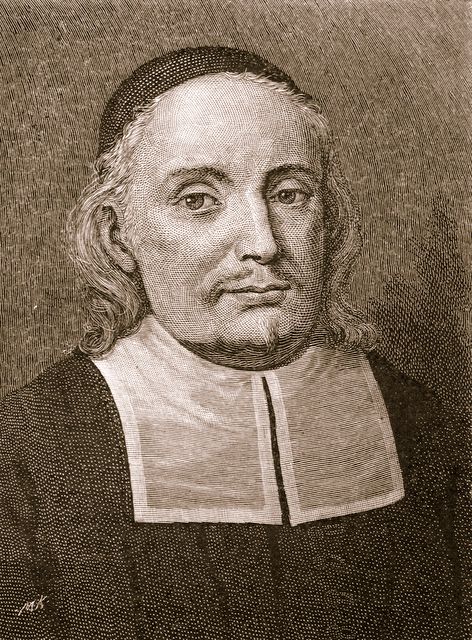
People You Have Probably Never Heard Of But Should: Paul Gerhardt

Paul Gerhardt was born in 1607 in Germany.  He enrolled in the University of Wittenberg in 1628 and graduated in 1642.  Though his schooling was to make him a pastor he was not immediately placed into a pastorate.  The Thirty Years War caused a great amount of tumult and difficulty during this time.  Finally in 1651 he was appointed as the new Probst at Mittenwalde.  (Ask me where Mittenwalde is, and I’ll point you to Wikipedia).  Here he was married and had children.  He also began writing hymns. 

In 1657 he and his family moved to Berlin.  Here in Berlin there was a heated debate between the Reformed church and the Lutheran church.  Gerhardt himself was Lutheran and a model voice in the debates of his time.  Though during his life he was probably most remembered as a pastor and for his work in these counsels to try to bring unity, it is his hymn writing that has struck a chord with me.

Why You Should Know Him:

Very little is left of Gerhardt’s sermons and we know next to nothing of his posterity.  Yet, the Lord has seen fit to preserve many hymns of Gerhardt.  I am sure that if given the time and the research there would be a few things that I would disagree with Gerhardt on.  (His somewhat sissy looking mustache is one of them).  But these hymns are rich.  They bear the mark of “A theologian experienced in the sieve of Satan”. 

Gerhardt’s hymns show a man that is well acquainted with sorrow and yet a man that has drawn from the deep well of Jesus.  He is at times broken and confused but ever trusting in the redemption to be brought to him.  His trust in Christ makes Gerhardt somebody worthy of reading. 

Sample:

A couple of days ago I posted Give to the Winds Thy Fears.  (That song has been remade by Jars of Clay and is available for your viewing at the end of this post. 

Here are a few stanzas from various poems that I found refreshing:

From Say With What Salutations?

From Why Without, Then, Art Thou Staying?

From Christian Devotion to God’s Will:

Further Reading:

There is a compilation of many of his hymns available for free at Google
Also available is a lengthy biography on Gerhardt and his influential hymn writing.
There have been a few more biographies written on Gerhardt, but the two free links above will suffice for a helpful introduction to Gerhardt. 

This is from Jars of Clay:

Monday, May 7, 2012

Give to the Winds Thy Fears

I am finding great comfort in this hymn by Paul Gerhardt:

Give to the winds thy fears,
Hope and be undismayed.
God hears thy sighs and counts thy tears,
God shall lift up thy head.

Through waves and clouds and storms,
He gently clears thy way;
Wait thou His time; so shall this night
Soon end in joyous day.

Still heavy is thy heart?
Still sinks thy spirit down?
Cast off the world, let fear depart
Bid every care begone.

What though Thou rulest not;
Yet heaven, and earth, and hell
Proclaim, God sitteth on the throne,
And ruleth all things well.

And whatsoe’er Thou will’st,
Thou dost, O King of kings;
What Thine unerring wisdom chose,
Thy power to being brings.

Leave to His sovereign sway
To choose and to command;
So shalt thou, wondering, own that way,
How wise, how strong this hand.

Far, far above thy thought,
His counsel shall appear,
When fully He the work hath wrought,
That caused thy needless fear.

Thou seest our weakness, Lord;
Our hearts are known to Thee;
O lift Thou up the sinking hand,
Confirm the feeble knee!

Let us in life, in death,
Thy steadfast truth declare,
And publish with our latest breath
Thy love and guardian care.

Wednesday, March 14, 2012

People You’ve Maybe Never Heard of But Should: Anne Bradstreet

Anne Bradstreet was born in 1612 of nonconformist stock.  Her father, Thomas Dudley, was a solider that had managed the affairs of the Earl of Lincoln.  Due to her families position Anne was a well-educated woman.  At the age of sixteen she married Simon Bradstreet.  Her husband (as well as her father) served as a governor of the Massachusetts Bay Colony.  Anne and her husband, along with Anne’s family, sailed for America in 1630 as a Puritan emigrants.  The Bradstreet and Dudley family were instrumental in founding Harvard.
Anne gave birth to eight children.  Throughout her life she would taken her family (often while pregnant) and move all around New England with her husband.  She died at the age of 60 in 1672. 

Why You Should Know Her:

Anne Bradstreet is actually New England’s first published poet.  In 1647 her brother-in-law, John Woodbridge, sailed to England carrying with him a manuscript of her poetry.  There is some discussion as to whether Anne knew it was to be published or not.  More than likely she had intentions of publication but had to carry a hint of surprise at its publication because during this time period women authoring books was quite controversial. 

Bradstreet was a friend of Anne Hutchinson but was less “liberal” in her views.  Using contemporary terms Bradstreet saw herself as a complementarian but was very much an early feminist.  Many believe that those around Bradstreet also believed that a godly and educated woman such as Anne could do such things as write and that would not necessarily contradict her other roles as a wife and a mother.  Few held this view at the time and Bradstreet faced much opposition during her life. 

Bradstreet’s poems are endearing and reflect much about the life of a Puritan woman.  They were probably not originally intended for publication so they almost serve as a diary and an autobiography of the life of a godly and intellectual Puritan wife and mother. 

Samples:

One of Bradstreet’s poems was written before the birth of one of her children.  In it one can see that those living in New England lived with constant reminders of their own mortality.  Here we see both the joys and fears of a new mother.  Even upon the joy of a child this pervasive death and toil is evident in her writing:

All things within this fading world hath end,
Adversity doth still our joys attend;
No ties so strong, no friends so dear and sweet,
But with death's parting blow is sure to meet.
The sentence past is most irrevocable,
A common thing, yet oh, inevitable.
How soon, my Dear, death may my steps attend.
How soon't may be thy lot to lose thy friend,
We both are ignorant, yet love bids me
These farewell lines to recommend to thee,
That when that knot's untied that made us one,
I may seem thine, who in effect am none.
And if I see not half my days that's due,
What nature would, God grant to yours and you;
The many faults that well you know
I have Let be interred in my oblivious grave;
If any worth or virtue were in me,
Let that live freshly in thy memory
And when thou feel'st no grief, as I no harms,
Yet love thy dead, who long lay in thine arms.
And when thy loss shall be repaid with gains
Look to my little babes, my dear remains.
And if thou love thyself, or loved'st me,
These O protect from step-dame's injury.
And if chance to thine eyes shall bring this verse,
With some sad sighs honour my absent hearse;
And kiss this paper for thy love's dear sake,
Who with salt tears this last farewell did take.

Further Reading:

Several of Bradstreet’s poems can be found here.
You can find a good amount of information on Bradstreet here.
Some may be interested in her interesting genealogical record.  (President Calvin Coolidge is a descendant of Bradstreet).
Also check out AnneBradstreet.com

Tuesday, February 21, 2012

Earth and Heaven by Isaac Watts

Hast thou not seen, impatient boy!
Hast thou not read the solemn truth,
That gray experience writes for giddy youth
On every mortal joy?

Pleasure must be dash’d with pain:
And yet with heedless haste,
The thirsty boy repeats the taste,
Nor hearkens to despair, but tries the bowl again.

The rills of pleasure never run sincere,
    (Earth has no unpolluted spring)
From the curs’d soil some dangerous taint they bear;
So roses grow on thorns, and honey wears a sting

In vain we seek a Heaven below the sky;
The world has false, but flattering, charms;
Its distant joys show big in our esteem,
But lessen still as they draw near the eye;
    In our embrace the visions die,
    And when we grasp the airy forms
         We lose the pleasing dream.

Earth with her scenes of gay delight,
Is but a landscape rudely drawn,
With glaring colors, and false light;
Distance commends it to the sight,
    For fools gaze upon;
But bring the nauseous daubing night
Course and confus’d the hideous figures lie,
Dissolve the pleasure, and offend the eye.

Look up, my soul, pant toward th’ eternal hills;
    Those Heavens are fairer than they seem;
There pleasures all sincere glide on in crystal rills,
    There not a dreg of guilt defiles,
         Nor grief disturbs the stream.
     That Cannan knows no noxious thing,
     No cursed soil, no tainted spring,
Nor roses grow on throns, nor honey wears a sting.
(Isaac Watts, Earth and Heaven)

Wednesday, February 15, 2012

Take More Than a Glance at Herbert’s The Glance

Earlier today I gave a few reasons why you should get to know George Herbert.  I gave you a couple of sample poems but this one I neglected to put in an already lengthy post.  For your benefit I have modernized the English but have not changed the words (i.e. “Vouchsaf’d” has become “vouchsafed”

     When first thy sweet and gracious eye
Vouchsafed even in the midst of youth and night
To look upon me, who before did lie
                         Weltering in sin;
       I felt a sugared strange delight,
Passing all cordials made by any art,
Bedew, embalm, and overrun my heart,
                         And take it in.
       Since that time many a bitter storm
My soul hath felt, even able to destroy,
Had the malicious and ill-meaning harm
                         His swing and sway :
       But still thy sweet original joy
Sprung from thine eye, did work within my soul,
And surging griefs, when they grew bold, control,
       And got the day.
       If thy first glance so powerful be,
A mirth but opened and sealed up again ;
What wonders shall we feel, when we shall see
                         Thy full-eyed love!
       When thou shalt look us out of pain,
And one aspect of thine spend in delight
More then a thousand suns disburse in light,
       In heaven above
(The Glance, From the Works of George Herbert)

I urge you to read through this slowly and think through what Herbert is saying—it is beautiful.  If “original joy” is enough to sustain us through many trials and temptations what “wonders shall we feel” when we are the objects of his “full-eyed love”.

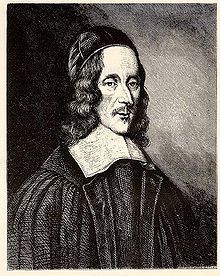
People You’ve Maybe Never Heard Of But Should: George Herbert

George Herbert was born in April of 1593 to a wealthy and artistic family in Montgomery, Wales.  Herbert attended Trinity College in Cambridge where he excelled in languages and music.  His intentions were to become an Anglican priest but his aims were thwarted when King James called him into parliament.  However, later in life (in his thirties) Herbert did take holy orders in the Church of England and became a rector of a little parish near Salisbury.  For the rest of his days Herbert faithfully served as the rector of Fugglestone St. Peter.  He died a month before his fortieth birthday of tuberculosis. 

Why You Should Know Him:

What sets Herbert apart from others is not only his stately nose undergirded by a faithful mustache, but also his beautiful poetry.  Herbert’s collection of poems entitled The Temple were given to Nicholas Ferrar instructing him to either use them for the “advantage of any dejected poor soul” or to burn them.  Thankfully Ferrar chose the former. 

Herbert also had a book of pithy sayings published after his death.  One of these sayings is probably familiar to you:  “His bark is worse than his bite”.  But more than anything Herbert’s poems are what set him apart from others.  Particularly cool are his “pattern poems” which take the shape of an object that the poem is about.  Regardless of the style, though, Herbert’s poems were always gospel-centered and aimed at promoting the beauty and majesty of Christ. 

Samples:

MY words and thoughts do both express this notion,
That LIFE hath with the sun a double motion.
The first IS straight, and our diurnal friend :
The other HID, and doth obliquely bend.
One life is wrapt IN flesh, and tends to earth ;
The other winds t'wards HIM whose happy birth
Taught me to live here so THAT still one eye
Should aim and shoot at that which IS on high—
Quitting with daily labour all MY pleasure,
To gain at harvest an eternal TREASURE.
(Colossians 3:3)

LORD, who createdst man in wealth and store,
    Though foolishly he lost the same,
        Decaying more and more,
            Till  he  became
                Most poor :
                With  thee
            O  let  me  rise
        As larks, harmoniously,
    And sing this day thy victories :
Then  shall  the  fall  further  the  flight  in  me.
My  tender  age  in  sorrow  did  beginne :
    And still with sicknesses and shame
        Thou didst so punish sinne,
            That  I  became
                Most thinne.
                With  thee
            Let me combine,
        And feel this day thy victorie,
    For,  if  I  imp  my  wing  on  thine,
Affliction  shall  advance  the  flight  in  me.
(Easter Wings)

Further Study:

There are many more poems from Herbert that will nourish your soul.  They are not only poetically brilliant but they also point to the fountain of life.  We live in a world of blogs and “quick reading” I invite you to look through some of Herbert’s poems and just sit awhile.  Read them a few times, they are profound and you will not catch everything on just a first glance. 

You can read the works of Herbert for free here:  The Works of George Herbert

Tuesday, July 5, 2011

Not Without Love

I have been listening to Jimmy Needham this morning.  Really solid stuff.  I especially like this song of spoken word:

I tried Lord
I tried Lord
I tried hard to be Your good little boy
Chin up, head high
All zeal and no joy
Thinking all my good deeds could please Jesus
Boy, was I wrong
Though I knew the right songs, all my cymbals and gongs played the melodies wrong
And it wasn’t long ‘til I saw my disease
A life spent wanting to please
On hands and knees
To make right, to appease
God help me please
This can’t be Christianity, it can’t be
The whole thing’s like insanity
Where’s the rest of eternal security?
Where’s the hope of a God big enough to cope with all my hang-ups and insecurities?
Certainly this isn’t breathing
My chest burning and heaving
It’s like my pulse is ceasing
Like my heart quits beating
Yet this I recall to mind and therefore I have hope:
You died, Lord
You died, Lord
Assuredly, like the coming of the dawn, the Father’s love song goes on
Drowning out my bitter songs
And breaking through walls and barriers
Christ swoops in, removes sin, picks up His bride and carries her
So I can sing in agreement with the King this thing:
There’s only one thing that pleases the Father
The God-man on the tree in the midst of the scoffers
Now I finally see that Christ is what Christ offers
And I’m finally free in the love of the Father

LinkWithin

Related Posts Plugin for WordPress, Blogger...