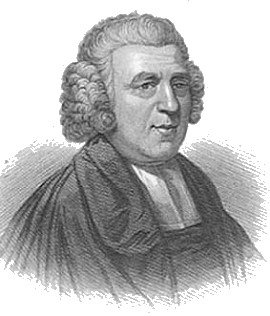
Showing posts with label John Newton. Show all posts

Thursday, June 20, 2013

How My Wife and I Are Changing Our Devotional Times

My wife and I are changing the way that we do devotions together. For one, we want to be more faithful in actually reading the Scriptures and praying through them. With two young children, ministry, and a host of other things we have had a difficulty blocking out time to spend together in the Word.

Secondly, we have developed an unhealthy pattern. We have a tendency to bond in negative things. This means that when we interact with the Scriptures we talk more about how we blow it than we rejoice in the provision of Christ to meet our weaknesses. I have not led well in making our devotions life-giving.

I want this to change.

For an undetermined amount of time we are going to study the Scriptures for the sole purpose of worshipping together. No questions. No focusing on our sins or successes. Simply worship. With every text we are going to make it our aim to feast on the beauty of God.

This practice is largely inspired by this quote by John Newton.

“I hope what you find in yourself by daily experience, will humble you—but not discourage you.

For if our Physician is almighty—our disease cannot be desperate. Our sins are many—but His mercies are more. Our sins are great—but His righteousness is greater. When our sins prevail, remember that we have an Advocate with the Father, who is able to pity, to pardon, and to save to the uttermost!

It is better to be admiring the compassion and fullness of grace which is in our Savior—than to dwell and pore too much upon our own poverty and vileness.”

Pray for us. Pray that the Lord would cause us to worship together, and that he would give us eyes to see Him.

Wednesday, June 19, 2013

Blogging as Manna

John Newton extracted this principle from the Israelite’s hoarding of manna:

The truths by which the soul is fed,
Must thus be had afresh;
For notions resting in the head,
Will only feed the flesh.

However true, they have no life,
Or unction to impart;
They breed the worms of pride and strife,
But cannot cheer the heart.

Nor can the best experience past,
The life of faith maintain;
The brightest hope will faint at last,
Unless supplied again.

We need a daily supply of grace. Newton firmly believed that with each new day we must encounter the God of grace anew. Otherwise we will wither. We cannot maintain a life of faith drawing on yesterday’s manna. Our God is a daily God.

Blogging is often used by God to bring us our daily manna.

If you aren’t aware of this (and at home with this) as a blogger you will get burned. 95% of what you write will disappear into the wasteland only a few hours after your write it. A few people will read it. Some will feast. Others will skip right over it looking for bread elsewhere. And then it’s gone.

If you write to be epic blogging will be a discouraging enterprise. For every article that has decent reach you will write a hundred more that only your mom will retweet. Such is the nature of manna. It seldom seems like much at the time but it is subtly sustaining people in their walk with Christ.

Therefore, write to give people daily grace. Be comfortable that at most you will only be used by God to sustain someone for the day.

Now there is one sense in which blogging is nothing like manna. In actuality what you write doesn’t appear into the ether. It gets swallowed up and stored somewhere in Al Gore’s basement—forever able to be accessed. In this sense what you write doesn’t get maggots and eventually disappear. It stays forever.

While it is true that our blog articles usually vanish from people’s minds this does not mean that we do not need to be careful and Christ-honoring with all of our words. What we say stays forever. And therefore we blog with an eternal perspective all the while knowing that the Lord is simply using us at times to provide daily grace.

Wednesday, May 29, 2013

The Trembling Hands of an African Blasphemer

I found myself deeply moved earlier this week upon reading the diary of John Newton. Newton has become a dear friend of mine and there was something deeply moving about reading his diary, from his own pen, near the end of his life. Here is a selection:

image

That is barely legible. By this time Newton has almost totally lost his eye sight and his memory is quickly fading. If one reads his diary from the the 1770’s you see the diary of a man with good penmanship, able to express deep and poetic thoughts. It is everything but this in 1804.

Why bother with journaling when you are nearly blind?

The answer is found in piecing together the scribbling of Newton in the above selection. His first line reads: “Though I cannot write, I can pray and praise”. This was (I believe) his birthday. Towards the end of the his life he only wrote in this diary on special anniversaries: the anniversary of his physical birthday, his spiritual birthday, and his wedding anniversary. And every time Newton praises. He kept writing because he believed that while the lips of the “African blasphemer” could still move he was to praise the Lord for His goodness.

Secondly, Newton wrote in the above selection, “I hope some may be benefited by my lispings”. Until the day of his death Newton wanted to praise God and help people. Perhaps this is why some 200 years later an associate pastor in Indiana is still benefiting from his life and labors.

This is why I found myself deeply moved. I can picture Newton with faint eyes and trembling hands dipping his pen in ink because whatever energy he had left he wanted it to be spent on praising God and helping people. I want to be this type of pastor. This type of man.

May I never stop being enamored at what the Lord has done for me. If the Lord tarries and I’m granted old age, I pray that my trembling hands are used to praise God and help people.

Thursday, May 23, 2013

7 Tips from John Newton On Battling Depression

Depression isn’t something new. Contrary to popular belief, Christians in ages past were not ignorant to its reality. I love reading through how the Puritans and early evangelicals (like John Newton) thought through such things as depression.

In one letter to a Mrs. Coffin we get a fair picture of Newton’s counsel to the depressed. Mrs. Coffin was a pastors wife. She also seems to have battled depressive episodes.

Here was Newton’s counsel to her:

  1. Pray much. Think little.
  2. Avoid musing and reasoning by yourself. (You need to battle in community)
  3. Keep to the Word.
  4. Realize that this is a spiritual battle.
  5. Know that the “Lord keeps the key of comfort in his own hand”.
  6. Wait for the Lord.
  7. Take heart that your experience isn’t unChristian, in fact no Christian is exempt from conflict of soul.

I also find it interesting that Newton told Mrs. Coffin, “I believe much of your complain is constitutional”. In other words Newton thought that a good bit of her problem wasn’t sin as much as it was biology. His counsel would have been very similar to my own.

This selection was tweaked from a letter of Newton that I got from this book. The whole book is filled with gems like this.

--

If you would like a more detailed explanation of any of the points feel free to ask in the comments. I’ve read enough Newton that I can explain what he means by each of these points.

Friday, May 10, 2013

An Unhealthy Focus on Weakness

My son is a pretty decent baseball player…for a five year old.

He’d rather me not have added those last five words. He wants to be, at the age of five, a better baseball player than the guys that he watches on television with his daddy*. But he’s not. And this makes him really angry and sometimes even makes him want to give up altogether.

When he falls to the ground and cries because he strikes out I want to pick him up and say, “Dude, you’re five. Suck it up, you’re gonna strike out.”

I think the Lord says something similar to me at times. “Dude, you’ve been plucked out of the fire. What did you expect? Suck it up, you’re going to blow it in your discipleship. You aren’t Jesus, you’re going to blow it at times in your ministry. Get over it!”

When I assume that I should have arrived by now, my pride is exposed. John Newton explains well:

Why then should you complain that you are not so tall, nor your branches so wide, nor your root so deep, in two years’ growth, as others who have been growing twenty or thirty years?…Do not let Satan impose a false humility upon you. Depend upon it there is more of self and self-righteousness in these complaints, than we are usually aware of. It is better to be thankful for what you have received than impatient because you have no more. If you can make yourself better, do it by all means; but if you cannot, wait simply the Lord’s time, at the Lord’s feet. If you heart is upright, you have only to attend to the means and precepts of grace.

An unhealthy focus on our depravity and weaknesses is unhealthy. Satan is more than happy to have us licking our wounds if it distracts us from finding true redemption and healing in Jesus. That is what Newton is saying here. Our duty is to run to Christ and be diligently engaged in the disciplines which put us in the path of grace. Whining about our lack of grace in an area does very little to help us.

Newton went on to say, “one look at the brazen serpent will do more than a month of looking at our own wounds”. Being focused on our rebellion, remaining sin, inadequacies, and personal brokenness is to foolishly stare at the conquered serpent instead of rejoicing in the conquering work of the One that represents the brazen serpent.

Diligently pursue Christ and be content with where he has you.

--

*Granted, since we watch the Kansas City Royals the bar is much lower and he is actually quite close to the talent level of some.

Tuesday, April 30, 2013

John Newton On the Boston Bombers


There was no little turmoil in the world in 1801. England was only a few years removed from the Revolutionary War and now they faced the ever-increasing advance of Napoleon Bonaparte’s rule. Newton, writing to Hannah More, reflects upon the times:

He does and will overrule all the designs of men for the furtherance and accomplishment of his holy plan. Not only his friends but his enemies contribute to it. The wrath of man, so far as it is permitted to act, shall praise him, and the remainder of their wrath, whatever they mean more than is subservient to his purpose, He will restrain…We, perhaps, have been tempted almost to wish that some persons had not been born, or had been taken away before they had opportunity of doing so much mischief, but what the Lord said to Pharaoh will apply to all like-minded, ‘For this very cause have I raised thee up.

Words like this usually draw sharp criticism in our day. How in the world can we say that the Boston bombers are somehow instruments in the hands of Almighty God? Doesn’t this make God evil and wicked? How could we serve such a God?

Such questions are tough. And I don’t know all of the answers to them. But at the end of the day I find comfort in the words of Newton, especially these:

When I consider all second causes and instruments as mere saws and hammers in the workman’s hands, and that they can neither give us pleasure nor pain, but as our Lord and Savior is pleased to employ them, I feel a degree of peace and composure.

Suffering is tough. Easy answers do not suffice. It seems that every day we open a newspaper some new story of suffering is unfolding. Abortion clinics, bombers, train wrecks, explosions, tsunamis, on and on the litany of pain continues. We either believe that God’s drama is somehow unfolding or we believe that He’s a reactionary. I don’t understand all the implications of it but I believe Scripture paints the first picture. 

Newton went on to say, “how little can we judge of this great drama by a single scene!”. We don’t have all the answers and that is intentional. But somehow we have to trust that God has a good purpose in all suffering.

---

For a more complete treatment of this theme I would invite the reader to check out my book, Torn to Heal, which releases tomorrow.

Wednesday, April 24, 2013

What If the Darkness Doesn’t Break?


I’m wrestling with God a little today.

I read this and it put no slight discomfort in my soul. Speaking of William Cowper, John Newton writes:

He lived far above the common standard [of comfort] for about ten years; and for twenty-seven years afterwards he knew not one peaceful day. May it remind me likewise of the precarious tenure by which we hold all our desirables. A slight alteration in the nervous system may make us a burden and a terror to ourselves and our friends.

I’ve got to be honest this is scary. I struggle with bouts of darkness and depression. So do some people in my life that I dearly love. This quote scares me because I know that in one sense nothing is off limits. God could allow me to go mad—overtaken with despair—and do all of this for His glory (and somehow my good).

In my arrogant humanity I want to believe that nothing like this could befall me or the ones that I love. Doctors can give us medicine, counselors can give us treatment. This isn’t 1800 and we’ve come long enough that things like this no longer need to happen.

My over-spiritualized confidence responds that so long as I continue faithful in the gospel—repenting and believing, nothing like this will befall me or those I love. I’m not so sure. That sounds more like Job’s friends than it does the reality of the Bible.

I believe that God is passionate about doing us good. I also believe that He is passionate about spreading His glory. I don’t believe those two are combatants. But I do believe that our experience of His “doing us good” might be held for another age and in the New Jerusalem instead of this fallen world.

So, I’m wrestling a little. I’m thinking very clearly today. The sun is shining. Darkness feels far off. But I know better. I know that in one moment I could be clinging to Christ in the midst of darkness instead of light. The darkness has always broke. Someday it might not.

The question for me today is this. Do I believe this along with Newton:

“But we are sure that He is rich enough, and that eternity is long enough to make them abundant amends for whatever his infinite wisdom may see meet to call them to, for promoting his glory in the end…”

God is always good. At times we see His smile as bright as the noon-day sun. At other times “He hides his smiling face behind a frowning providence”. For some they might not see that smile again until the see Him face to face. Will I trust Him in the light and in the darkness?

He will make the darkness light. May He give us grace to hold on until all things are made well again.

Tuesday, February 19, 2013

Is It Enough to Just Speak the Truth?

On the day of his first public service at St. Mary Woolnoth, John Newton explained to his hearers the truths that would inform his gospel ministry. They are evangelical and gospel-centered as to be expected with on like Newton. One thing, however, that I believe sets Newton apart as an exemplary example for us to follow. He believed that just speaking truth was not the whole of his duty:

But the cause of truth itself may be discredited by improper management; and, therefore, the Scripture which furnishes us with subject-matter for our ministry, and teaches us what we are to say, is equally explicit as to temper and spirit in which we are to speak. Though I had the knowledge of all mysteries, and the tongue of an angel to declare them, I could hope for little acceptance or usefulness, unless I was to speak “in love”.

I believe Newton is correct. Just speaking truthfully—even eloquently--about the great mysteries of our faith is not sufficient. Certainly the Lord is powerful and convert sinners using even the weakest means. But the apostolic method of preaching/pastoring/leading/living is to speak the truth in love. Both are necessary.

“Loving” people without speaking truth is a sham. At the same time, speaking truth without loving people is a mockery of Christ our example.

Friday, February 1, 2013

The Christian Hedonism of John Newton

I sure hope I’m right about this gospel-centered thing. I hope John Piper is correct that God is most glorified in us when we are most satisfied in him. I hope that Sam Storms is correct when he says that the key to holiness if falling in love.

I say that because I’m staking my life on this. Not on the claims of men. But on the fact that these men have faithfully exposited what the Scriptures teach. What Piper and Storms are saying is what God has said to us in His Word. I’m banking so much on this that if I’m wrong I am to be pitied.

That’s why I take great encouragement when I find that I can add other dear saints to the list of Christian Hedonist. John Newton is one of those dear saints. Writing to a woman only known to me as Miss M****, Newton says this:

A sight of Jesus, as Stephen saw him, crowned with glory, yet noticing all the sufferings of his poor servants, and just ready to receive them to himself, and make them partakers of his everlasting joy, this will raise the spirit, and restore strength; this will animate us to hold on, and to hold out; this will do it, and nothing but this can. So, if obedience be the thing in question, looking unto Jesus is the object that melts the soul into love and gratitude, and those who greatly love, and are greatly obliged, find obedience easy.

This is the truth that I am banking my Christian life on. That beholding Christ will lead to holiness. That my chief aim is to have a “sight of Jesus”. And that “looking unto Jesus” will mold my heart into conformity with His. (If my experience with Psalm 88 recently is any evidence then I believe catching a sight of Jesus does indeed have great value).

Look unto Jesus…that’s our chore.

Wednesday, December 19, 2012

Singing to the Deaf

Yesterday I looked at the Mystery of “God Moves in Mysterious Ways”. In my research for this I read through John Piper’s biography of William Cowper again. There was a statement that Piper used that came alive to me. One of his section headings reads: Never Cease to Sing the Gospel to the Deaf.

Piper writes,

Let us rehearse the mercies of Jesus often in the presence of discouraged people. Let us point them again and again to the blood of Jesus…Don’t make your mercy to the downcast contingent on quick results. You cannot persuade a person that he is not reprobate if he is utterly persuaded that he is. He will tell you he is deaf. No matter. Keep soaking him in the “benevolence, mercy, goodness, and sympathy” of Jesus and “the sufficiency of the atonement” and “the fullness and completeness of [Christ’s] justification”…Pray that in God’s time these truths may yet be given the power to awaken hope and beget a spirit of adoption. (Piper, The Hidden Smile of God, 117-19)

This is what John Newton did in the life of William Cowper. Newton was very discouraged and perplexed at Cowper’s ailment. Yet he remained by his side, even at times foregoing vacation so as not to leave his dear friend alone. Newton never ceased to sing the gospel to the deaf. It took a toll in Newton too.

On one occasion Newton wrote to John Thornton of the toll it was taking on him:

Mr. Cowper’s long stay at the vicarage in his present uncomfortable state, has been upon many account inconvenient and trying. His choice of being here was quite unexpected; and his continuance is unavoidable, unless he was to be removed by force…I make myself easy by reflecting that the Lord’s hand is concerned; and I am hoping weekly for his deliverance…The Lord evidently sent him to Olney, where he has been a blessing to many, a great blessing to myself. The Lord has numbered the days in which I am appointed to wait upon him in this dark valley, and He has given us such a love to him both as a believer and as a friend, that I am not weary; but to be sure, his deliverance would be to me one of the greatest blessings my thoughts can conceive.

Why it was so taxing on Newton?

Sometimes when I read through tattered pages from days long ago I slip into a type of fairy tale thinking. People stop becoming real. John Newton becomes a hero without warts. I rejoice in the fruit of his ministry but I do not accurately reckon the toil that such fruit entails. I say things like—and will say again in a moment—that we need more pastors like John Newton. But I forget the travail that Newton must have experienced as he bled with William Cowper.

Consider this letter from Cowper and how it must have pained Newton. Keep in mind this is written in 1784. That is eleven years after Cowper’s second bout with madness (first under the watch of Newton). Now it is happening again after a brief respite. Listen as if you had received this letter from a dear friend that you had been counseling and bleeding with for years:

Loaded as my life is with despair, I have no such comfort as would result from a supposed probability of better things to come, were it once ended ... You will tell me that this cold gloom will be succeeded by a cheerful spring, and endeavour to encourage me to hope for a spiritual change resembling it—but it will be lost labour. Nature revives again; but a soul once slain lives no more ... My friends, I now expect that I shall see yet again. They think it necessary to the existence of divine truth, that he who once had possession of it should never finally lose it. I admit the solidity of this reasoning in every case but my own. And why not in my own? ... I forestall the answer:—God's ways are mysterious, and He giveth no account of His matters:—an answer that would serve my purpose as well as theirs that use it. There is a mystery in my destruction, and in time it shall be explained.

Do you hear what has happened in the mind of Cowper? His mind has become so set upon destroying him that his precious hymn written in 1773 is now darkened. “There is a mystery in my destruction, and in time it shall be explained”. He has somehow believed that the mystery of God’s ways is that he will be damned even though he is one of the elect. He theologically agrees with everything that Newton is saying but he is, as on biographer said, “utterly deaf” to “every consolatory suggest” because he had “concluded that God had rejected him”.

Yet Newton never abandoned his friend.

We Need More John Newton’s

Some would probably consider Newton’s soul care of Cowper a failure. After all he never really found healing. We like magic words that somehow fix everything. But Cowper wouldn’t be “fixed”; not on this side of Eden.

Newton couldn’t be Cowper’s savior. But he could be his friend. Though it’s a mystery and not something I would really want to write a theological dissertation on, it seems that at times the Lord calls people like John Newton to hold the hand of his friend while simultaneously holding the hand of Jesus. His dear friend was in such despair that he could no longer cry out for mercy. It seems that Newton interceded for Cowper when he was too weak to even plead for help.

Newton’s ministry to Cowper was a ministry where he continued to “sing the gospel to the deaf”. He did it as his friend not as his fixer. He loved William Cowper, madness and all. He was never a project but always a brother in Christ. To this end Newton never gave up on his friend. He pleaded for Cowper’s stake in Christ even when Cowper was confident that he had been forsaken.

Ministry success isn’t defined by the number of hands we heal but the hands we hold. Healing belongs to the Lord. Holding on is our sacred duty as fellow sojourners. We need more pastors like John Newton. Pastors that aren’t discouraged because their “projects” fail. But pastors that ache because their friends hurt. Pastors that stay and preach, and plod, and proclaim the excellencies of Christ even when it seems that we are only holding a symphony for the deaf.

Jesus is pleased with such faithful husbands, daddies, friends, and pastors. I pray that I am one.

Wednesday, October 10, 2012

Poem From a Dying 9 Year Old Boy

I find myself today reading the Life and Writings of Mrs. Jane Dawson of Lancaster.  I skipped across this because of my weekly time with my dear friend John Newton.  My heart is warmed by reading the account of Jane Flower (later to be Mrs. Dawson).  Her letter to her parents at the age of 11 is astonishing and one that in our times we would expect to come from the pen of perhaps a college student.  I am further blown away by the dying poem of her little brother George. 

At 9 and a half years old a dying George quipped these words to his mother:

Christ is my portion and my all,

I need not fear, I shall not fall;

Nor need I fear what all the world can do,

Since Christ can fight and make---subdue. 

He’s not repeating a song, mind you.  He made that up moments before his death.  “Even your young men shall see visions…”  It’s amazing to see the work of the Spirit in the 1700’s Comforting and Guiding these little children.  This is encouraging me to pray for an outpouring of God’s favor and grace upon my children that they might see the beauty of Christ and live solely for His glory.

Thursday, June 14, 2012

In Defiance of Them All

He had been working on his glorious castle for at least 10 minutes.  Not very long to me but 10 minutes is like 12 years in Isaiah time.  He had put every bit of his creativity and effort into building what was going to be the most amazing Lego castle known to man. 

His masterpiece was finally taking shape and the little master builder was beaming with joy.  Then the unthinkable happened.  The permanency and impregnability of his creation was questioned in the form of a curious little sister.  Isaiah the architect and his creation did not stand a chance as Godzilla—played masterfully by Hannah—took vengeance upon her brothers joy. 

Anyone with children knows what happened next: Godzilla was firmly rebuked by the discouraged builder as the now tear soaked Lego’s were gathered together to begin their resurrection.  As mommy and daddy set Godzilla on another mission of destruction the little architect began to recreate his castle.  He would not be stopped this castle would be built and built as it was intended to be. 

After about 5-10 more minutes of reconstruction the castle was beginning to take shape again.  Little Gehry was well on his way to fame and notoriety as the world’s greatest castle builder.  Then, without one moment of warning, the entire thing was destroyed by two rambunctious kittens reenacting their version of the Hatfield and McCoy’s. 

Getting up from this bitter betrayal would require the help of daddy.  Together we picked up the pieces and began rebuilding the castle.  Eventually, with Godzilla distracted and the Hatfield/McCoy feud moving to higher ground, the master architect completed his masterpiece*. 

A Little Help From Newton

A couple hundred years ago John Newton compared the work of Christ in our lives to a master-builder that does not stop his creation until “it appears to others as he intended it should be”.  And just as little Isaiah did, Christ finishes His work “in defiance of them all”. 

I couldn’t help but think of Isaiah’s diligence in completing his castle when I read these words from Newton:

But nothing can disappoint the heavenly Builder; nor will He ever be reproached with forsaking the work of his own hands, or beginning that which He could not or would not accomplish.  Let us therefore be thankful for beginnings, and patiently wait the event.  His enemies strive to retard the work, as they did when the Jews, by his order, set about rebuilding the temple.  Yet it was finished in defiance of them all.  (Letters of Newton, 219)

There are many **Godzilla’s within and without that seem to greatly frustrate the work of the master-builder but He is powerful enough to even make these “set-backs” resound to His glory and our good.  We would not enjoy Him as fully or as sweetly had these “rambunctious kitties” not wreaked havoc on our hearts and lives.  But as they crumble and the building stands the wisdom and splendor of the master-Builder shines more brightly. 

Brothers and sisters Christ will complete His work in defiance of them all!

----

*Just to show you that you should be careful not to stretch analogies too far you ought to know that shortly after reaching the apex of his Lego career little Frank Lloyd Wright then proceeded to take his bicycle and unleash havoc upon his unsuspecting castle.  I am pretty sure the analogy breaks down at this point. 

**I should probably also mention that I do not typically refer to my beautiful little girl as Godzilla or the work of demons.  But from little Isaiah’s perspective when his creation came toppling down I think Godzilla would have been a nice response.  See how easily you can break down analogies? 

Monday, June 4, 2012

O For a Warmer Heart

Sometimes it is really helpful to read the struggles of someone that you greatly admire.  When I read of John Newton’s complaints of his own walk with the Lord it helps me to think that perhaps I am not alone in my struggle.  Seeing that Newton remained faithful throughout his life and that he is still ministering—even to associate pastors in Indiana—some 250 years later makes me think that perhaps the Lord can shine His light through a cracked vessel like me. 

I want to comment on every line of this little letter from Newton but I will refrain.  I do urge you to read through it slowly as I found great encouragement from it:

I hope you will find the Lord present at all times and in all places.  When it is so, we are at home every where; when it is otherwise, home is a prison, and abroad a wilderness.  I know what I ought to desire, and what I do desire.  I point him out to others as the all in all; I esteem him as such in my own judgment; but alas! my experience abounds with complains. 

He is my sun; but clouds, and sometimes walls, intercept him from my view.  He is my strength; yet I am prone to lean upon reeds.  He is my friend; but on my part there is such coldness and ingratitude as no other friend could bear.  But still he is gracious, and shames me with repeated multiplied goodness. 

O for a warmer heart, a more simple dependence, a more active zeal, a more sensible deliverance from the effects of this body of sin and death!  He helps me in my endeavors to keep the vineyards of others; but, alas! my own does not seem to flourish as some do around me. 

However, though I cannot say I labor more abundantly than they all, I have reason to say, with thankfulness, By the grace of God, I am what I am.  My poor story would soon be much worse, did not he support, restrain, and watch over me every minute.

Tuesday, May 29, 2012

Is This Helpful or Needlessly Pessimistic?

As an aging man, and one who had been a Christian for over 30 years, John Newton had this to say about his experience:

At my first setting out, indeed, I thought to be better, and to feel myself better from year to year; I expected by degrees to attain everything which I then comprised in my idea of a godly Christian. I thought my grain of grace, by much diligence and careful improvement, would, in time, amount to a pound; that pound, in a farther space of time, to a talent; and then I hoped to increase from one talent to many; so that, supposing the Lord should spare me a number of years, I pleased myself with the thought of dying rich in grace.

In other words Newton expected to grow exponentially in his faith.  You can imagine that there were various sins of the heart that Newton figured he would have conquered within 30 years time.  Not only that but there were certainly a good number of graces that Newton had hoped to “improve upon” within this time.  Yet this was what he discovered:

But, alas! these my golden expectations have been like South-Sea dreams! I have lived hitherto a poor sinner, and I believe I shall die one! Have I then gained nothing by waiting upon the Lord? Yes, I have gained, that which I once would rather have been without, such accumulated proofs of the deceitfulness and desperate wickedness of my heart, as I hope, by the Lord's blessing, has, in some measure, taught me to know what I mean, when I say, "Behold I am vile!"

The core of what Newton learned was that he is more vile than he imagined.  If he stopped there this would be obviously depressing.  There is really no benefit in acknowledging our sinfulness and wretchedness if we don’t look to Christ the remedy.  Admitting human need is empty application unless God’s provision is simultaneously exalted.  And this is what Newton does:

And, in connection with this, I have gained such experience of the wisdom, power, and compassion of my Redeemer; the need, the worth, of his blood, righteousness, attention, and intercession; the glory that he displays in pardoning iniquity and sin and passing by the transgression of the remnant of his heritage—that my soul cannot but cry out, "Who is a God like unto you!"

Still, my question to use is this: Do you find Newton’s testimony here helpful or needlessly depressing?  Is he denying the image of God and work of the Spirit in his own life too much?  In his desire to exalt the work of Christ on the Cross is he at the same time casting a dark shadow on the work of the Spirit in the Christians life? 

I’m interested to read your comments…   (I’m hoping to get opinions from both sides). 

Thursday, May 24, 2012

Grace for the Little Things

It was an easy task.  At least it should have been.

Yet, if you ask my wife why our garbage disposal leaks she can quickly point the finger to the time that I took the whole thing apart, breaking the seals, and everything to “fix it”.  No need for a professional or an expert.  I’m a husband AND I’ve stayed at a Holiday Inn.   Even though I have no idea how a garbage disposal works I’m pretty certain that its not a big deal and I’ll figure it out as I go along.  After all how hard can it really be to get my garbage disposal to stop sounding like a pterodactyl giving birth? 

Had it been something huge I would have called a professional.  But this was something little that I was confident that through my own wisdom and strength I could fix.  No need to call in an expert. 

So I plugged away for a couple of hours.  Wasting an entire night.  Learning nothing.  Tearing up half the kitchen sink.  Sinking in my shame and inadequacy.  Even trying the ridiculous like taking off my belt and sagging my Levi’s hoping that maybe that will make me a better plumber.  Fail.

Grace for the Little Things

It’s not only garbage disposals that I do this with, though.  John Newton reminds me that it’s often in my prayer life that I “got” the little things:

…if the occasion seems small, we are too apt secretly to lean to our own wisdom and strength, as if in such slight matters we could make [due] without him.  Therefore in these we often fail. 

And so the Lord often treats us as a wise mother teaching a self-confident child how to walk.  “If there is no danger or harm from a fall, as if he is on plain carpet, the mother will let him alone to try how he can walk.”  Where mommy couldn’t convince him that he isn’t as strong and able as he thought a donk on the noggin will do the trick. 

Often times the Lord allows these “small things” to become “big things” to teach us the danger of self-dependence and the joy of trusting His infallible hand.  This is supremely loving.  The Lord consistently reminds us that “it requires the same grace to bear with a right spirit a cross word as a cross injury; or the breaking of a china plate, as the death of an only son.” 

We need grace for the little things just as much as we need grace for the big things. 

--

In case you were wondering after my failed efforts at fixing my garbage disposal my good friend Ryan came to our rescue.  He is somewhat of handyman and as opposed to me actually knows what he is doing.  Dude fixed it in three minutes.  “How”, you ask?  By sticking his hand down the drain and pulling out the screw that was rubbing up against the blades and causing the screeching of a birthing pterodactyl.   Little things don’t turn into “big things” when we get the right means of help. 

Tuesday, May 15, 2012

A Disciple, Husband, Daddy, Pastors Confession of Need for Gospel Joy

…how greatly would they prize the gospel, which alone can support us in the day of trouble, or even enable us to find satisfaction in a state of prosperity!  (John Newton in a Letter to the Rev. William Howell)

It takes the gospel to sustain you in a day of trouble.  You passed over that statement didn’t you?  It’s a duh.  It’s a sentence that you skim.  You may forget that at times, but for the most part in the midst of “trouble” you know that the only thing that will sustain you is the gospel. 

It takes the gospel to enable you to find satisfaction in a state of prosperity.  If you are like me, this statement causes you to pause.  Maybe I am extra sensitive to this statement because of something the Lord is doing in my life right now.  At present I am feeling some of the bitter fruit of a self-absorbed and cold heart. 

My legalism, techniques, and biblical principles only last for so long.  I’ve been exposed.  It is with great pain that I have had to confess something that has long bubbled in the darkness.  I do not love my wife and children, as I ought.  They know this.  They feel this.  I know this.  I feel this. 

Of course I do love my wife and children more than I do anyone else.  But they do not need me to love them more than grapefruit or some drunken uncle.  I am called to love my kids with a God the Father type love and to love my wife with a Jesus sacrificing type of love.  I’m called by God to delight in my family. 

And that is where I am broken.  I could do duty.  I can buy flowers.  I can follow the 10 steps to discipling your children.  I can tell them about Jesus.  I can read the Bible with my wife.  I can hang out and watch television.  I can, for the most part, fake it.  But what I cannot make myself do is truly delight in them the way the Lord calls me to.   

That stinks. It exposes my heart.  Part of the consequence of my rebellion is that I have a numb heart that seems to only be slowly growing in Jesus.  I have a really hard time enjoying sunsets.  You show me a rose and my eyes gravitate to the thorn.  I want this redeemed. 

All of this is why Newton’s words here stopped me dead in my tracks.  I’ve been battling this for a long time.  I cannot seem to make myself have joy and to treasure and enjoy the things that I ought.  I try to do stuff but I know in my heart that I’m not really being a joyful giver.  It’s empty. 

I daily feel these words of Augustine.  Not only as it relates to God but also to my family:

I was astonished that although I now loved you…I did not persist in enjoyment of my God.  Your beauty drew me to you, but soon I was dragged away from you by my own weight and in dismay I plunged again into the things of this world…as though I had sensed the fragrance of the fare but was not yet able to eat it.

And so I pray…

Lord, captivate my heart.  I want to enjoy Your roses.  I want to enjoy Your sunsets.  I want to enjoy the children that You have given me.  I want to enjoy the wife that You have given to me.  Not with some vague worldly love like a drunken guy with mustard stains on his wife-beater cheering for the Red Sox, but with a love that springs from your radiant love.  Make my love beautiful.  I know the gospel sustains me in darkness, open my eyes to the gospel provision of joy.  Awaken my dullness.

--

When this article posts I will be in TN with my wife celebrating our anniversary.  I realize the “irony” of posting this on my anniversary.  But it actually shows the value of marriage.  I doubt this would be a battle that I was fighting if I lived in my mom’s basement playing XBox 360 all day.  This is a battle because of love.  This is part of the reason God gave me my wife to enjoy.  He uses her for my holiness (and vice versa).  I am eternally grateful for her in my life.  God is using her to root out sin and unbelief and replace it with real God-honoring joy. 

Wednesday, May 9, 2012

A Response to @RevKevDeyoung Hiding Above the Fray

I missed a post by Kevin DeYoung a couple of days ago.  In this post he decries those that…

“claim to transcend old polarities. The ones that always claim to be above all the silly nonsense that used to drag us down. The ones that keep their noses clean by putting them high into air. The ones that are never dirty enough for the trenches.”

He freely admits that he has no desire to “turn every skirmish into a war” but there are battles that need to be fought and won.  It’s cowardice to take to higher ground when there is a legitimate battle going on down below. 

I’ve written a fair amount in the past about being slow to engage in controversy.  Yet, I also identify with what DeYoung is saying here.  If I am reading him correctly he is saying much the same that Richard Sibbes said 400 years ago:

And yet often we see a false spirit in those that call for moderation.  Their doing so is but to carry their own projects with greater strength; and if they prevail they will hardly show that moderation to others which they now call for from others.  And there is a proud kind of moderation likewise, when men will take upon them to censure both parties, as if they were wiser than both, although, if the spirit be right, an onlooker may see more than those that are in conflict.  (Sibbes, The Bruised Reed, 30)

If there is a legitimate battle that needs to be fought then the gospel demands that we suit up and contend for the faith.  The problem is we often take swords into an arm wrestling match.  It takes wisdom to discern when there is a legitimate high-road and when silence is the best course.  It takes wisdom to know if the battle is yours.  And it takes wisdom to know what if you should bring a knife, a smile, or a grenade. 

One Critique

I do think that DeYoung takes this a little far when he says, “I am skeptical of those whose first instinct in the midst of theological, political, or cultural controversy is to plead with everyone that there doesn’t have to be a controversy.”  There will be many that are wired in a similar way to Kevin that will give hearty amen’s to this sentiment.  Some are wired to have a first instinct of “fight”.  They will err on the side of getting in fights that they shouldn’t. 

But then again there are also those that could say something very similar to DeYoung but from a different perspective.  John Newton often spoke of controversies and distinctions being against his nature.  His disposition probably would have been similar to what DeYoung responds to with skepticism.  Consider his posture with regards to Andrew Fuller’s newest book which was causing great controversies. 

Indeed it costs me but little self-denial to decline books of controversy, which though well written and even upon important points, seldom (I fear) are very useful.  Especially when the opponents are known and avowed, and the debate is not merely about sentiments, but Mr. A is engaged against Mr. B.  Then it is fighting not merely for truth but for victory; and they usually push each other to extremes.  Whereas if they would explain and qualify there is perhaps a [common ground] in which they might meet at once and be at peace.  (From Wise Counsel, 217)

Newton was skeptical of those whose first instinct was to do battle.  His natural instinct was to “flight”.  And it is no accident that one of the great questions of Newton’s life is that there were controversies that he probably should have engaged in but did not.  Whereas those whose first instinct is to fight will err in getting into fights they shouldn’t, those like Newton will err in taking the “high ground” when they ought to get in the trenches and do battle. 

Yet, I don’t think the error is in “first instincts” but in the actual response (or non-response) to controversies.  At the end of the day those that are wired to be quick to battle will probably look at those like Newton and wonder, “Why isn’t this nancy-boy joining the fight”.  And those that are wired like Newton will look at those that are engaged in many controversies and wonder why they are not more marked by a peaceful and loving spirit.  It would do us well to consider the disposition of our brothers and sisters in Christ and do battle with our own disposition well before we graciously do battle with theirs. 

Tuesday, May 1, 2012

When Serpents Bite Your Granny

Perhaps the most offensive claim of the gospel is that a hate-filled cannibalistic child molester finds the same redemption and has an equal status in the eyes of God as your dear old church lovin’, bake-sale havin’, baby burpin’ granny.  The truth that there is only one way to salvation for granny and the cannibal is equally comforting and offensive.  It’s offensive to the vestiges of self-righteousness in our own heart but it is a great comfort to those acquainted with the darkness of their own hearts. 

In the late 1700’s John Newton wrote a letter to a dejected pastor that was stricken with illness and despair.  This man felt that though he had preached to many and rejoiced in seeing their having found grace he was not sure that he himself could be pardoned.  Newton did what any good pastor does to those that are in despair—he preached to him the gospel.  His counsel here is especially rich:

When the brazen serpent was erected in the wilderness, to cure those who must otherwise have died, the benefit was not restrained to those who had been bitten by the fiery serpent but once or a few times.  The worst case amongst the people was relieved as soon and as certainly as the very slightest.  The remedy was universally proposed to every person.  The application was easy; it was only, look and live.  But if a man had spent all his time in measuring or counting his wounds, instead of looking to the ordinance of God, he might have died, though the means of life were within his view.  The sense of the evil of sin is given to quicken application to Christ, and not to discourage our approach.  The Scripture has concluded all under sin, and as such we are all condemned already.  But the Gospel proclaims a free pardon to everyone who, with the eye of his mind, looks for life to him who hung upon the cross.  (Letters of John Newton, 198, emphasis mine)

If you find yourself in despair over the greatness of your sin do not spend your time counting your wounds or licking them.  Turn your eyes away from your serpent bite and fix your eyes on the blood-drenched yet resurrection healed face of Jesus.  This is the remedy whether you find yourself a cookie makin’ granny or an openly shamed sinner. 

Tuesday, April 3, 2012

From the Pen of Newton: Those Other Folks…

Why can’t I seem to get it? 

I look around at other believers and they seem so passionate about Jesus.  They seem to not be marked by my negativity and skepticism.  Holiness seems to come easy to them.  They don’t seem to have the desires that I have or to be privy to the battles like the ones that wage war in my fragile mind.  They seem jovial, cheerful, and together. 

Not me.

I’m broken.  I’m jaded.  My prayer life stinks.  My hope is often dashed.  I constantly proclaim the sufficiency of the gospel but I have a hard time living in it myself.  Even this little tirade is dark, morbid, and skeptical. 

Why can’t I be like those other guys?  Why do I struggle as I do? Why can’t I seem to conquer this junk, this heart that is prone to negativity? 

These other believers are amazing!  They have such a tremendous relationship with the Lord and never seem to struggle as I do.  They always seem to be in a happy and blessed frame.

To such a heart Newton replied:

I must say it is well that they do not live here; if they did, they would not know how to pity us, and we should not know how to understand them.  We have an enemy in Olney that fights against our peace, and I know not one amongst us but often groans under the warfare.  I advise you not to be troubled by what you hear of other folks experience, but keep close to the written word, where you will meet with much to encourage you, though you often feel yourself weary and heavy laden.  For my own part, I like that path best which is well beaten by footsteps of the flock, though it is not always pleasant and strewed with flowers. 

In other words, the way of believers isn’t an unhindered and constantly blessed frame.  The way of believers is marked by war, struggle, defeat, and bewilderment.  But it is a path that is trodden by many faithful believers and one that plods through the valleys with eyes to follow the Master’s sandal prints.

Thursday, March 29, 2012

From the Pen of Newton: On Being a Consistent Protestant

According to John Newton, popery “has a very extensive sense”.  Newton believe that anyone that desired to confine another person to “follow his sentiments, whether to doctrine or order, is so far a papist”.  He then described a consistent thus:

Whoever encourages me to read the Scriptures, and to pray for the teaching of the Holy Spirit, and then will let me follow the life of the Lord gives me, without being angry with me because I cannot or will not see with his eyes, nor wear his shoes, is a consistent Protestant.

One of the reasons that I love John Newton so much is because of his gracious spirit and desire to see unity within the body.  He constantly strove to encourage believers of all stripes to “love one another, bear with one another, to avoid dispute; and if they must strive, to let their strife and emulation be who shall most express the life of the Son of God in their temper and conduct”. 

If we really believe the gospel and the unity that Christ has bought for us then we have no other option than to pursue the type of unity and mindset that Newton models and exhorts us towards.  Consistent Protestantism means that we believe in the priesthood of all believers and we believe that the Spirit guides others just as much as us.  It means that we humbly acknowledge that the Christ is Lord over their lives and not us or any other “vicar of Christ”. 

LinkWithin

Related Posts Plugin for WordPress, Blogger...