Showing posts with label history. Show all posts

Friday, May 31, 2013

What Can We Learn From Voltaire?

Voltaire isn’t an evil robot from an 80’s cartoon, nor is he the bad guy from Harry Potter. Voltaire was an atheist that hated God and the Bible. Near the end of his life he claimed that within 100 hundred years Christianity would be stamped out and known only as a relic of history. Voltaire died in 1778. In God’s irony, within 25 years of Voltaire’s death his mansion housed the Geneva Bible Society. His former residence is now used to churn out Bibles.

Isn’t God amazing? Doesn’t this show us that God is sovereign and that His word will last for ever?

Yes to the first, no to the second. It doesn’t show us anything about God because the story isn’t true. First, Voltaire was a deist not an atheist. Second, there is no record of his having predicted that Christianity would be stamped out within 100 years. Now don’t misunderstand me—Voltaire was no follower of Jesus. Such a statement would not be surprising. But there is no record of his having said it.

Furthermore, it is not true that any of his houses were ever used for a Bible society. It’s a great sermon illustration. It leaves people in awe at the power of God. But it’s simply not historically accurate.

What is true is that the Hotel Gibbon which Voltaire often frequented became a depository of the Bible Society* in 1849. But that is it. Not quite as good of a sermon illustration. And so, like any good fishing story, the catch has gotten a little bigger over the years.

We ought to learn a couple lessons from this false story of Voltaire:

  1. Check your facts and stories. What is intended to be a “point for Jesus” ends up being a point for unbelievers. Christians look like blind people groping for anything to believe in. It’s okay that we look like idiots—after all the gospel is offensive and seen as foolish to an unbelieving mind. But we shouldn’t look like idiots because didn’t fact check.
  2. Let the Word of God be the anchor and the stories be the servants—not the other way around. The fact that this story is not true should not do anything to your faith other than to make you say, “ah man, that would have been a great sermon illustration”. The truth of God’s word is unchanging. If we find out these stories are untrue we have only lost a servant to our gospel proclamation—not it’s foundation.
  3. We will have an eternity filled with TRUE stories like this. God is in the process of rooting out of his kingdom all sin and unbelief and replacing it with passionate worshippers. Therefore, there will be in heaven a million true stories of light overcoming darkness. I can’t wait!

---

*Information take from here.

Friday, April 26, 2013

4 Reasons Why I’m Tentatively a Historic Pre-Millennialist

Yesterday I proposed a grid for thinking through early church practices. I believe it partially works for how to apply early church theology too. Following a similar grid is why I am tentatively a historic pre-millennialist.

  1. New Testament passages explicitly deny a Post-millennial position; namely, those passages which show the world will get worse (2 Thess. 2:3-4) and those passages which seem to state the number of believers will be fewer than unbelievers when Christ returns (Mt. 22:14).
  2. I am not convinced by pre-millennial dispensationalism.This article explains that in part.
  3. The historical place that historic pre-millennialism holds. The Apostle John discipled Papias and Polycarp. Polycarp discipled Irenaeus. Between these three we have explicit claims that the apostle John held to a pre-millennial position.
  4. It is the most clear reading of Revelation 20:1-10. This seems to be the most clear reading of the binding of Satan and the nature of the resurrection.

In all honesty I want to hold to amillennialism. I find certain aspects of that position compelling. But I believe because of the place in history that the historic pre-millennial position holds the burden of proof lies on other positions. There is nothing in Scripture that seems to directly contradict a pre-millennial position. Therefore, I’m inclined to lean that way.

I hold the historic pre-millennial position tentatively. There does not, in my estimation, appear to be enough textual evidence to overturn the most clear reading of Revelation 20:1-10, nor to overturn the historical precedent set by the early church fathers. Therefore, I hold at least a form of historic pre-millennialism—yet there is still much that I do not know.

The one thing that I do know is that Christ is returning. Christ has defeated Satan on the Cross and will more fully defeat him in the culmination of the history as we know it. It is to the return of Christ that I look. Regardless of your view of the millennium it is appropriate to say, Maranatha!

Feel free to convince me of your position in the comments. I could be an easy sell to an a-mill position, you’ll have a more difficult time of convincing me on the others.

Wednesday, April 10, 2013

Did John Knox Deny the Pre-Existence of Christ

For one of my classes I was tasked with reading The Person of Christ by Donald Macleod. (Which has been a pretty good read so far). In his chapter on the pre-existence of Christ, Macleod quotes John Knox as saying:
Belief in the pre-existence of Jesus is incompatible with a belief in his genuine normal humanity…We can have the humanity without the pre-existence and we can have the pre-existence without the humanity. There is absolutely no way of having both.

This shocked me. John Knox is one of my bearded heroes. He’s the same guy who refused to back down from biblical convictions as he stood face to face with Queen Mary (also known as Bloody Mary). I was shocked that he didn’t hold to the pre-existence of Christ.

Then I looked up the source and realized that there is another John Knox. This guy was a more liberal scholar in the 20th century that was, I believe, also beardless. The lesson here is to be careful when reading quotes. Be sure that it’s the same guy that you think it is. When one guy thinks of John Knox he thinks of a somewhat liberal biblical scholar and the other guy thinks of a bearded Scottish Reformer.

Kind of reminds me of this guy:


Can you think of any other people with the same name but totally different theologies?

Thursday, February 21, 2013

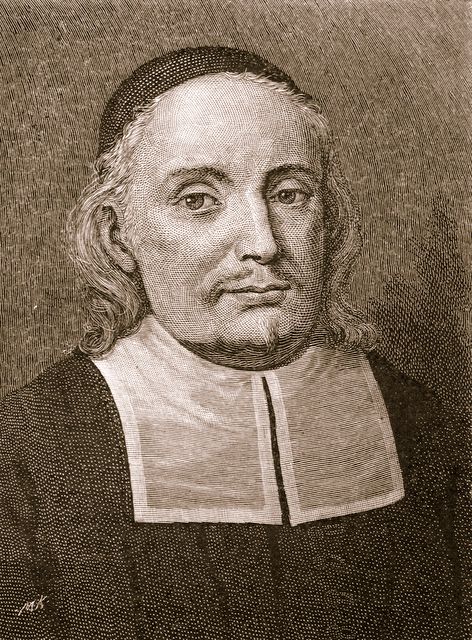
People You’ve Probably Never Heard of But Should: Bede

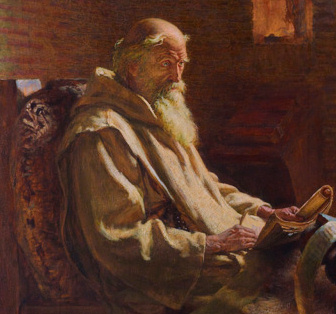
Bede (which rhymes with feed) lived his entire life in a monastery where he grew a beard which could house a flock of birds. Yet he is most known for his mind, which gave words to the history of England.

We know very little of Bede. We only know what he has recorded for us, which is not much. He was born in 672. He died in 735 while singing a hymn. He lived out most of the dash between those dates in a monastery in Jarrow (which is near modern-day Newcastle…which also doesn’t help me locate it any better).

Though the man himself is not much known his work is well preserved.

Why You Should Know Him:

Have you ever wondered why we use AD in our dates, or where this came from? Look no further than Bede. Actually, it wasn’t Bede who invented the anno domini but he did make it popular. Much like Justin Bieber didn’t invent bad music he just made it popular.

The anno domini is not why you should know Bede, though. We owe a great debt to Bede because of his Ecclesiastical History of the English People. Our information on the conversion of England would be dicey at best if it were not for this scholar, now known as The Venerable Bede. There are those that critique Bede’s work. And some of that criticism may be just. Yet his work has shaped history.

There is one other reason I believe we should know Bede; he seems to have really loved the Lord and passionately proclaimed the gospel. His commentaries are in Latin. Since the only Latin I know comes from Monty Python’s Holy Grail I couldn’t understand much. However, I was able to read a couple of sermons that were translated. One such sermon On the Meeting of Mercy and Justice is a wonderful exposition of the gospel (read an article about that sermon here).

Bede is an interesting figure in that he lived in the 700s and spoke of the world being round

Sample:

You can see his love for Christ in quotes like this:

"No words are able to speak," he wrote, "that beauty, that virtue, that glory, that magnificence, surpasses every expression, every sense of human mind. And if to attain to that ineffable sight and to be made radiant with the splendor of Christ's countenance it were worthwhile for you to suffer torment every day—if it were worthwhile for you to endure hell itself for a season, so that you might behold Christ coming in glory, and be joined to the number of the saints—is it not then well worthwhile for you to endure [mere] earthly sorrows that you may be partakers of such good and of such glory?"

This is a great quote for all students of history:

“If history records good things of good men, the thoughtful hearer is encouraged to imitate what is good: or if it records evil of wicked men, the devout, religious listener or reader is encouraged to avoid all that is sinful and perverse and to follow what he knows to be good and pleasing to God.”

Tuesday, February 19, 2013

The Most Unsettling Thing in the World

Read this:

It pleased God to cite me inwardly, judicially, in my conscience, and to present all my sins before me in such a sort, that He omitted not a circumstance, but made my conscience to see time, place, persons, as [distinctly] as in the hour I did them. He made the devil accuse me so audibly, that I heard his voice as [vividly] as ever I heard anything, not being sleeping but awaking. And so far as he spoke true, my conscience bare him record, and testified against me very clearly…my conscience condemned me and the condemnator tormented me, and made me feel the wrath of God pressing me down, as it were, to the lower hell; yea, I was so fearfully and extremely tormented, that I would have been content to have been cast into a cauldron of hot melted led, to have had my soul relieved of that insupportable weight.

How do you expect this story to conclude? Do you expect this to end in this man’s conversion?

It doesn’t. He was more than likely already a follower of Jesus at this point.

Perhaps at this point you are assuming that he is a depressed Christian that is lacking assurance. You might assume that what is about to happen in his life is what Jared Wilson has termed Gospel Wakefulness. Maybe this troubled soul will experience and apply the gospel in a way that he never has before.

You would be partially correct. Yet, what is really going on in this moment is that Robert Bruce has been running from gospel ministry. He later said, “I [murmured] long to my calling to the ministry. Ten years, at the least, I never leaped on horseback, nor lighted, but with a repyning and just accusing conscience”.

Here in a loft chamber of Airth Castle in 1581, Bruce could no longer run. Bruce bowed a knee and surrendered to God’s call upon his life. “That same night ere the day dew, or ere the sun rose, he restrained these furies and these outcries of my just accusing conscience, and enabled me to rise in the morning”.

Is it possible that some of the torments of conscience that we experience are a result of our running from the Lord’s calling upon our life? Ministry is scary. Following Christ in the hard stuff is difficult. But there is nothing more unsettling than disobedience to Christ.

---

This biographical information on Robert Bruce is from Iain Murray’s A Scottish Christian Heritage.

Tuesday, December 18, 2012

The Mystery of “God Moves in Mysterious Ways”

God moves in a mysterious way
His wonders to perform;
He plants His footsteps in the sea
And rides upon the storm.

Deep in unfathomable mines
Of never failing skill
He treasures up His bright designs
And works His sovereign will.

Ye fearful saints, fresh courage take;
The clouds ye so much dread
Are big with mercy and shall break
In blessings on your head.

Judge not the Lord by feeble sense,
But trust Him for His grace;
Behind a frowning providence
He hides a smiling face.

His purposes will ripen fast,
Unfolding every hour;
The bud may have a bitter taste,
But sweet will be the flower.

Blind unbelief is sure to err
And scan His work in vain;
God is His own interpreter,
And He will make it plain.

Those words were penned by William Cowper. There is a question, however, surrounding the circumstances that led to the poem. In the early 1900’s a story arose that Cowper had decided once again to commit suicide by drowning himself. Here is how one person tells it:

One night he de­cid­ed to com­mit su­i­cide by drown­ing him­self. He called a cab and told the driv­er to take him to the Thames Riv­er. How­ev­er, thick fog came down and pre­vent­ed them from find­ing the riv­er (ano­ther ver­sion of the story has the driv­er get­ting lost de­liber­ate­ly). After driv­ing around lost for a while, the cab­by fin­al­ly stopped and let Cow­per out. To Cowper’s sur­prise, he found him­self on his own door­step: God had sent the fog to keep him from kill­ing him­self. Even in our black­est mo­ments, God watch­es over us.

Cool story. Tullian Tchividjian picks this story up in his book Glorious Ruin when he writes, “after one of his failed suicide attempts, he wrote what has become one of my favorite hymns…” Heart-warming tale, unfortunately I can’t find historical accuracy to this story.

Many of those who share this story place the date for God Moves In Mysterious Ways (originally titled Light Shining Out of Darkness) at 1774. This is almost certainly impossible. Cowper was in such despair at this time he would have never spoke with such faith. By February of 1773 he had become convinced that God had rejected him. As one early biographer wrote, “to every consolatory suggestion he was utterly deaf, concluding that God had rejected him.”

The More Likely Story

The cab driver story is absent in all of the early biographies that I could get my hands on. The story behind the writing of God Moves in Mysterious Ways is much different. The year was 1773. Cowper had enjoyed almost a decade of respite from his earlier depression and suicidal tendencies. Then something most unwelcome happened on January 1st of 1773. A few hours after attending morning worship (where he would have heard John Newton preach), the poet was visited with what can only be termed a “terrible premonition” that he was about to return to his previous state. Before the madness set in, he put to verse a proclamation of his faith. That is what we have today entitled God Moves in Mysterious Ways.

Cowper did not recover from this fit of madness for half a decade. Some would even say that he never really recovered. This hymn was the last one of the 68 hymns that he would write with John Newton. It would later be published as part of the Olney Hymns collection.

Why the First Story?

There could be an element of truth to the first story. It is possible that Cowper had this premonition and decided that suicide would be better than enduring another bout of darkness. And it could also be possible that this hymn was a sort of repentance before he was completely enveloped in madness. But I find that unlikely knowing Cowper’s mental frame when he was prone to suicide. Such darkness would not have penned the hopeful words of this hymn.

My guess is that the cab driver story has an element of truth to it. Cowper attempted to commit suicide many times. And on many occasions he was prevented by mysterious circumstances. Yet, these should not be attached to the hymn. Yet, we like to attach these stories to the hymn because they not only make for a great story they also serve to convince us that everything will eventually make sense to us.

It is true that “even in our blackest moments God watches over us”. But the darkest times for Cowper were yet to come. Even after this particular fit of madness dissipated another was on the horizon. Before his death he said, “I feel unutterable despair”. His last words were, “What can it signify?” William Cowper died a miserable man.

The words of the hymn are true. God does move in mysterious ways. God is his own interpreter and eventually He will make it plain. But there is no sure promise that he will “make it plain” this side of redemption. For some, like Cowper, the “sweetness of the flower” is never enjoyed in this life. For him life under the sun was marked by the “bitterness of the bud”.

We don’t like this story. We don’t like that heavens response to this poem was five years (and later more) madness. We want a story where God watched out for Cowper, kept him from suicide by using fog, and then rescued him from the darkness of despair. Though Cowper never committed suicide he did live a majority of his life in darkness and deep anguish. He seldom saw the smile of God.

239 years later Cowper’s life and the poem attached to it begs us to look to a different land for the “blessings to break upon our head”. Cowper dreaded the clouds that were looming on the horizon. Yet, at the beginning of his madness he held hope that someday they would break. They rarely did. Cowper died a miserable man…BUT a miserable man that was welcomed into the arms of Jesus. Though convinced by his madness that he had been disqualified to receive the blessings of Christ, nonetheless they were still his lot. He received his “golden harp” of which he had written in his other famous hymn There is a Fountain Filled With Blood

Lord, I believe Thou hast prepared, unworthy though I be,
For me a blood bought free reward, a golden harp for me!
’Tis strung and tuned for endless years, and formed by power divine,
To sound in God the Father’s ears no other name but Thine.

Wednesday, October 10, 2012

Poem From a Dying 9 Year Old Boy

I find myself today reading the Life and Writings of Mrs. Jane Dawson of Lancaster.  I skipped across this because of my weekly time with my dear friend John Newton.  My heart is warmed by reading the account of Jane Flower (later to be Mrs. Dawson).  Her letter to her parents at the age of 11 is astonishing and one that in our times we would expect to come from the pen of perhaps a college student.  I am further blown away by the dying poem of her little brother George. 

At 9 and a half years old a dying George quipped these words to his mother:

Christ is my portion and my all,

I need not fear, I shall not fall;

Nor need I fear what all the world can do,

Since Christ can fight and make---subdue. 

He’s not repeating a song, mind you.  He made that up moments before his death.  “Even your young men shall see visions…”  It’s amazing to see the work of the Spirit in the 1700’s Comforting and Guiding these little children.  This is encouraging me to pray for an outpouring of God’s favor and grace upon my children that they might see the beauty of Christ and live solely for His glory.

Thursday, October 4, 2012

10 Reasons Why The YRR Crowd Digs the Puritans

Last week Anthony Bradley asked a really great question on Twitter, “Why do the YRR like the Puritans so much”.  (It was something similar to that).  I offered a quick answer that it’s because we love the gospel and the Puritans are gospel-rich.  That was probably too simplistic of an answer but sometimes it’s hard to really not be on Twitter. 

Today I hope to expand on that answer.  Rather than just straight up list 10 reasons why the YRR (Young Restless and Reformed) crowd loves the Puritans I want to make a sort of progressive list. 

Why do the YRR love the Puritans?

Or how did we start loving the Puritans?

1. Because Mark Dever does.

What I mean by that is that within YRR circles there are several leaders (see T4G) that we really admire.  Though often it brings the accusation of hero worship, I think for the most part it’s that God is really moving in our generation and they feed us Jesus.  So we look up to them because they bless us in Christ.  So, it’s only natural then that we start reading the things that they suggest we read.  Couple this with the fact that one of Dever’s aims is to get solid books into peoples hands (and often for free at conferences and such) and you see how we started liking the Puritans.

2. Because J.I. Packer and others did

If Dever and the T4G crowd don’t introduce you directly to the Puritans you’ll eventually get introduced to them by J.I. Packer and Martin Lloyd-Jones.  Puritan-love has been going on pretty strong since the 1950’s.  If you are young, restless, reformed and love to read you’ll either get introduced through the Puritans by the T4G crowd or MLJ (and probably both).  When all these dear men of God are rockin’ out to the Puritans why shouldn’t you.

3. Banner of Truth

When you have a publishing company churning out books from the Puritans for under 10 bucks and you’ve got guys like Timmy Brister doing a Puritan Reading Challenge then it’s only inevitable that we’ll start reading the Puritans. 

But why do you love them so much when you do read them?

4. We Aren’t Turned Off By Their Reformed Theology

Though a good chunk of the YRR crowd are Baptists and don’t agree with their infant baptism and aspects of their Covenant theology we aren’t turned off by the Calvinism of their Reformed Theology.  That means that we don’t stumble over that and have a bad taste in our mouth from their unashamed Calvinism.  So we are left to enjoy…

5. Their gospel-centrality

This goes back to my original answer.  The Puritans are gospel rich.  Seriously, if you embrace Reformed theology then you will not trip over their expositions of the gospel.  You’ll revel in them.  You’ll rejoice as John Bunyan reflects on the gospel promises and as he waxes on about the excellencies of Christ.  These dudes had a way of bringing everything back to Jesus. 

6. Their big view of God

The YRR crowd has a very big view of God.  Hopefully, nobody sees that as a bad thing.  So did the Puritans.  We have a shared vision of God.  Piper is just an Edwardsean Puritan with a microphone.  If you love Piper you’ll love the Puritans—so long as you are okay with the labor of reading them.

7. Their practical theology

Though often presented as pie-in-the-sky theologians arguing about angels dancing on the heads of pins and what exactly constitutes a witch, the Puritans were immensely practical.  Occasionally as we reflect on the bigness of God we are left wondering how to put into practice the theology that we are growing to embrace.  The Puritans helps with that and we love it. 

Sure, but there are other groups of people that have a big view of God, love the gospel, and will give you practical theology.  So is it just their Reformed theology or is there something else?  Some cultural similarity perhaps?

8. They were underdogs like us

This may only apply to the Baptist brand of the YRR crowd but we are underdogs.  The majority of people in the SBC (and other Baptist groups) are not Calvinists.  They aren’t necessarily militant non-Calvinists but they aren’t Calvinists either.  We are underdogs.  So were the Puritans.  We share an affinity with them.

9. They were a reform movement like us

The Puritans were passionate about reforming stale and stagnating church.  We live in an era much like the Puritans that might claim to be Protestant but we are filled with stale and stagnant churches too.  When the Puritans preach passionately about this it stirs us, exhorts us, and comforts us.  As they preach to awaken “sleeping and stupid sinners” they spur us on to do the same with a bold confidence that God can raise up these dry bones.

10. They were physicians of the soul in a hurting culture

They ministered in an era with such maladies as the plague.  They ministered to suffering people.  So do we.  The Puritans were some of the first people to talk about depression (fits of melancholy).  As we minister to hurting people the Puritans are a gold-mine to applying gospel-rich and God-centered theology to the lives of broken and hurting saints. 

But if I’m being honest it’s really…

They had cool hats and awesome beards.

Wednesday, September 5, 2012

God’s Happy Little Trees

I love watching Bob Ross paint his happy little trees.  However, on occasion Bob will do something that really bothers me emotionally.  What almost killed me was that Ross would paint a very intricate and beautiful mountain, or a bunch of happy little trees on a mountain ridge and then…I’m getting all worked up remember it…he would practically destroy the thing by putting a big fat tree that covers almost everything he just painted. 
For a solid 10 minutes I’d sit there shocked and quivering and not able to enjoy my Fruit Loops while I watched this afro-wearin’ painter make something beautiful and then taunt me by destroying it.  Then slowly…ever so slowly…I started seeing what he had already created in his mind 15 minutes ago.  Suddenly what seemed like a disaster turned into a masterpiece. 

Bob, you beautiful genius, you did it again!

I think the Lord paints the same way as Bob Ross.  You get the idea from Ephesians (2:10, 3:7-13) that God is painting this beautiful masterpiece of redemption.  He is displaying on the canvas of history a bunch of happy little trees that resound to his glory.  At times it is absolutely beautiful and looks almost complete. 

But then…

He does the unthinkable.  He covers up those happy little trees with that squirrel-infested log it looks a bit unbecoming.  We were comfortable with the happy little trees of buzz words like “gospel-centrality”.  We thought the picture was nearing completion and filled to the brink with beauty.  Then the Master decided to draw a big fat tree of emphasizing holiness right in the middle of it. 

We did not know it but the canvas was not complete.  It was missing something.  And so He continues painting.  Sometimes, in our view spoiling things that seemed quite beautiful only to emphasize something that at first looks detestable. 

But He keeps painting.

With his Paul’s, his Augustine’s, his Monica’s, his Benedictine monks, his his Luther’s, Edwards’, Newton’s, Moody’s, Graham, Pipers.  And covering them with his praying widow, his baking grannies, his humble maintenance men, and his weary pastors.  Some shine more than others but all are essential.  They each emphasize something different that would be an incomplete canvas without their presence. 

History moves back and forth with each stroke.  And often making a watching and waiting church quite uncomfortable.  Yet, he keeps painting. 

And when the Lord gets done with his painting, all of creation will sit back and say, Lord, you beautiful genius, you did it again!

--

If you aren’t familiar with Bob Ross here he is remixed:

Saturday, June 9, 2012

One Way to Hide a Bible

I read this today in Benjamin Franklin’s autobiography:

This obscure family of ours was early in the Reformation, and continued Protestants through the resign of Queen Mary, when they were sometimes in danger of trouble on account of their zeal against popery. They had got an English Bible, and to conceal and secure it, it was fastened open with tapes under and within the cover of a joint-stool. When my great-great-grandfather read it to his family, he turned up the joint-stool upon his knees, turning over the leaves then under the tapes. One of the children stood at the door to give notice if he saw the apparitor coming, who was an officer of the spiritual court. In that case the stool was turned down again upon its feet, when the Bible remained concealed under it as before.

I can’t help but wonder what would happen if people in our little community were told that they couldn’t read their Bibles.  Would it increase our Bible reading? 

Wednesday, May 9, 2012

People You Have Probably Never Heard Of But Should: Paul Gerhardt

Paul Gerhardt was born in 1607 in Germany.  He enrolled in the University of Wittenberg in 1628 and graduated in 1642.  Though his schooling was to make him a pastor he was not immediately placed into a pastorate.  The Thirty Years War caused a great amount of tumult and difficulty during this time.  Finally in 1651 he was appointed as the new Probst at Mittenwalde.  (Ask me where Mittenwalde is, and I’ll point you to Wikipedia).  Here he was married and had children.  He also began writing hymns. 

In 1657 he and his family moved to Berlin.  Here in Berlin there was a heated debate between the Reformed church and the Lutheran church.  Gerhardt himself was Lutheran and a model voice in the debates of his time.  Though during his life he was probably most remembered as a pastor and for his work in these counsels to try to bring unity, it is his hymn writing that has struck a chord with me.

Why You Should Know Him:

Very little is left of Gerhardt’s sermons and we know next to nothing of his posterity.  Yet, the Lord has seen fit to preserve many hymns of Gerhardt.  I am sure that if given the time and the research there would be a few things that I would disagree with Gerhardt on.  (His somewhat sissy looking mustache is one of them).  But these hymns are rich.  They bear the mark of “A theologian experienced in the sieve of Satan”. 

Gerhardt’s hymns show a man that is well acquainted with sorrow and yet a man that has drawn from the deep well of Jesus.  He is at times broken and confused but ever trusting in the redemption to be brought to him.  His trust in Christ makes Gerhardt somebody worthy of reading. 

Sample:

A couple of days ago I posted Give to the Winds Thy Fears.  (That song has been remade by Jars of Clay and is available for your viewing at the end of this post. 

Here are a few stanzas from various poems that I found refreshing:

From Say With What Salutations?

From Why Without, Then, Art Thou Staying?

From Christian Devotion to God’s Will:

Further Reading:

There is a compilation of many of his hymns available for free at Google
Also available is a lengthy biography on Gerhardt and his influential hymn writing.
There have been a few more biographies written on Gerhardt, but the two free links above will suffice for a helpful introduction to Gerhardt. 

This is from Jars of Clay:

Friday, May 4, 2012

Review of Reformation: Yesterday, Today and Tomorrow by Carl Trueman

C.S. Lewis once advised against chronological snubbery by encouraging us to read older books along with the new:

"There is a strange idea abroad that in every subject the ancient books should be read only by the professionals, and that the amateur should content himself with the modern books.... Now this seems topsy-turvy. Naturally, since I myself am a writer, I do not wish the ordinary reader to read no modern books. But if he must read only the new or only the old, I would advise him to read the old.... A new book is still on its trial and the amateur is not in a position to judge it. It has to be tested against the great body of Christian thought down the ages, and all its hidden implications (often unsuspected by the author himself) have to be brought to light.... It is a good rule, after reading a new book, never to allow yourself another new one till you have read an old one in between.... The only palliative is to keep the clean sea breeze of the centuries blowing through our minds, and this can be done only by reading old books."

There is as Lewis noted a type of “uncritical acceptance of the intellectual climate common to our own age and the assumption that whatever has gone out of date is on that account discredited” in our day.  It may be less than in Lewis’ time—thanks in part to his wise words here.  Yet still there are many students and even elderly folks within our churches that think Martin Luther is the guy who gave the “I have a dream” speech.  Or perhaps he is that guys lesser known daddy. 

Many still in our day wonder, “what can we learn from guys that wore weird hair cuts and scratchy robes?” 

In July of 2000, Carl Trueman gave a group of lectures on the contemporary relevance of some aspects of Reformation theology.  He was attempting to answer the question of what we can learn from these guys with weird hair cuts and scratchy robes.  That group of lectures was made into a short book which sadly fell out of print.  Thankfully in 2011 Christian Focus decided to put Trueman’s thoughts back into print in the form of Reformation: Yesterday, Today and Tomorrow

Summary:

In this short book (127 pages) after defending the relevance of the reformation, Carl Trueman looks at the necessity of a theology of the cross, an emphasis upon Scripture, and a healthy doctrine of assurance.  Trueman believes that “the Reformation represents a move to place God as he has revealed himself in Christ at the center of the church’s life and thought” (17).  It is only natural then for Trueman to emphasize the cross and the Scriptures.  It may seem odd, however, that with everything one could draw from the Reformation that the author would focus on assurance.  Yet it is here, in our doctrine of assurance that we find the difference between the Reformation and Catholicism. 

In each chapter Trueman explains the “yesterday” the Reformation, he applies it to the churches “today”, and also sets a course for the church of “tomorrow”.  To see how Trueman weaves these thoughts together consider his explanation of how assurance and lamentation fit together

My Take:

I have always enjoyed the writings of Carl Trueman.  At times you have to pause and really think about the point that he is making, but he never fails to be profound and to make helpful points.  Even when I disagree with Trueman (which is rare) he communicates in such a way that the reader is left to clearly understand his position.  He is an engaging writer and one that clearly loves to display the excellencies of Christ and the sufficiency of God and His Word.  His helpful writing is on full display in this short book.

As in his other writings Trueman will make you think and to question certain deeply held beliefs.  Going through this study caused me to ask whether or not I am truly living according to these Reformation principles.  Of course, and Trueman would be the first to admit this, the goal is to live according to biblical principles.  So it may be better to ask whether or not we are living according to the biblical principles that found a renewed emphasis in the Reformation.  Not only am I living out these principles but are we living out these principles as we gather together? 

Reading through this book I was challenged and encouraged throughout.  It will cause church leaders to ask questions of their ministries and it will cause every believer to consider the man of sorrows.  I was also encouraged (as well as challenged) by Trueman’s treatment of assurance.  As he did throughout, the author did a tremendous job of showing the central issue and making it relevant for today. 

Should You Buy It?

If you like to study the Reformation and church history then spending 8 bucks on this little book will be a purchase that you want to make.  This book would also be very helpful for church leaders as well—the way Trueman applies these Reformation principles will cause us to at least ask whether we are being biblical in the way we live out the Christian life in these areas. 

Chances are if you clicked on the link for the book review and you have made it this far then you are the type of person that would greatly enjoy and benefit from this book.  So just do it, manGo buy the bookIt’s only 8 bucks

Wednesday, May 2, 2012

People You’ve Probably Never Heard of But Should: Charles Bridges

Charles Bridges was born in 1794 to some guy with the last name Bridges and to a woman that he called mother.  He grew up to be an Anglican preacher, as well as a gifted writer and theologian.  He was ordained in 1817 and served the church of Old Newton, Suffolk from 1823 until 1849.  He then served churches in Dorset until he died in 1869. 

He was married to a woman named Harriet.  With her he had two sons (maybe more) and one of them became a physician. 

That’s all I’ve got.  I entangled myself in the world wide webs searching for all things Charles Bridges’ only to come up with these scant biographical blips.  Nearest that I can tell a guy named Ronald wrote a biography on him in 2004.  How he did this from one Wikipedia article is beyond me. 

Why You Should Know Him:

Charles Bridges has written two amazing works that greatly benefit the church.  His commentary on Proverbs was “worth its weight in gold” according to Spurgeon.  If you are curious it probably weighs about 2 pounds.  It is also available for free on the internets.  I have a hard copy of the book and my series on Proverbs for Christian Blogging is deeply indebted to Bridges’ work. 

The other amazing work (and I have to confess I know this second hand) is his book The Christian Ministry.  This is a book that I have had on my list for quite some time but because every edition that I could find of the book was apparently worth its weight in gold ($28.00 the cheapest I could find), I have yet to buy it and read it.  Thankfully the ninjas at Google have made the book available for free as well.  Yours truly is going to start reading through this one very soon. 

Bridges also wrote an Exposition of Psalm 119, a Memoir of Mary Jane Graham, a Manual for the Young, an Exposition of Ecclessiastes, Forty-Eight Scriptural Studies, and we also have some of his Correspondence.  Most of these can be found for free at Google and are well worth your time of at least browsing. 

Sample:

From his work on The Christian Ministry Bridges writes:

“It is faith that enlivens our work with perpetual cheerfulness. It commits every part of it to God, in the hope, that even mistakes shall be overruled for His glory; and thus relieves us from an oppressive anxiety, often attendant upon a deep sense of our responsibility.

The shortest way to peace will be found in casting ourselves upon God for daily pardon of deficiencies and supplies of grace, without looking too eagerly for present fruit. Hence our course of effort is unvarying, but more tranquil. It is peace—not slumber, rest in the work—not from it.

What I have read so far of Bridges in Proverbs and in the little I have read from The Christian Ministry is deeply encouraging, dripping with wisdom, and saturated with the savor of Christ. 

Further Reading:

These links are available from Bridges’ Wikipedia article

Wednesday, April 18, 2012

People You’ve Probably Never Heard Of But Should: Ichabod Spencer

With a name like Ichabod he has to be great.  Spencer was born in 1798 in Rupert, VT.  He was converted shortly after his 18th birthday.  He actually began his career as an educator.  In 1830 he was called to be the President of the University of Alabama.  He, however, felt that the Lord had called him to preach.  He served as a colleague-pastor of the Congregational Church in Northampton, MA.  If that sounds familiar it is because this is the same church that Jonathan Edwards served. 

In 1832 Spencer accepted a call to a church plant in Brooklyn: The Second Presbyterian Church of Brooklyn.  At the time they called Spencer they had 40 congregants.  At the time of his death 22 years later—and still their pastor—they had grown to be one of the largest in Brooklyn.  Spencer died in 1854. 

Why You Should Know Him:

Anyone named Ichabod that rocks suck wildly awesome side-burns is worth getting to know.  Apart from this, however, Spencer is known to us mainly through his two volume Pastor’s Sketches.  His Pastors Sketches is a compilation of 77 stories (from over 20,000) that he carefully recorded after visiting with members of his church and community.  Spencer had been convicted that it was his duty to visit the home of every member of his church every year.  He did this for the 22 years that he pastored the church of Brooklyn.  (A daunting task when they had 40 members—even more when they grew to one of the largest churches in Brooklyn). 

A rough estimate is that he visited over 800 people per year for 25 years of labor.  What is even more remarkable still is that he wrote out in detail every one of these visits.  He never intended to release these to the public but many faithful friends encouraged him to release them for the good of the Church.  After the release of these Sketches, Spencer’s fame grew.  He then received numerous letters—each he answered with his noted pastoral care. 

Not only his Sketches (which are available) but his model is one that should cause every pastor and every lay person pause.  He had given himself completely to the Lord’s work and gained much fruit.  His life is an encouragement for believers to be serious about our call as ministers of reconciliation (that is EVERY believers call). 

Sample:

This is a small section from The Brown Jug

“You are already somewhat advanced in life. Your remaining years will be few. You have no time to lose. You have lost enough already. If you do not become a follower of Christ soon, you never will. You have a family of children. You have never set them an example of piety. You have never prayed with them as you ought to have done. Your neglect goes far to destroy all the influence which their mother might have over them. They copy your example. God will hold you accountable for a father’s influence. You may be the cause of their ruin, because—”

“That often troubles me,” said he, (interrupting me in the middle of what I designed to say.)

“It ought to trouble you. It is a serious matter, for a father to live before his sons without acknowledging God, without prayer, without hope, just as if he and they had no more interest in the matter of religion than the beast, whose ‘spirit goeth downward to the earth.’”

“Yes, indeed it is,” said he. “And I am now getting to be an old man, I wish I could get religion.”

“You can. The whole way is clear. God’s word has made it so.”

“I will begin,” said he, emphatically. “But I wish you would make a prayer with us. I will call in Mrs. E— and the boys.”

He immediately called them.

After my saying a few words to each of them, and briefly addressing them all, we knelt together in prayer. As we rose from our knees, he said to his children, very solemnly:—“Boys, I hope this visit of our minister will do us all good. It is time for us to think of our souls.” I left them.

Read the rest…

The above sample shows how Spencer would often plead with sinners.  This would be another one of those dear saints that would help an angry and divisive Calvinist.  Honestly, the Lord will probably use Spencer’s ministry to encourage every believer—no matter his/her soteriological convictions—to be about the work of the ministry of reconciliation. 

Further Reading:

A Pastor’s Sketches: Volume 1 and 2
Much of the biographical information I found and adapted from here
“I Can’t Repent” is one of Spencer’s Sketches
Most of his published Sketches are available here.

Wednesday, March 28, 2012

People You’ve Maybe Never Heard Of But Should: Bernard of Clairvaux

Bernard was born in 1090 and died in 1153.  He was a French abbot who sought admission into the Cistercian order to be a monk shortly after the death of his mother.  He goes down in history as the “most powerful propagator of the Cistercian reform” not only of his day but probably of all time.  In 1115 he was sent to begin a new monastery in Clairvaux (hence the name).  Bernard was very instrumental in the Catholic development of Mary’s mediatorial role.  He was often sick throughout his life eventually succumbing to death in 1153.

Why You Should Know Him:

Bernard is one of those interesting writers for evangelical Protestants to enjoy.  His views on Mary’s mediatorial role obviously leave us shaking our heads and tempt us to confine him to the ranks of those that simply do not understand the gospel.  But then there is another side to Bernard where Protestants enjoy not only his spiritual and personable writing but also we rejoice at his conception of justification.  It sounds very close to that which Calvin and Luther would teach years later.  Bernard was passionate about imputed righteousness. 

Hundreds of years after the Protestant Reformation we are left confused at how someone could be so instrumental in formulating much of the Mariology present in the Roman Catholic Church today and ALSO someone that Calvin and Luther are able to look for in formulating a doctrine of imputed/alien righteousness. 

It is also quite possible that we owe some of the Reformation to Bernard’s monastic reforms.  In a time when the importance of Scripture reading, meditation, and prayer was drying up Bernard insisted on these—aided by the Spirit--as keys to Christian living. 

Samples:

Ever heard the phrase, “The road to hell is paved with good intentions?”  Many believe that this pithy saying is to be originally attributed to Bernard. 

Here is an example of the devotional and heart searching way that Bernard wrote:

“There are those who seek knowledge for the sake of knowledge; that is Curiosity. There are those who seek knowledge to be known by others; that is Vanity. There are those who seek knowledge in order to serve; that is Love.”

Tell me this doesn’t sound like something you would hear from evangelicals in our day?

“What we love we shall grow to resemble.”

“So far from being able to answer for my sins, I cannot even answer for my righteousness!”

"Your sins are very great and beyond number. Never will you be able to make satisfaction for them, so many and so great are they, not even if you strip the very skin from your body.”

Further Reading:

I have no idea if you can find it anywhere—I’ll let you search—but I believe Danny Akin actually did his doctoral work on Bernard of Clairvaux.

Good quotes here from Just and Sinner

Biographies:

The Life and Miracles of St. Bernard of Clairvaux
Project Gutenberg
You’ll find quite a bit on Google Books

Wednesday, March 21, 2012

People You’ve Maybe Never Heard of But Should: Jeremiah Burroughs

Jeremiah Burroughs was born sometime around 1600.  He went to college at Emmanuel College in Cambridge in 1617 finally graduating with a Master of Arts in 1624.  His tutor was another famous Puritan--Thomas Hooker

He began his ministerial “career” as an assistant to Edmund Calamy in Suffolk.  Here he and Calamy vehemently opposed King James’ Book of Sports, refusing to read “the king’s proclamation in church that dancing, archery, vaulting, and other games were lawful recreations on the Lord’s Day.”  Eventually he moved to Norfolk where he served as pastor until 1636 when he was suspended for refusing to read the Book of Sports, bow at the name of Jesus, and read prayers rather than speak them extemporaneously. 

From 1638-1640 the ejected Burroughs ministered in the Netherlands with other Congregationalist pastors.  By 1640 he returned to London and became a very popular preacher.  He pastored two of the largest congregations in London: Stepney and St. Giles, Cripplegate.  Burroughs remained in London until his death in 1646.  He died two weeks after a fall from his horse. 

Why You Should Know Him:

He’s a Puritan with a stately mustache an awesome hat and what appears to be double-jointed fingers, what more do you need to know to be inspired to read him? 

Not only did Burroughs pave the way for great mustaches but he was also had a great influence on the Westminster Assembly.  He was one of the few Independents that opposed the Presbyterian majority.  Yet he did so with his typical moderate and irenic spirit.  Those of us churches that come from an Independent strain of Puritanism owe a great deal to the work of men like Jeremiah Burroughs who paved the way for a middle-ground between Presbyterianism and the more chaotic Brownism. 

Though Burroughs is worth studying for his historical value and influence on Westminster the greatest reason to get to know Jeremiah Burroughs is his prolific writing career.  (Actually his books are really nothing more than a compilation of his sermons).  One of Burroughs’ works that has had a great influence on me personally—and many other believers—is his Rare Jewel of Christian Contentment

Burroughs’ writing contains within it an engaging Christian spirit and a steadfast dedication to the gospel.  He writes like many of the Puritans of his time, in that he will tear open up your soul with the Law and then apply the gospel for healing. 

Sample:

As far as God sees Christ in anyone He accepts them. If Christ is not there, no matter what they have, He does not regard them. Christ is all in all, even in the esteem of the Father Himself. He was the delight of the Father from all eternity, Prov.8:30, and the Father undertook infinite contentment in Him upon His willingness to undertake this blessed work of the redemption of mankind. God the Father is infinitely satisfied in Christ. He is all in all to Him. Surely if Christ is an object sufficient for the satisfaction of the Father, much more, then, is He an object sufficient for the satisfaction of any soul.

I will give you just this note: if it were your last time to pray to God and your everlasting estate depended on God's mercy, should you seek God never so earnestly, if it is only in a natural way as your Creator, your condition would be very dreadful and you would perish eternally. If God should lay any of you upon your sick or death beds and you should cry to God for mercy, be sure to take Christ along with you and look upon God through Christ, or else all your cries will be of no avail. Luther said that God looked upon outside of Christ is most dreadful and terrible. And it proves a great deal of ignorance in us when we think we can go to God and find mercy in Him without considering Him as a God that will be reconciled to us only through His Son.

Both selections are from Christ is All in All an excellent piece worthy of your reading.

Further Reading:

Joel Beeke’s Biography from Meet the Puritans is helpful and also includes a listing of his Modern Reprints available for purchase.  (NOTE: I’m indebted to Beek’s biography for much of the material above). 

The full text of The Rare Jewel of Christian Contentment is available for free here

You can find almost anything you want to know at the Jeremiah Burroughs Homepage.  Phil Simpson has also written a biography that I may try to check out at some point.  You can buy that biography here.

I’ve also quoted and written a few things from Burroughs on my own site—a search on Borrowed Light will yield you some fruit.

Wednesday, March 14, 2012

People You’ve Maybe Never Heard of But Should: Anne Bradstreet

Anne Bradstreet was born in 1612 of nonconformist stock.  Her father, Thomas Dudley, was a solider that had managed the affairs of the Earl of Lincoln.  Due to her families position Anne was a well-educated woman.  At the age of sixteen she married Simon Bradstreet.  Her husband (as well as her father) served as a governor of the Massachusetts Bay Colony.  Anne and her husband, along with Anne’s family, sailed for America in 1630 as a Puritan emigrants.  The Bradstreet and Dudley family were instrumental in founding Harvard.

Anne gave birth to eight children.  Throughout her life she would taken her family (often while pregnant) and move all around New England with her husband.  She died at the age of 60 in 1672. 

Why You Should Know Her:

Anne Bradstreet is actually New England’s first published poet.  In 1647 her brother-in-law, John Woodbridge, sailed to England carrying with him a manuscript of her poetry.  There is some discussion as to whether Anne knew it was to be published or not.  More than likely she had intentions of publication but had to carry a hint of surprise at its publication because during this time period women authoring books was quite controversial. 

Bradstreet was a friend of Anne Hutchinson but was less “liberal” in her views.  Using contemporary terms Bradstreet saw herself as a complementarian but was very much an early feminist.  Many believe that those around Bradstreet also believed that a godly and educated woman such as Anne could do such things as write and that would not necessarily contradict her other roles as a wife and a mother.  Few held this view at the time and Bradstreet faced much opposition during her life. 

Bradstreet’s poems are endearing and reflect much about the life of a Puritan woman.  They were probably not originally intended for publication so they almost serve as a diary and an autobiography of the life of a godly and intellectual Puritan wife and mother. 

Samples:

One of Bradstreet’s poems was written before the birth of one of her children.  In it one can see that those living in New England lived with constant reminders of their own mortality.  Here we see both the joys and fears of a new mother.  Even upon the joy of a child this pervasive death and toil is evident in her writing:

All things within this fading world hath end,
Adversity doth still our joys attend;
No ties so strong, no friends so dear and sweet,
But with death's parting blow is sure to meet.
The sentence past is most irrevocable,
A common thing, yet oh, inevitable.
How soon, my Dear, death may my steps attend.
How soon't may be thy lot to lose thy friend,
We both are ignorant, yet love bids me
These farewell lines to recommend to thee,
That when that knot's untied that made us one,
I may seem thine, who in effect am none.
And if I see not half my days that's due,
What nature would, God grant to yours and you;
The many faults that well you know
I have Let be interred in my oblivious grave;
If any worth or virtue were in me,
Let that live freshly in thy memory
And when thou feel'st no grief, as I no harms,
Yet love thy dead, who long lay in thine arms.
And when thy loss shall be repaid with gains
Look to my little babes, my dear remains.
And if thou love thyself, or loved'st me,
These O protect from step-dame's injury.
And if chance to thine eyes shall bring this verse,
With some sad sighs honour my absent hearse;
And kiss this paper for thy love's dear sake,
Who with salt tears this last farewell did take.

Further Reading:

Several of Bradstreet’s poems can be found here.
You can find a good amount of information on Bradstreet here.
Some may be interested in her interesting genealogical record.  (President Calvin Coolidge is a descendant of Bradstreet).
Also check out AnneBradstreet.com

Wednesday, March 7, 2012

People You’ve Maybe Never Heard Of But Should: Charles Simeon

Charles Simeon was born in 1759 in Reading, Berkshire.  He attended Eton College and Cambridge.  While at Cambridge he came to know the Lord.  John Piper helps us to see the miracle of this when he says, “He had no mother to nurture him.  His father was an unbeliever.  His boarding school was a godless and corrupt place.  And his university was destitute, as far as he knew, of other evangelical believers.”
After his conversion he soon became the pastor at Trinity Church in Cambridge.  Here he remained for the next 54 years until his death.  We have much to learn from a pastor that has such staying power as Charles Simeon. 

Why You Should Know Him:

Simeon was vital in the modern missions movement.  He used his influence through his position at the university to not only fill many pulpits throughout England with evangelicals but also to send missionaries to the East.  Many of those that would pioneer missions movement go back to Simeon as a mentor.  His branches extend far throughout the world. 

Simeon was also a wonderful preacher.  Simeon said that the three great aims of all his preaching where, “To humble the sinner, to exalt the Savior, and to promote holiness”.  For 54 years that is precisely what Charles Simeon did.  And he did it, especially in his early years against the backdrop of much persecution. 

The newly minted preacher was not wanted by his parishioners.  They wanted another guy.  So they revolted.  It wasn’t until 1794 that the congregation allowed their own pastor, Simeon, to give the Sunday afternoon lecture.  When Simeon tried to start a Sunday evening service the churchwardens locked the door.  They also had a habit of locking the pew doors on Sunday morning and then going home.  Those that wanted to hear Simeon would have to do so while standing.  When Simeon decided to provide seats in the empty spaces (at this own expense) the churchwardens threw them into the churchyard. 

All of this is not to mention the cold reception that he would receive when visiting peoples houses.  On top of this he was despised as he taught at Cambridge University.  All of this lasted for at least ten years.  Finally, through patient plodding and preaching the Word the community gradually began to accept Simeon. 

Charles Simeon’s faithful endurance under very difficult circumstances is a model to all of us.  Many pastors—(perhaps even including myself)—would not have been strong enough to have endured such attacks.  But Simeon kept pressing on and left a lasting gospel legacy. 

Samples:

One particular thing that is endearing about Simeon is his response to controversy and his refusal to needlessly engage in it.  I love his word to a pastor encouraging Simeon to engage in controversy:

I know you will forgive me if I say that the very account you give of yourself in relation to controversy is a dissuasive from embarking in it.  Let a man once engage in it, and it is surprising how the love of it will grow upon him; and he will find both a hare in every bush, and will follow it with something of a huntsman’s feelings.

Simeon was also very passionate about experiencing and enjoying grace and not merely defending it:

By this then, my brethren, you may judge whether you are Christians in deed and in truth, or whether you are only such in name…For a nominal Christian is content with proving the way of salvation by a crucified Redeemer.  But the true Christian loves it, delights in it, glories in it, and shudders at the very thought of glorying in anything else. 

There is much more gospel centered and humble preaching that flows from the works of Charles Simeon. 

Further Reading:

John Piper’s Biography on Simeon is one thing that I used in putting together this article.  It’s very helpful. 

There is much on Google Books by Simeon and about Simeon.

Also check out the Simeon Trust.

Wednesday, February 29, 2012

People You’ve Maybe Never Heard Of But Should: Isaac Watts

Isaac Watts was born in July of 1674 in Southampton, England.  His father, Isaac, was imprisoned at the time of his birth for his being a deacon of a dissenting church.  Because of their non-conformity Watts was never able to attend the prolific Oxford or Cambridge but instead attended the Dissenting Academy of Stoke Newington.

After his education Watts took up a pastorate of a large independent chapel in London.  John Owen had previously ministered in the church Watts now pastored.  During this season of his life his intense study and dedication to the pastorate led him to have frequent attacks of illness.  Within his first couple years Watts had to have a co-pastor (Samuel Price) assist him in his duties.  Though often ill—and often having misgivings about taking a salary—Isaac Watts’ congregation refused to break their connection. 

Watts finally succumbed to illness in 1748 dying in Stoke Newington at the house of the beloved Sir Thomas Abney family.

Why You Should Know Him:

Even if you do not know Watts you have more than likely read some of his hymns.  He was one of the most popular writers of his day for his hymns.  But he also was very popular for his catechism and his Scripture History—these were standard works for years.  Even his books on philosophy were often used as textbooks.  Watts, however, is most known today for his hymn writing. 

Watts broke the mold of the day by introducing new poetry and new songs and hymns of spiritual worship.  Previously churches would only sing hymns or other poetry found in the Scriptures.  Watts’ use of extra-biblical poetry opened up the door for the hymns and songs we now sing in our churches. 

Some of Watts’ more famous hymns include:

When I Survey the Wondrous Cross
Alas! And Did My Savior Bleed
Joy to the world
This is the Day the Lord Has Made

These are only four of over 500 hymns that Watts composed.  You can read all of these hymns here.  Watts’ poetry and hymn writing is very rich, God-centered, drenched in the gospel, and Christ-focused.  It is worth noting that John Newton was very much influenced by the hymns of Watts.  His mother would sing them to a young Newton and many believe that these seeds of truth were instrumental in Newton’s later conversion.  Certainly, it influenced Newton’s own hymn writing. 

Samples:

I gave you this last week but it fits here as well.  This is classic Watts:

Hast thou not seen, impatient boy!
Hast thou not read the solemn truth,
That gray experience writes for giddy youth
On every mortal joy?

Pleasure must be dash’d with pain:
And yet with heedless haste,
The thirsty boy repeats the taste,
Nor hearkens to despair, but tries the bowl again.
The rills of pleasure never run sincere,
    (Earth has no unpolluted spring)
From the curs’d soil some dangerous taint they bear;
So roses grow on thorns, and honey wears a sting

In vain we seek a Heaven below the sky;
The world has false, but flattering, charms;
Its distant joys show big in our esteem,
But lessen still as they draw near the eye;
    In our embrace the visions die,
    And when we grasp the airy forms
         We lose the pleasing dream.

Earth with her scenes of gay delight,
Is but a landscape rudely drawn,
With glaring colors, and false light;
Distance commends it to the sight,
    For fools gaze upon;
But bring the nauseous daubing night
Course and confus’d the hideous figures lie,
Dissolve the pleasure, and offend the eye.

Look up, my soul, pant toward th’ eternal hills;
    Those Heavens are fairer than they seem;
There pleasures all sincere glide on in crystal rills,
    There not a dreg of guilt defiles,
         Nor grief disturbs the stream.
     That Cannan knows no noxious thing,
     No cursed soil, no tainted spring,
Nor roses grow on throns, nor honey wears a sting.
(Isaac Watts, Earth and Heaven)

Further Study:

Psalms and Hymns of Isaac Watts

Isaac Watts’ biography

A search for Isaac Watts on Google Books will give you a few very helpful books for free.  Some by Watts and a few biographies from others.

Watts was more than just a hymn writer he was also a physician of the soul.  Check out his counsel to those going through spiritual ups and downs

Wednesday, February 22, 2012

People You’ve Maybe Never Heard Of But Should: Alexander Whyte

whyte-alexander Alexander Whyte was born in January of 1836 in a small town in Scotland.  He was raised by his mother—as his father abandoned he and his mother when he was still a baby.  Growing up to a single mother Whyte did not have the finances to afford an education.  This did not stop him as he taught himself to read. 

Fortunately for Alexander his abilities were discovered and a kind minister taught him Latin and Greek so he could attend university.  He eventually was educated at Aberdeen University and the Free Church College in Edinburgh, but not before having to seek out his biological father.  Young Alexander had to ask his father—now a wealthy businessman—for the resources to attend university. 

Alexander Whyte died quietly in his sleep at the age of 85. 

Why You Should Know Him:

Though Whyte looks like he played a scary butler from a 1960’s Hitchcock film his value to the church is far greater than a supporting role in a horror flick.  Within his eighty-five years Whyte pastored the largest church in Scotland and was also a college president.  He was known as a tremendous orator with vivid illustrations that were saturated with gospel truths.  Whyte was also responsible for introducing D.L. Moody and Ira Sankey to the people of Scotland.  Whyte also wrote many books and biographies. 

What originally drew me to Andrew Whyte were quotes from his preaching and sections from his biographies.  He proved to be a faithful biographer of many God-besotted men.  He was also a tremendous preacher himself. 

Samples:

Whyte was very passionate about the importance of wrestling with God in prayer.  Consider this quote:

Take good care that you are not spiritual overmuch in the matter of prayer. Take good care lest you take your salvation far too softly, and far too cheaply. If you find your life of prayer to be always so short, and so easy, and so spiritual, as to be without cost and strain and sweat to you, you may depend upon it, you are not yet begun to pray.  As sure as you sit there, and I stand here, it is just in this matter of time in prayer that so many of us are making shipwreck of our own souls, and of the souls of others.

I also found this quite helpful from Barbour’s Life of Alexander Whyte:

As he had his own heart warmed by Christ, so he singed others. He learned about human character from delving deep into the recesses of his own "desperately wicked" heart. Strict self-examination and self-knowledge were a major part of his own life and teaching. What he himself had experienced was a basis for what he then taught others. He related to his people the terrors and the glories at which his own heart had trembled or rejoiced. Nobody ever heard from his lips any cold truth. He was not detached from the truth he preached. His fiercest accusations were always against himself. When he was speaking in a slum where its inhabitants were known for their drinking he astonished his hearers by informing them that he had found out the name of the wickedest man in Edinburgh, and he had come to tell them; and bending forward he whispered: "His name is Alexander Whyte."

Further Study:

Barbour’s Life of Alexander Whyte is very interesting and about the only at length biography of Whyte that I know of.  Buy it here.

Dr. Michael Haykin has put together a nice collection of snippets from the works of Whyte.  A Consuming Fire: The Piety of Alexander Whyte.

You can access one of his books, “Lord Teach Us to Pray” for free at CCEL.

If you do a search on Google Books for Alexander Whyte you will find several free offerings

LinkWithin

Related Posts Plugin for WordPress, Blogger...