Showing posts with label John Calvin. Show all posts

Friday, March 29, 2013

The Greatest Lesson I Have Learned from John Calvin

  • Where did Satan come from?
  • Why did God create a world in which the New York Yankees (evil) would win more championships than the Kansas City Royals (righteous)?
  • In the mind of God which came first…the chicken or the egg?
  • If you were the only person in the world would Jesus have died for you?

These and a host of other questions are not directly or clearly answered in Scripture. There are many things that the Lord has not chosen to reveal to us. What I have learned from John Calvin is to ground all my knowledge of God in what God has revealed about Himself. If He has not revealed something to us in Scripture we shouldn’t plunge too deeply or speak too confidently about it.

He is actually speaking of unbelievers here—but I think believers can fall prey to this as well:

Indeed, vanity joined with pride can be detected in the fact that, in seeking God, miserable men do not rise above themselves as they should, but measure him by the yardstick of their own carnal stupidity, and neglect sound investigation; thus out of curiosity they fly off into empty speculations. They do not therefore apprehend God as he offers himself, but imagine him as they have fashioned him in their own presumption. When this gulf opens, in whatever direction they move their feet, they cannot but plunge headlong into ruin.

This is only one quote among many in Calvin’s Institutes that helped me to see this grand point. Whenever the Scriptures are silent on something I’m pretty stupid to spend my time on speculation and I had best not speak with much certainty.

One of the statements that I make in my book*, Torn to Heal, is that me trying to solve the problem of evil is like a sumo wrestler attempting to river-dance on a patch of thin ice. He’s going to get in a few sweet moves here and there but eventually he is going to fall through the ice—making himself and every onlooker wet in the process. This statement was largely influence by John Calvin.

I can say this because God has not seen fit to solve the problem of evil in Scripture. I’m not responsible for untangling the paradoxes that the Lord has revealed to us in Scripture. I’m just responsible for grabbing hold, in faith, to everything that He has revealed. I don’t want to back away from anything that He has said. But I also don’t want to proudly proclaim a god of my own making.

--

*I am not certain as of yet if this statement will make the final cut.

Friday, July 22, 2011

Calvin, Calvinists, and Seeking God

It’s funny that Calvinists are often accused (and many times rightly so) of looking outside of Scripture and what God has revealed to find our theology.  A pretty common objection is that it is nothing more than a man-made system.  That’s probably true with every “ism”.  Nonetheless I found this from Calvin himself quite enlightening:

Consequently, we know the most perfect way of seeking God, and the most suitable order, is not for us to attempt with bold curiosity to penetrate to the investigation of his essence, which we ought more to adore than meticulously to search out, but for us to contemplate him in his works whereby he renders himself near and familiar to us, and in some manner communicates himself.  (Calvin, Institutes, 1.5.10)

In other words the way to seeking God is not by dissecting Him like you would a frog but adoring Him like you would a sunset. 

Monday, July 18, 2011

content with questions

…in seeking God, miserable men do not rise above themselves as they should, but measure him by the yardstick of their own carnal stupidity, and neglect sound investigation; thus out of curiosity they fly off into empty speculations.  They do not therefore apprehend God as he offers himself, but imagine him as they have fashioned him in their own presumption.  When this gulf opens, in whatever direction they move their feet, they cannot but plunge headlong into ruin.  Indeed, whatever they afterward attempt by way of worship or service of God, they cannot bring as tribute to him, for they are worshipping not God but a figment and a dream of their own heart.”  (John Calvin)

One of the things that I have learned from Calvin is the absolute necessity of being satisfied and wholly dependent upon that which God has revealed of Himself.  It is not just the pagan that goes off into wild and empty speculations.  It is quite often the self-assured theologian that is “not content with sobriety but claiming for themselves more than is right, they wantonly bring darkness upon themselves”.  And they (we) do this because we have a “vain curiosity” and “an inordinate desire to know more than is fitting”. 

That “inordinate desire to know more than is fitting” has caused much trouble.  This is perhaps the breeding ground from whence every heretic is born.  This questioning and inordinate desire goes back as far as the garden.  “Did God really say…”?  And it finds itself in much of our speculation and in many of the books in our day and age. 

Am I content with what God has revealed?  Am I satisfied with making my sole passion being to enjoy God’s grace and extend His glory with a group of other Jesus fools?  Or do I need something flashy?  Do I need to figure stuff out and find new things, or am I content to rest and enjoy everything Jesus has already purchased and revealed? 

If I’m not, I pray the Lord change my heart to be content with His revelation.

Monday, March 21, 2011

Take a Bribe, Win a Free Book

  OR
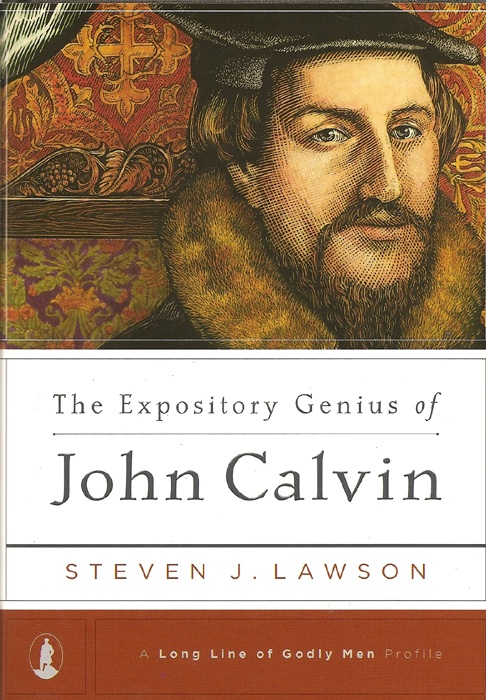
I am not above bribing you.  If you vote for me I will enter you in a chance to win a free book:  The Expository Genius of John Calvin or a Pre-Ordered copy of Radical Together.  This book is still in its shrink wrap and it can be yours. 

Two ways to win.  First you can go to SBC Voices and place a vote for Borrowed Light in the Southeast division.  Then simply leave a comment letting me know you voted.  

Second way to win is to subscribe to this blog and then leave a comment letting me know you are a subscriber (and what way you subscribe). 

If you do both I will enter your name in the drawing twice.  Winner will be announced on Friday!  If you win tell me which book you want. 

Friday, February 18, 2011

Review of The Expository Genius of John Calvin by Steven Lawson

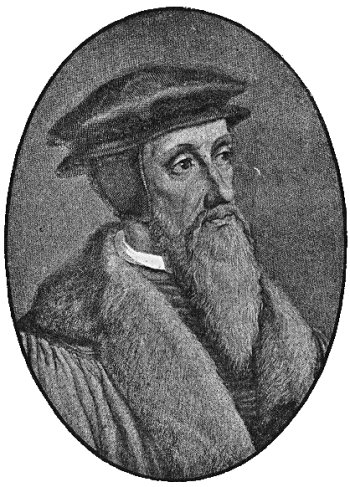
John Calvin. 

What came to mind when you read those words?  Do you think of a heretic that burned people at the stake?  Is he a hard-edged egotistical maniac that sat in an ivory tower writing theology books?  Or perhaps you think of him as your theological hero.  Some may even think maybe he’s a guy that sells jeans and cologne.  Regardless of the John Calvin you think you know Steve Lawson has made the argument, and numerous others with him, that Calvin should fundamentally be thought of as a pastor and a preacher. 

That is why Lawson has written this book, The Expository Genius of John Calvin .  Lawson wants us to consider Calvin the Preacher and the way he went about the sacred task of declaring Christ to men through the preached Word.  But he does not merely want us to admire Calvin; Lawson wants us to emulate him.  As his stated goal proclaims:
The goal here is not to take a sentimental journey—the hour is too desperate for such a triviality. Rather, the aim of this book is to raise the bar for a new generation of expositors.  The method is to see what a commitment to biblical preaching looks like by examining the work of a man who was sold out to this sacred duty.  (xii)

Lawson offers eight chapters on the preaching of Calvin that is filled with 32 distinctives.  Lawson begins with a brief biography and then covers everything from the preparation of the minister, the message itself, the delivery of the sermon, and the conclusion of the sermon.  Through we read from Calvin himself and are also introduced to a good amount of Calvin’s sermons. 

If you pick up this book thinking that Calvin is a cold dictator, a distant theologian, or a passionless teacher you will be surprised that you do not know the Calvin that stood in the Genevan pulpit.  Calvin modeled what Lloyd-Jones called theology on fire in his preaching.  Truly there is much to learn from Calvin.

I do think that occasionally Lawson will overstate his case.  At the end of each chapter it seems as if he puts Calvin on a pedestal and then asks, “where is Calvin today”.  The closing of every chapter seems to follow a formula.  Calvin was X, we desperately need X today, so be X. 

I understand that Lawson is attempting to use the life of Calvin to motivate preachers today to emulate him—and Calvin’s preaching is certainly worthy of emulation.  But at times it seems like Lawson is saying nobody today is doing X and this is why the church stinks—so maybe if you start doing X things will get better.  I assume this is not his intention or his heart.  But I simply find this a dangerous approach to encouraging men in ministry.  We don’t need another John Calvin.  We need people to be who God has called them to be in the generation God has called us to.  Follow Calvin, yes.  But God isn’t calling you to be the next John Calvin.  He’s calling you to be a you that is utterly transformed by the gospel. 

Even with that being said this book is very beneficial.  You can ignore a few of the overstatements and learn from Lawson and Calvin.  He is right we need faithful expositors in our day just as Calvin was in his.  I guess I’m just more optimistic that God is and has risen up many gospel-centered expository preachers in our day.  Men that exude much of these 32 distinctives whether they’ve even heard of John Calvin. 

I am not going to encourage every preacher to go out and buy this book.  But I would certainly say that it is worthy of adding to your library.  Those that love church history (preacher or not) will appreciate learning about Calvin the preacher.  Those going into ministry could learn a ton from this work.  Those in ministry could learn a ton.  Actually the greatest thing this book offers is presenting Calvin as the preacher he truly was.  Many could think they are preaching like Calvin but they are boring “exegetes” that aren’t even engaging in expository preaching.  We all could learn from someone like John Calvin to stoke the fire of the gospel in our preaching ministries.   

I received The Expository Genius of John Calvin free from Reformation Trust in exchange for a review.  But you’ll have to buy it for 10 bucks .

Monday, January 3, 2011

Am I Still a Calvinist?

This post is long and won’t be for everyone…

Andrew Fuller once made this declaration on the extent of the atonement:

“If I speak of it [Christ’s death as a substitute for sinners] irrespective of the purpose of the Father and the Son, as to its objects who should be saved by it, merely referring to what it is in itself sufficient for, and declared in the gospel to be adapted to, I should think that I answered the question in a Scriptural way by saying, It was for sinners as sinners; but if I have respect to the purpose of the Father in giving his Son to die, and to the design of Christ in laying down his life, I should answer, It was for the elect only”  (Brewster, Andrew Fuller: Model Pastor-Theologian , p92-93)

I tend to agree with Fuller and I think John Calvin would too.  My views on the extent of the atonement have been developing (or regressing in the mind of some).  I recently wrote a paper on Calvin’s view of the extent of the ilasmos (propitiation/atonement) in 1 John 2:2.  You can read it here.

In a section of that paper I argue that there are really two streams of Calvinists that hold to limited atonement.  There is the strict particularist stream that denies the “sufficient for all, efficient for the elect” statement and then a stream that still holds to limited atonement (in a meaningful sense) but approves of the “sufficient, efficient” language.  Calvin, I argue, was in the latter stream. 

Many would argue that I am no longer a 5 point Calvinist because I deny limited atonement.  In their mind I am now a 4 point Calvinist.  But my retort is an encouragement to read the synod of Dort:

“The death of the Son of God is the only and most perfect sacrifice and satisfaction for sin; is of infinite worth and value, abundantly sufficient to expiate the sins of the whole world.”

Calvin is, in my opinion, in the Dortian stream--and I believe Fuller is too.  And honestly I think Calvinists could speak more honestly of the atonement if we followed the sentiment of Dort (and many Puritans) instead of the more strict particularist variety. 

Owen’s Triple Choice

Furthermore, and this would take some time to explain, I do not agree with John Owen’s argumentation in The Death of Death in the Death of Christ.  I do not think that Calvin saw the atonement the same way as Owen.  I doubt Calvin would have agreed with Owen’s triple choice:

"The Father imposed His wrath due unto, and the Son underwent punishment for, either: All the sins of all men, All the sins of some men, or Some of the sins of all men; In which case it may be said: That if the last be true, all men have some sins to answer for, and so none are saved; That if the second be true, then Christ, in their stead suffered for all the sins of all the elect in the whole world, and this is the truth; But if the first be the case, why are not all men free from the punishment due unto their sins? You answer, Because of unbelief. I ask, Is this unbelief a sin, or is it not? If it be, then Christ suffered the punishment due unto it, or He did not. If He did, why must that hinder them more than their other sins for which He died? If He did not, then He did not die for all their sins!

You can read my argumentation on page 4-5 of my paper.  Calvin clearly stated, “as long as Christ remains outside of us, and we are separated from him, all that he has suffered and done for the salvation of the human race remains useless and of no value to us”.  Owen doubtfully would speak that way.  But I think Calvin is closer to the using the language of Scripture than Owen. 

Where the real difference is…

For me the discussion about the “limit” of the atonement has everything to do with unconditional election.  If asked the question, Who Did Christ Die For (and meaning that in an effectual sense), my response would clearly be “all those that respond to the gospel in repentance and faith”.  I doubt anyone Calvinist or Arminian would disagree with that. 

The difference then is not in the atonement but in the prior work of God in election and regeneration.  Who Did Christ Die For?  Everyone who responds in repentance and faith.  Who will respond in repentance and faith?  Those whom the Father has elected before the foundation of the world; namely, those whom the Spirit regenerates the heart of. 

Thoughts?  Am I Still a 5 Point Calvinist?

Monday, December 13, 2010

Was John Calvin Saved? And Other Things Not to Trust In.

Recently I wrote a paper on John Calvin’s view of the extent of the atonement in 1 John 2:2.  Perhaps, I will share some of that at some point (I’d like to get a grade first to see how much of a heretic I am).  While doing research on this topic I came across an interesting thread on the Baptist Board.  A guy named Plain Old Bill posed this question:

I'm not trying to be mean but you guys got me started reading all kinds of Calvin's writings and I can't find anything with his testimony of how he came to know Christ as his personal Lord and Savior. Does anybody have anything to help out here I guess that would also beg the question , was Calvin saved?

My response here is not meant to be directed towards Plain Old Bill.  In fact I doubt he will ever see this post, as the question was posted almost four years ago. 

First, I’ll just answer the question directly.  You will not find much of a testimony from John Calvin.  What you will find is this, “God by a sudden conversion subdued and brought my mind to a teachable frame.”  And you will also find a great amount of Christ-centeredness and trust in Calvin’s writing.  Even upon his deathbed Calvin spoke of trusting in Christ alone. 

What I really want to interact with is this idea that you have to have a “testimony” to be saved. 

Around the time of the Puritans there was a particular teaching going around similar to our SPOT (Specific Place or Time).  Iain Murray points refers to this in his book The Old Evangelicalism.  There he mentions Richard Baxter who:

…[spoke] of a meeting of eminent Christians and ministers where it was asked that everyone should give an account of the time and manner of his conversion, ‘and there was but one of them that could do it’.  To which Baxter added, ‘I aver from my heart that I neither know the day, nor the year, when I began to be sincere’.”  (Murray, The Old Evangelicalism, p20)

Now certainly there are those, like the Apostle Paul, that had an arresting conversion experience.  But there is a serious danger in forcing many true believers to fit this mold.  Furthermore, it is a potentially grave error to make “ a testimony” the mark of whether or not a person is saved. 

This is one reason why those like Spurgeon did not hop on board the “altar call” movement.  They had a great fear that people would eventually conflate things like a “testimony” and “going forward” with trusting in Christ.  If my personal experience is worth anything I would have to agree with them.  I have often heard people use “going forward” or “having a testimony” as synonyms for trusting in Christ. 

Granted this is often just a nuance of our Christianese.  But there is a real danger when the evidence of someone’s salvation is marked by something they did in the past rather than if they are trusting in Christ at the present.  There are numerous people that have testimonies, that went forward, and are still living in sin and not trusting Christ.  There are also numerous stories of people, like Calvin and Baxter, that evidently trust in Christ yet do not know the particular time or place when they were first converted. 

So, I ask.  What are you trusting in?  Are you trusting in an experience or are you trusting in Christ?  Your experience or “past decision” is a shaky foundation.  Only when your foundation is Christ will it be firm. 

Tuesday, November 16, 2010

Sinners at the Table

If I am struggling in my faith, where my love for Christ is faint, my love for other believers is hardening, and I’m having a hard time seeing the gospel should I take the Lord’s Supper when it is offered? 

Allow me to make that question concrete.  Many pastors have us “examine ourselves” before we partake of the Lord’s Supper.  Typically we are urged to look at our hearts and see if there is a breach of fellowship between ourselves and another believer.  If so, we should make that right before we partake.  We are further urged to look at our life and our heart.  Is there known sin that we are refusing to give up?  If so, we need a serious time of confession before we partake. 

But what do I do if I look into my heart and see some of those really deep and tangled sins?  What if I am struggling in a relationship with another person, but it’s not just as simple as—“make things right”?  What if I find myself much like the man in Mark 9—“Lord I believe, help my unbelief”?  Should I take the Lord’s Supper when my faith is weak, I’m struggling with bitterness, and I’m having a hard time giving myself fully to the Lord? 

Some of those reading this are perhaps by default saying that I should not take the Lord’s Supper.  Fair enough.  But I want to expose you to what John Calvin said on this particular topic—as I found it helpful. 

He is speaking against a belief that said “that those who were in a state of grace at worthily”.  And they defined this “state of grace” as those who are “pure and purged of all sin”.  Calvin responds by saying, “Such a dogma would debar all the men who ever were or are on earth from the use of this Sacrament”.

This doctrine (very similar to the scenario I mentioned above) Calvin says “deprives and despoils sinners, miserable and afflicted with trembling and grief, of the consolation of this Sacrament”. 

He then goes on to define what it really means to be “worthy” to take the Lord’s Supper. 

Therefore, this is the worthiness—the best and only kind we can bring to God—to offer vileness and (so to speak) our unworthiness to him so that his mercy may make us worthy of him; to despair in ourselves so that we may be comforted in him; to abase ourselves so that we may be comforted in him; to abase ourselves so that we may be lifted up by him; to accuse ourselves so that we may be justified by him; moreover, to aspire to that unity which he commends to us in his Supper…

Calvin continues…

How could we, needy and bare of all good, befouled with sins, half-dead, eat the Lord’s body worthily?  Rather, we shall think that we, as being poor, come to a kindly giver; as sick, to a physician; as sinners to the Author of righteousness; finally, as dead, to him who gives us life. 

Now, I do not agree with everything Calvin says on the Lord’s Supper.  But I do appreciate the pastoral sensitivity here.  For those reading this that are pastors, be careful in how you speak to these weak and feeble souls that may cut themselves off from this ordinance. 

For those that are reading this that are those weak and feeble souls, I want to encourage you that when you look into your heart and see darkness, sin, despair, bitterness, and a whole host of other things—your best response is not to run away from the table and try to go fix it.  Your best response is to run to Christ as represented in the Lord’s Supper. 

Thoughts?

Wednesday, November 3, 2010

The Root of Church Defection

…those who more boldly than others incite defection from the church, and are like standard-bearers, have for the most part no other reason than their contempt of all to show they are better than the others. (John Calvin, Institutes, 1030)

Ripping on the church has become a national past-time.  It is not uncommon for people to get so fed up with the brokenness of the church that they decide their relationship with Jesus could be just as easily cultivated at home. 

There is also the other type of person that hops from church gathering to church gathering but never firmly plants within a body.  There is nothing wrong with trying to find a church home.  But there is something wrong with NEVER planting.  And I question someone that is just “following where the Spirit leads” but never commits himself/herself to a local manifestation of the body that Christ died for. 

I understand there is more to this than the simple John Calvin quote. I understand there is much debate about what constitutes a “church” and that many are moving away from an institutional variety and embracing a more organic house church model. 

I simply want to make one point.  Make certain that you aren’t “defecting” out of pride and a sense of having it all together.  Do you love the church?  If your heart is not beating for the church of God then I doubt it truly longs for Jesus.  You can’t love Jesus and dis’ his wife. 

Monday, September 27, 2010

Christ, the Fountain of Our Salvation

We see that our whole salvation and all its parts are comprehended in Christ [Acts 4:21].  We should therefore take care not to derive the least portion of it from anywhere else…If we seek any other gifts of the Spirit, they will be found in his anointing. If we seek strength, it lies in his dominion: if purity, in his conception: if gentleness, it appears in his birth. For by his birth he was made like us in all respects [Heb. 2:17] that he might learn to feel our pain [Heb. 5:2]. If we seek redemption it lies in his Passion: if acquittal, in his condemnation: if remission of the curse, in his cross [Gal. 3:13]: if satisfaction, in his sacrifice: if purification, in his blood: if reconciliation in his descent into hell: if mortification of the flesh, in his tomb: if newness of life, in his resurrection: ii immortality, in the same: if inheritance of the Heavenly Kingdom, in his en- trance into heaven: if protection, if security, if abundant supply of all blessings, in his Kingdom: if untroubled expectation of judgment, in the power given to him to judge.

In short, since rich store of every kind of good abounds in him, let us drink our fill from this fountain, and from no other. Some men, not content with him alone, are borne hither and thither from one hope to another: even if they concern themselves chiefly with him, they nevertheless stray from the right way in turning some part of their thinking in another direction. Yet such distrust cannot creep in where men have once for all truly known the abundance or his blessings.  --John Calvin, Institutes

I would encourage you to chew on what Calvin is saying here.  Consider every place where you have need and know that Christ has through his work has given everything we need.

Wednesday, July 21, 2010

Hump Day Humor: Debating Calvinism

(HT: Sacred Sandwich)

Obviously, this could have been turned to the Calvinist making a silly panicked argument.  All of us at time proof text, get backed in a corner and then get desperate. 

Secondly, in case you aren’t aware Servetus is one great blemish on the legacy of John Calvin.  Here is one perspective on what went down.  Here is another viewpoint.

Friday, July 9, 2010

Review of The Unquenchable Flame by Michael Reeves

Author: Michael Reeves

Pages: 208 pgs

Publisher: B & H Publishing

Price: 10.19

Genre: Church History/Reformation

Quick Summary:

Touted on the back cover as a “remarkably accessible introduction to the [Reformation] historic era” this 208 page book focuses on Luther, Zwingli, Calvin, and the Puritans. As these key figures are analyzed the heart of the reformation is uncovered. The book begins by glancing at the pre-history of the Reformation and closes by asking “is the Reformation over?”.

What I Liked:

The Reformation is an interesting time period to study. I have, however, read books that make it seem boring and stale. Thankfully, this book is not in that line. Michael Reeves writes with humor, passion, and insight. He allows the main characters to be who they really were. He does not take pains to gloss over their rough edges or to needlessly exalt them. He allows them to be. And in so doing he points out the heart of the Reformation—the redeeming work of Jesus Christ alone.

There are also little sidebars that help us to take a slice out of these particular time periods and focus on a crucial event or character. These are helpful for seeing the well-rounded landscape of the Reformation. Reeves does a great job of not confining the Reformation to one particular location but showing how it impacted all of Roman Catholic lands.

What I Disliked:

I always greatly dislike footnotes at the end of a chapter. I prefer them at the bottom of the page, or even at the end of the book, but it is laborious to try to find the last page of the chapter ends on every time you want to check the footnote. Other than this minor dislike, there is nothing else I can point to as a dislike worth mentioning.

Should You Buy It?

It is a fun read even for those that have read many books on the Reformation period. Particularly helpful is the chapter on Zwingli (he doesn’t get much press in Reformation books). If this is your first exposure to the Reformation then this is also a great place to start. So, no matter who you are I think this book would be an asset. You can buy it here for only 10.19

Rating: 4.8 out of 5 stars

Saturday, February 9, 2008

Who is Galeacius?

In John Flavel's Mystery of Providence he makes mention of a Galeacius (p.52). Galeacius was of noble birth and was converted out of "Popery". John Calvin tells the story in his commentary on Corinthians (p.11-14):

"I may say much rather than Jacob — Few and evil have my days been; yet in these few days of mine something have I seen, more have I read, more have I heard; yet never saw I, heard I, or read I any example (all things laid together) more nearly seconding the examples of Moses than this of the most renowned Marquesse Galeacius. Moses was the adopted son of a king’s daughter; Galeacius the natural son and heir apparent to a Marquesse; Moses a courtier in the court of Pharoah, Galeacius in the court of the emperor Charles the Fifth; Moses by adoption a kin to a Queen, Galeacius by marriage to a Duke, by blood son to a Marquesse, nephew to a Pope; Moses in possibility of a kingdom, he in possession of a Marquesdome; Moses in his youth brought up in the heathenism of Egypt, Galeacius schooled in the superstition of Popery; Moses at last saw the truth and embraced it, so did Galeacius; Moses openly fell from the heathenism of Egypt, so did Galeacius from the superstition of Popery. But all this is nothing to that which they both suffered for their conscience. What Moses suffered Saint Paul tells us — ‘Moses, when he was come to years, refused to be called the son of Pharoah’s daughter, and chose rather to suffer adversities with the people of God, than to enjoy the pleasures of sin for a season; esteeming the rebuke of Christ greater riches than the treasures of Egypt.’ Nay, Moses had rather be a base brick maker amongst the oppressed Israelites, being true Christians, than to be the son of a king’s daughter in the court of Pharaoh amongst idolaters. In like case noble Galeacius, when he was come to years and knowledge of Christ, refused to be called son and heir to a Marquesse, cup-bearer to an Emperor, nephew to a Pope, and chose rather to suffer affliction, persecution, banishment, loss of lands, livings, wife, children, honors and preferments, than to enjoy the sinful pleasures of Italy for a season, esteeming the rebuke of Christ greater riches than the honors of a Marquesdome without Christ, and therefore, seeing he must either want Christ or want them, he despoiled himself of all these to gain Christ. So excellent was the fact of Moses, and so heroical, that the Holy Ghost vouchsafes it remembrance both in the Old and New Testament, that so the Church in all ages might know it and admire it, and doth chronicle it in the epistle to the Hebrews almost two thousand years after it was done. If God himself did so to Moses, shall not God’s Church be careful to commend to posterity this second Moses, whose love to Christ Jesus was so zealous, and so inflamed by the heavenly fire of God’s Spirit, that no earthly temptations could either quench or abate it; but to win Christ, and to enjoy Him in the liberty of His Word and Sacraments, he delicately contemned the honors and pleasures of the Marquesdome of Vicum — Vicum, one of the paradises of Naples, Naples, the paradise of Italy — Italy of Europe — Europe of the earth; yet all these paradises were nothing to him in comparison of attaining the celestial paradise, there to live with Jesus Christ...."

On his refusing to do so, “sentence was passed against him, and he was deprived of all the property which he inherited from his mother.” “In the following year... an offer was made to him in the name of his uncle now Pope Paul IV. that, he should have a protection against the Inquisition, provided he would take up his residence within the Venetian States; a proposal to which neither his safety nor the dictates of his conscience would permit him to accede.” He went repeatedly to Italy, and had interviews with his aged father, but was refused the privilege of seeing his wife and family, until about six years after he had quitted Naples. His wife, Victoria, then wrote to him, earnestly requesting an interview with him, and fixing the place of meeting. This she did on two different occasions, but in both instances, on his arrival at the appointed place, after a fatiguing and dangerous journey, he had the disappointment of finding that she did not make her appearance. At length, impatient of delay, he went once more to Italy, and at his father’s house had an interview with Victoria, when he entreated her to accompany him to Geneva, “promising that no restraint should be laid on her conscience, and that she should be at liberty to practice her religion under his roof. After many protestations of affection, she finally replied, that she could not reside out of Italy, nor in a place where any other religion than that of the Church of Rome was professed, and farther, that she could not live with him as her husband so long as he was infected with heresy.” The scene at their final parting was peculiarly tender. “Bursting into tears, and embracing her husband, Victoria besought him not to leave her a widow, and her babies fatherless. The children joined in the entreaties of their mother, and the eldest daughter, a fine girl of thirteen, grasping his knees, refused to part with him. How he disengaged himself, he knew not; for the first thing which brought him to recollection was the noise made by the sailors on reaching the opposite shore of the Gulf.” (of Venice.) “He used often to relate to his intimate friends, that the parting scene continued long to haunt his mind; and that not only in dreams, but also in reveries into which he fell during the day; he thought he heard the angry voice of his father, saw Victoria in tears, and felt his daughter dragging at his heels.” (HT: CCEL)

LinkWithin

Related Posts Plugin for WordPress, Blogger...