This post is long and won’t be for everyone…
Andrew Fuller once made this declaration on the extent of the atonement:
“If I speak of it [Christ’s death as a substitute for sinners] irrespective of the purpose of the Father and the Son, as to its objects who should be saved by it, merely referring to what it is in itself sufficient for, and declared in the gospel to be adapted to, I should think that I answered the question in a Scriptural way by saying, It was for sinners as sinners; but if I have respect to the purpose of the Father in giving his Son to die, and to the design of Christ in laying down his life, I should answer, It was for the elect only” (Brewster, Andrew Fuller: Model Pastor-Theologian , p92-93)
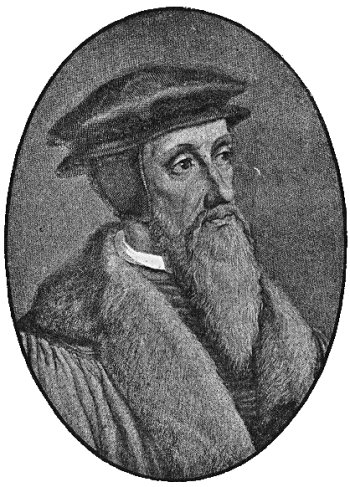 I tend to agree with Fuller and I think John Calvin would too. My views on the extent of the atonement have been developing (or regressing in the mind of some). I recently wrote a paper on Calvin’s view of the extent of the ilasmos (propitiation/atonement) in 1 John 2:2. You can read it here.
In a section of that paper I argue that there are really two streams of Calvinists that hold to limited atonement. There is the strict particularist stream that denies the “sufficient for all, efficient for the elect” statement and then a stream that still holds to limited atonement (in a meaningful sense) but approves of the “sufficient, efficient” language. Calvin, I argue, was in the latter stream.
Many would argue that I am no longer a 5 point Calvinist because I deny limited atonement. In their mind I am now a 4 point Calvinist. But my retort is an encouragement to read the synod of Dort:
“The death of the Son of God is the only and most perfect sacrifice and satisfaction for sin; is of infinite worth and value, abundantly sufficient to expiate the sins of the whole world.”
Calvin is, in my opinion, in the Dortian stream--and I believe Fuller is too. And honestly I think Calvinists could speak more honestly of the atonement if we followed the sentiment of Dort (and many Puritans) instead of the more strict particularist variety.
Owen’s Triple Choice
Furthermore, and this would take some time to explain, I do not agree with John Owen’s argumentation in The Death of Death in the Death of Christ. I do not think that Calvin saw the atonement the same way as Owen. I doubt Calvin would have agreed with Owen’s triple choice:
"The Father imposed His wrath due unto, and the Son underwent punishment for, either: All the sins of all men, All the sins of some men, or Some of the sins of all men; In which case it may be said: That if the last be true, all men have some sins to answer for, and so none are saved; That if the second be true, then Christ, in their stead suffered for all the sins of all the elect in the whole world, and this is the truth; But if the first be the case, why are not all men free from the punishment due unto their sins? You answer, Because of unbelief. I ask, Is this unbelief a sin, or is it not? If it be, then Christ suffered the punishment due unto it, or He did not. If He did, why must that hinder them more than their other sins for which He died? If He did not, then He did not die for all their sins!
You can read my argumentation on page 4-5 of my paper. Calvin clearly stated, “as long as Christ remains outside of us, and we are separated from him, all that he has suffered and done for the salvation of the human race remains useless and of no value to us”. Owen doubtfully would speak that way. But I think Calvin is closer to the using the language of Scripture than Owen.
Where the real difference is…
For me the discussion about the “limit” of the atonement has everything to do with unconditional election. If asked the question, Who Did Christ Die For (and meaning that in an effectual sense), my response would clearly be “all those that respond to the gospel in repentance and faith”. I doubt anyone Calvinist or Arminian would disagree with that.
The difference then is not in the atonement but in the prior work of God in election and regeneration. Who Did Christ Die For? Everyone who responds in repentance and faith. Who will respond in repentance and faith? Those whom the Father has elected before the foundation of the world; namely, those whom the Spirit regenerates the heart of.
Thoughts? Am I Still a 5 Point Calvinist?


 My exposure to Andrew Fuller has been pretty minimal. Thankfully, Paul Brewster joins a host of others that are contributing to the rise of study of Andrew Fuller. Hopefully, through these efforts many others will not be left in the darkness on the life of this great man.
  it is a tad overpriced. Hopefully it drops below 15 bucks sometime soon.
 I am excited to announce a new project that I have been working on over my Christmas break and will be launching on January 1, 2011. It is my goal in 2011 to post every day a poem, letter, etc. from the pen of John Newton accompanied with a helpful reflection.