Showing posts with label holiness. Show all posts

Tuesday, August 6, 2013

12 Truths to Help Us Grow In Our Hatred of Sin

By faith Moses, when he was grown up, refused to be called the son of Pharaoh’s daughter, choosing rather to be mistreated with the people of God than to enjoy the fleeting pleasures of sin. –Hebrews 11:24-25

Sin can seem quite pleasurable at the time. Even if we know that it’s wrong or unwise we still have a tendency to coddle our sin. This is because we do not see sin for what it really is. I’m convinced that we will not be as passionate about turning from sin unless we truly hate it.

With help from Richard Baxter here are twelve things to meditate upon that will help us grow in our hatred of sin. As you read through this I encourage you to make this practical. Keep in your minds eye that particular sin that the Spirit has been nagging you about.

  1. Meditate on the character of God. You cannot know the seriousness & ugliness of sin without knowing the beauty of the God of whom sin is against.
  2. Consider the work of Christ. Christ came to kill that sin that we are holding on to.
  3. Ponder the work of the Holy Spirit. He came to purify us—can we then abide with sin?
  4. Know the wonderful love and mercy of God. The ugliness of sin is shown in comparison to the great love of the God that we are sinning against. Every sin is a sin against the hand of mercy.
  5. Consider what you were created for. Knowing the “excellent, and high, and holy work, you were created for” shows from what height sin has made us to fall from.
  6. Think of the delights that come from holiness. Sin robs you of true delight, remember those seasons of delight that sin has robbed from you.
  7. Think upon heaven. There is no sin in heaven. If it doesn’t satisfy and give joy there—what makes us think it is worthwhile in the present?
  8. Look to the state of the damned. Consider the difference between angels and devils. “Holiness and sin do make the difference”.
  9. Consider what men say of sin at the last. What do men in heaven and hell say of sin? If it’s not applauded in hell, and it’s not, then it should not be applauded here.
  10. Look upon sin and judgment together. Remember that you must answer for this sin before God, and angels, and all the world.
  11. Consider the grave. “Sickness, poverty, shame, despair, death, and rottenness in the grave” is the consequence of sin.
  12. Look upon truly holy people and great sinners. Is there no difference? Sin is the foundational difference between the two.

As we consider the odiousness of sin let us also consider the beauty of Jesus. He rescued us from the muck and mire of sin. May we flee from it today and live in His redemption and not foolish rebellion.

Repent and run to Jesus.

Consider this from Spurgeon as you ponder the ugliness of sin:

Suppose I could find out a sinner so vile that Jesus Christ could not reach him; why then the devils in hell would take him through their streets as a trophy; they would say, "This man was more than a match for God; his sin was too great for God's grace." What says the Apostle? "Where sin abounded"—that is you, poor sinner;—"where sin abounded"—what sins you plunged into last night, and on other black occasions,—"where sin abounded"—what? Condemnation? Hopeless despair? No, "Where sin abounded grace did much more abound." I think I see the conflict in the great arena of the universe. Man piles a mountain of sin, but God will match it, and he upheaves a loftier mountain of grace; man heaps up a still huger hill of sin, but the Lord overtops it with ten times more grace; and so the contest continues till at last the mighty God plucks up the mountains by the roots and buries man's sin beneath them as a fly might be buried beneath an Alp. Abundant sin is no barrier to the superabundant grace of God.

Monday, July 8, 2013

The Gospel’s Root Work and Axe Work

Apparently one is not supposed to plant a Magnolia tree close to the house. As first-time home buyers my wife and I were not aware of this tip. We liked looking out our bedroom window and seeing the beautiful flowering magnolias. That is until our basement wall started to crack.

This past week—when I was supposed to be on vacation—I spent my evenings killing and uprooting a Magnolia tree. I decided to do this in a three stage process. Stage one is chopping down the tree and leaving a 3 foot stump*. Stage two is to dig a hole around the tree until I expose and then kill those dastardly roots. Stage three is to rent several horses, badgers, cattle, Sherpa's, and anything else I can find to pull the tree out of the hole.

While planning my lumberjacking festivities I started thinking a little about how this magnolia tree relates to sanctification. Specifically gospel-driven sanctification.

“So, I’ve got this porn problem”

A young man is in my office confessing his struggle with pornography. I know that the fundamental answer to his problem is the gospel. I also know that there are a few root issues that are likely causing his struggles with pornography. As we dig deeper we are likely to discover that his identity is found in sexual conquest and not in Christ. Those things must be dealt with.

All that is true, but do you want to know what my first advice to this young man will be (especially if he is a believer)? I will tell him…

“Dude, you need to stop looking at porn. Right now. This instant”.

Sometimes you’ve got to kill the visible tree (porn addiction) before you can start digging out the roots (idolatry). I fear that sometimes, with all of our talk of gospel-motivated obedience, we miss something crucial; namely, actual obedience. I like the way Kevin DeYoung put it:

Without [the biblical emphasis of effort], we’ll be confused, wondering why sanctification isn’t automatically flowing from a heartfelt commitment to a gospel-drenched justification. We’ll be waiting around for enough faith to really ‘get the gospel’ when God wants us to get up and get to work (Phil 2:12-13). Because when it comes to growth in godliness, trusting does not put an end to trying. (Deyoung, The Hole in Our Holiness)

You aren’t denying the gospel by grabbing the axe of effort and chopping down the tree of lust. At this point you might not even be dealing with root issues or motivations, all you know is that porn is bringing guilt and pain and you want it to stop. Don’t overcomplicate sanctification, grab the axe and start chopping.

What if I just leave the stump?

The problem with this passive—though gospel-sounding—approach to sanctification is that it spends all of its time and effort on uncovering roots and never chops. You’ve got to kill sin when you see it.

The other end of the pendulum, the Pharisee, is just as deadly. The pharisaical approach to sanctification chops down the visible without dealing with the root system. I’m not an expert on trees but I believe it is correct that if I don’t also sever the roots they will continue to grow (maybe even eventually sprouting another tree out of my stump).

You cannot just chop down the tree, leave a stump, and assume that the job is done. You’ve got to dig and get to the root of the issue. Otherwise you might outwardly tackle your pornography problem but your misplaced identity will lead you to bow to some other god.

Here is my point. If you and I are sinning we need to grab an axe and deal with it. The gospel is what causes us to grab an axe and get to work. And the gospel also causes us to grab a shovel and start digging out roots. But we must never confuse the gospel’s axe work with gospel’s root work. They aren’t the same but they are both necessary to our sanctification.

--

*I should also mention that I did this with an axe and not a chainsaw. I tell you this just so you picture me as a true hardcore lumberjack…beard and all.

**In case you wonder why I would put a picture of an awkward guy awkwardly cutting down a big tree, it is intentional. Our attempts at grabbing an axe and hacking away at sin is often awkward and ugly. But it’s holy work.

Saturday, April 27, 2013

Is Dat Funny?

hannah “Is dat funny”, says my daughter as she dances on the table after being told for the fourteenth time that we don’t dance on the kitchen table.

Part of me wants to laugh with her. But the other part of me is a little frustrated that we’ve told her a million times not to do this particular activity and yet she still wonders whether or not mommy and daddy will let it slide and laugh it off.

I want to say to her, perhaps rather loudly, “No honey it is NOT funny because it is outright disobedience. Mommy and Daddy will never laugh at you disobeying us. It’s just NOT funny”. In my finer moments I stay composed and calmly help her to see that it’s not all that funny because we’ve asked her to not stand on the table, then I try to redirect her towards things that actually are funny.

I see myself in my daughters actions.

I love making people laugh—and I’m discovering that she does too. Yet I’m beginning to wonder if maybe somehow she’s picked up a little of her daddies twisted sense of humor.

Let no corrupting talk come out of your mouths, but only such as is good for building up, as fits the occasion, that it may give grace to those who hear. –Ephesians 4:29

This one has been a battle for me. I’ve always had a weird sense of humor—and for years before Christ captivated my heart it was pretty vulgar. I’m the guy that not only crosses the line but crosses the line and spanks it. (Hopefully that statement wasn’t doing that). Or at least I was that guy, the Lord has transformed my wit over the years.

Yet, I still struggle.

At times I foolishly assume that just because something is funny that the Lord is slapping his knee up in heaven and going to give my words a free pass. It’s the humor clause. And so I say something really dumb and I’m like my daughter saying, “Is dat funny, God”?

No, son, it’s not. It’s disobedience and disobedience is never funny…

--

*Just as a side note, my daughters disobedience is somewhat excusable. She’s not even quite three yet. She’s still trying to learn the ins and outs of humor. But that’s not the case with me. My “is dat funny?” moments are far less excusable.

Also isn’t my daughter about the cutest thing you’ve ever seen?

Monday, November 12, 2012

From Woe to Go

“Woe is me! For I am lost…”

I had a very embarrassing “date” one time. I went with a group of friends to a bowling alley. No, the fact that I went to a bowling alley wasn’t the embarrassing part. What shamed me was the presence of black lights.

When I left my dorm room I looked pretty fly in my black shirt and Levi’s. However, by the time that I got to the bowling alley and found myself under the hateful glare of those black lights I had somehow developed a horrible case of psoriasis, spilled bleach on my pants, and had a stain on my shirt that looked like Gary Coleman leg wrestling an ostrich.
Black lights have a way of exposing flaws that are hidden in regular lights. Every blemish on my clothes screamed out at the crowd to laugh at me. Now I know that only idiots wear black clothes to an event featuring a black light.

Isaiah the prophet had a similar experience (though intensely magnified) in Isaiah 6. Upon his vision of the “King, the LORD of hosts” Isaiah says “Woe is me! For I am lost”. Before this vision Isaiah probably felt himself to be a pretty good chap with a pretty wholesome tongue. But when he finds himself in the penetrating holiness of Yahweh his sinfulness and inadequacy to be in the presence of the Lord is glaringly obvious. Isaiah feels as if he is being ripped asunder. He cannot get low enough. It seems as if everything within him wants to hide but there is no place to go and so he does the only fitting thing—he pronounces a curse upon himself.

When a sinner, like Isaiah, has a true vision of the splendor and majesty of Yahweh his only one fitting response is brokenness and contrition at the ugliness of his sin.

Thankfully, for Isaiah and us, the story does not end there. The Lord in His grace touches Isaiah’s mouth and says, “Behold, this has touched your lips; your guilt is taken away, and your sin atoned for”. Isaiah is clean. Somehow this sinful prophet is able to now stand in the presence of Yahweh. Isaiah is not only confronted with God’s majesty and splendor and terrifying holiness. He is also confronted with God’s life-changing grace.

“Here am I! Send me”

One verse after Isaiah’s cleansing is his commissioning. Notice that in verse 5 when confronted by the Lord’s holiness Isaiah is groveling upon the floor trying to find some portal to escape. He is undone. He does not want to be seen. He wants to be come nothing, to be annihilated if that is possible.

Now notice Isaiah in verse 8. It seems as if he is like the kid in fourth grade that kept raising her hand saying, “pick me, pick me, pick me”! He wants to be noticed. He wants to be used. That is what grace does. It turns brokenness into bold missional fervor.

Yet, I wonder how many of us act as if we are still living in Isaiah 6:5, “woe is me”. There are at least two reasons why we would not have scores of people in our churches saying “here am I! send me”. One is that our God is not big enough. Missional fervor comes after brokenness before the Lord’s presence. It seems to me that God seldom uses people in mighty ways until people become utterly convinced that there is no way that God could possibly use someone as vile and dirty as them.

The second reason why people aren’t shouting out “Here am I! send me” is because we see sin where God sees grace. Some people are convinced that they are vile and dirty and there is no way that God can use them. And so they sit there saying “woe is me”. But if God has taken away your guilt and your sin has been atoned for, you had better not be saying “woe is me”. You aren’t vile and dirty and unable to be used by God. You are redeemed. Therefore, our only fitting response is “Here am I! Send me”. 

God’s powerful grace turns woe into go.

Wednesday, September 12, 2012

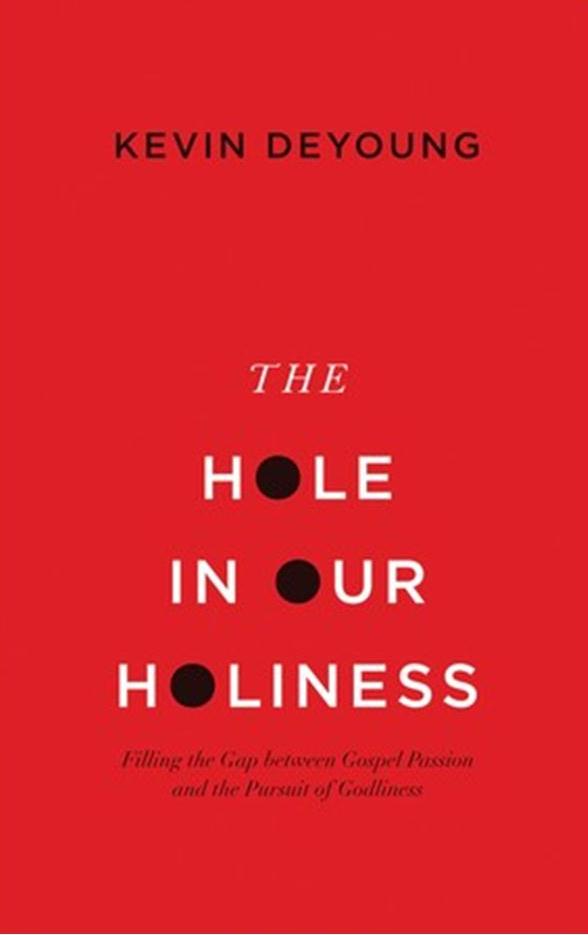
Review of The Hole in Our Holiness

“The hole in our holiness is that we don’t seem to care much about holiness.  Or, at the very least we don’t understand it”. 

That “hole” is what has motivated Kevin DeYoung to set his pen to writing.  The result is a little book entitled The Hole in Our Holiness: Filling the Gap between Gospel Passion and the Pursuit of Godliness.  Many have been waiting this “ruthlessly biblical” treatment of holiness.  And those that attended T4G and heard DeYoung’s message there (which seems to have found its home in chapter six of this book) knew that this book was going to send shock waves throughout the gospel-centered movement. 

The book begins with DeYoung’s defense of his book and explaining his desire to fill the gap that seems to be in the gospel-centered movement.  For the first six chapters DeYoung, with his typical wit and faithful treatment, lobs a few correctives to the gospel-centered movement and slowly begins establishing a case for having a passion for holiness alongside our passion for gospel centrality.  In the last four chapters he begins to make his case practical and explain the biblical categories of union and communion. 

Union with Christ, says DeYoung is the “irrevocable work of the Spirit”.  He notes that, “nothing can make us a little more or a little less united.”  Compartively, “Communion with Christ…can be affected by sin and unresponsiveness to God’s grace”.  For all of our emphasis on union with Christ, DeYoung wants to see the church also have a passion for pursuing deeper communion with Christ.  And that is the central theme and purpose the book.

My Take:

I’m a little lost at how to review this.  If these chapters were separate blog posts from Kevin’s blog, DeYoung, Restless, and Reformed, then I would have probably linked to almost everyone of them in my Today in Blogworld feature.  By themselves each one is tremendous.  Kevin is a tremendous writer and it shows throughout this book.  He has a way of making you laugh, punching you in the gut, applying the gospel, and then making you laugh again as you close the book up and go about living your life all the while having been profoundly changed throughout. 

There is nothing in this book that leaves me shaking my head and saying, “whoa, this dude has gone off the deep end”.  The correctives that he mentions are needed and helpful.  Personally, I appreciate him saying, “It’s not wrong for a sermon to conclude with something we have to do.” (54)  And I further agree with him that those of us within the gospel-centered movement can without an equal emphasis on holiness end up “confused, wondering why sanctification isn’t automatically flowing from a heartfelt commitment to gospel-drenched justification”.  (91)

So why am I confused in how to review this?  Mainly because this is a book review and not a review of several separate blog posts put together.  In my opinion the book is confused as to its audience and overall purpose. 

I think had DeYoung decided he wanted to only write a book about the hole in the gospel-centered movement and our lack of emphasis and promotion of holiness then it'd have been better.  Or even if he wanted to write a book simply on holiness and how it comes about.  But I think he tried both and it didn't seem to fit together. Honestly, it reads kind of like an associate pastor that finally gets to preach and decides to try preaching 4 sermons in the time frame of 1. 

That is why I am conflicted.  If you were to ask me, “What is the main thesis of the book” I think I would say that DeYoung believes that there is a hole in our gospel and that we need to start emphasizing personal holiness as well as gospel passion.  And as he points out that hole in the gospel he wants to fill it with a robust theology of holiness.  The book is an attempt to point out the hole and then fill it. 

But does he do it? 

Time will tell.  Part of me wants to say that the book is awesome and one of the better books written in the last couple of years.  But the other part of me wonders if it is just a bunch of really awesome truths and statements that wind up simply jarbled around in my skull but not as life transforming as they could have been had I been given a few pegs to hang them on. 

Part of me does not even want to mention that criticism.  The book is superb for the most part and I would feel comfortable putting it in the hands of anyone in our congregation.  It is, as Piper says on the back cover, “ruthlessly biblical”.  And I would never discourage anyone from buying a book that is ruthlessly biblical.  There are whole paragraphs in the book that inspired me, encouraged me, convicted me, and drove me to re-examine ways that I say things.  The book has proven helpful for me.  I’m simply left wondering if the lack of cohesiveness and confused audience will get in the way of leaving a lasting impact. 

At the end of the day, though, I would highly recommend this book.  It’s possible that the lack of cohesiveness is a problem with my brain and not Kevin’s typewriter.  He’s a tremendous author, speaker, and seems to be a humble man of God.  So, I’d be happy to chalk the fault up entirely to myself.  And I would greatly encourage you to shuck out 10 bucks and get a copy for yourself. 

You can buy it here.

Tuesday, March 22, 2011

What To Do When the Gospel Confronts You

A couple months ago I quoted this gem from Wesley Hill:

The gospel resists the fallen inclinations of Christian believers.  When we engage with God in Christ and take seriously the commands for purity that flow from the gospel, we always find our sinful dreams and desires challenged and confronted. 

In other words it is impossible to be comfortable in the Christian life.  As long as there is still sin in my life, God is still holy, and as long as God he is committed to me, then it will be impossible for me to be comfortable. 

God, through His gospel, is always confronting my fallenness.  And my fallenness is constantly running from the gospel and attempting to hide in darkness or build a life of mock holiness.  The sin in me cannot stand the Lord’s blazing holiness.  And the Spirit within me cannot stand my wretched wickedness.  Who do you think is going to win that one? 

So, then the gospel is constantly confronting us. 

And when that happens I can do one of three things.  I can change the gospel, I can claim the gospel, or I can allow the gospel to change me and claim me.  Ultimately, if I am a believer, the gospel will win.  I know that I will still die with sin in my life; but Christ is greater.  But in the here and now will I live a life of redemption or rebellion?  Will I experience now what Christ has already purchased? 

Change the Gospel

This option is very attractive.  My plain ol’ ESV outreach Bible has some 900 pages worth of material that I can twist, distort, and shape to fit whatever heresy my wicked heart wants to promote.  Every heretic has his verse and every rebel can find Scripture to justify wickedness.  (That’s scary).

Not only can I find refuge in my distorted view of Scripture but I can also find a community that will make me feel good about myself.  I’m certain there are plenty people that are living in the same delusion—and we can gather together as a merry band of Scripture-twisting gospel dodgers.  If you need it you can find any false prophet telling you “peace, peace”; even when there is no peace. 

So if I want, I can change the gospel and the nagging of the gospel will be quiet for a season. 

Claim the Gospel

When the gospel confronts me one option is to claim a cheap grace.  This is also very attractive because it’s a half truth.  At this point I’m claiming the promises of the gospel but ignoring the conditions and the demands of the gospel. 

Hiding behind cheap grace has its perks.  You can feel forgiven and stay comfortable with a rebellious heart at the same time.  I’m certain that the accuser would be more than happy to help us hide our sin behind a false gospel for a good 80 years before he exposes it, for the sake of accusation, when we stand before Jesus.  (And that’s scary).

So if I want, I can claim the gospel in part and hide behind a cheap grace.  As long as I feel forgiven it doesn’t matter if I really am, does it?

Be Changed, Be Claimed

The other option, and the only fitting option, is to actually believe the gospel.  When the gospel confronts me I can agree with God that my sin is odious, live in the power of the resurrection, and rest in the merits of Christ. 

To be claimed is what Paul is referencing in Galatians 2:20. 

I have been crucified with Christ. It is no longer I who live, but Christ who lives in me. And the life I now live in the flesh I live by faith in the Son of God, who loved me and gave himself for me.
(Galatians 2:20 ESV)

I belong to Jesus.  My old idolatrous heart has no claim to my life.  My desires now must be his desires.  So when the gospel confronts my idolatrous heart I—through the power of the resurrection—turn from idols and cling to Christ.  This also means that I am hidden in Jesus; I have a new identity.  I am adopted, forgiven, justified, cleansed, made holy, etc. etc.  And all of this because of the identity of Christ.

Being claimed by the gospel inevitably leads to being changed and transformed by the gospel. 

And this is why the gospel is constantly confronting me.  Even though I occasionally attempt to change the gospel to fit my idolatry the Spirit doggedly pursues me, chastises me, bruises me; whatever it takes.  He is radically committed to me and WILL bring about my holiness.  The gospel wins.

And occasionally I try to claim the gospel and hide in cheap grace.  Jesus NEVER lets me get away with that.  He breaks through the facade.  He conquers my spiritual self-righteousness, lays me bare, and calls me to hide in His powerful and costly grace. 

---

For a great article on gospel repentance check out this article by Tim Keller.

Wednesday, November 10, 2010

Piper on the Danger of Disconnect

(HT: JT)

What do you think?

Personally I agree.  I’ve seen it in my own life.  And it’s telling that this is even worthy of 4 minutes of Piper’s time (as well as ours).  The fact that this will generate discussion proves Piper’s point. 

Lord, connect my wires!  Give me a vision of the beauty of Jesus and the only fitting response of worship that proves itself in personal holiness. 

Wednesday, July 28, 2010

Lessons from a man named Obadiah

With an awesome name like Obadiah Sedgwick its surprising that few people have heard of him.  One particular work of his that I have found beneficial is Anatomy of Secret Sins .  This book is a 382 page exposition of Psalm 19:12-13.  Yes, 382 pages on these two verses. 

12 Who can discern his errors?
Declare me innocent from hidden faults.
13 Keep back your servant also from presumptuous sins;
let them not have dominion over me!
Then I shall be blameless,
and innocent of great transgression.

One particular gem is his explanation of “persons who are truly holy desire still further measure of holiness.”  I’ll let Obadiah explain:

David was cleansed before, and yet he desires to be cleansed.  Why?  Because though he had a radical purity, he did not have a gradual purity.  The whole man was cleansed, but it was not cleansed wholly.  He had some grace, but he wanted more.  He was pretty well rid of some sins, but others he felt stirring and working.  Though no man saw them, yet he felt them.  No combat serves the Christian, but that which looks to victory, and he thinks the day is not yet won if he does not yet have the conquest of every sin as well as any one particular sin.   (p.14, emphasis mine)

In other words, if you desire holiness you won’t just desire a little bit of it.  You will want to be “cleansed completely”. 

Tuesday, June 8, 2010

Our Battle with Sin Illustrated

I’m a visual person.  So this little cartoon by Josh Harris is a great tool to visualize our battle with the flesh: Feeding the Flesh. 

It is an excerpt from his “theological autobiography” Dug Down Deep.  I haven’t gotten to read it yet, but hope to have it read and reviewed by the end of summer.

Friday, January 25, 2008

Borrowed Light: Today in Blogworld 01/25

This would perhaps be better titled Today and Yesterday in Blogworld. Business did not allow me to do as much posting yesterday.

Steve Camp has an excellent, though somewhat lengthy, article on holiness. I love how Steve introduces this: "They say when Leonardo Davinci painted his famous Last Supper he had little difficulty with any of it except the faces. Then he painted the faces in without too much trouble except one. He did not feel himself worthy to paint the face of Jesus. He held off and kept holding off, unwilling to approach it but knowing he must. Then in the impulsive carelessness of despair, he just painted it quickly and let it go. “There is no use,” he said. “I can’t paint Him.”I feel very much the same way about explaining the holiness of God. I think that same sense of despair is on my heart. There isn’t any use for anybody to try to explain holiness. The greatest speakers on this subject can play their oratorical harps, but it sounds tinny and unreal, and when they are through you’ve listened to music but you haven’t seen God."

Thabiti has a couple of good posts. One is on Jerry Bridges Four Ways to Live. The other discusses Carefulness in Treating Sin.

Jonathan Leeman continues blogging through REVEAL. Today we are treated to Part 7 and Part 8.

Scott Lee discusses the Task of a Faithful Shepherd and John MacArthur discusses the pastor's job as More Than Just a Preacher.

Here are a couple of good quotes one by MLJ the other by Thomas Brooks. Martyn Lloyd-Jones quote hits me pretty hard. "You can be so interested in great theological and intellectual and philosophical problems that you tend to forget that you are going to die." (HT: DG)Brooks tells us the mark of true humility. “Remember this—all the sighing, mourning, sobbing, and complaining in the world, does not so undeniably evidence a man to be humble, as his overlooking his own righteousness, and living really and purely upon the righteousness of Christ.” (HT: Of First Importance)

Jimmy, actually a guy I went to college with, has a great post on lessons from The Young Physician. No, not Jesus. He is referring to a Resident Doctor that had learning unconnected with real life. Jimmy uses this experience to give sound advice to us young ministers.

Terry Rayburn asks whether or not we have two natures. His answer is no. This keeps coming up I am sensing that the Lord is prodding me to study this in depth.

And lastly, Denny Burk absolutely disgusts me. OK, not actually him, he is pretty cool. What disgusts me is the truth of his latest article: Yale Students Celebrate Abortion Rights. Apparently they celebrated with comedy skits and mock abortions. Truly disgusting.

LinkWithin

Related Posts Plugin for WordPress, Blogger...