Showing posts with label Children. Show all posts

Thursday, April 18, 2013

Review of the Boy and the Ocean by Max Lucado

When you’re little everything looks big. Even as an adult there are some things that are breathtaking in their vastness. Max Lucado has captured this in his book, The Boy and the Ocean. Using the vastness of the ocean, the mountains, and the stars Lucado helps children (and adults) see that  God’s love is never ending.

The story is about a little boy that is captivated by the ocean. Then the mountains. Then the sky. It begins with the mother showing him how the ocean points to God’s love. Then dad joins in by showing him how the mountains point to God. At the end of the story the little boy has joined in proclaiming the depth of God’s love as he reflects upon the big sky.

The book is well written and the pictures are captivating. I’ve read it to my little boy (5) a couple of times and he loves it. It keeps his attention and the message of God’s love clearly gets across to him. My daughter (2) isn’t quite as entertained—the book is a little long for her at this point. But if your kid is around the ages of 3-7 this is a great book to help your child understand the depth of God’s love. It can even create conversation later as you take your child to look at the great things that God has created.

Isaiah wanted to help me review this book. His thoughts are below:

From Isaiah (5):

I really liked where the boy couldn’t see the end of the ocean. I also liked how they said everything was like God’s love. This book teached me how you can’t see the end of anything…like the ocean. And God’s love!! It helped me to see that God never ends and His love never ends. I just wanted to say this book is awesome! I loved all the pictures.

You can get the book here.

Saturday, November 3, 2012

Thereness

Psalm 105:4 says, “Seek the LORD and his strength; seek his presence continually!”  I was trying to chew on that last phrase for a little while today.  I thought about how it relates to God’s omnipresence.  How do I seek his presence?  It’s not like there is ever a spot where He is not and that Psalm 105 is telling me that I need to play hide and seek and find my Lord behind a bush somewhere.  No, I’m not to seek knowledge of His omnipresence. 

This text is telling me to seek His good presence.  His favor.  His countenance.  It’s telling me to be like my children as they demand my presence.  “Daddy, Daddy, Daddy!  Look!  Look!  Do you like my book I made?”

My son, Isaiah, is in a drawing and cutting things out of a notebook phase.  He also found our stapler the other day and is in the business of “makin’ books”.  He’ll staple together a few pages, write a couple of the words that he knows how to spell, and then squiggly lines for the rest.  But the book isn’t complete until daddy “reads” it.  He is seeking my presence, my approval, my thereness

That is what Psalm 105:4 is calling us to do continually.  Psalm 105 is calling us to tug on the Lord’s robe and say, “hey daddy, dad, daddy, dad, hey dad!  Do you like my drawing?”  Such a heart is precious.  It refuses to be satisfied until the object of its affection is present in complete thereness.  That snowflake that you cut out isn’t complete in its awesomeness until its also enjoyed by daddy. 

Christ makes the presence of the LORD our delight.  Though he is mighty beyond description and “no creature is hidden from his sight, but all are naked and exposed to the eyes to whom we must give account”, even still because of Christ we are able to “with confidence draw near to the throne of grace”.  His thereness is no longer a terror, it’s a joy. 

---

Of course there is also the other side to this that as we continually seek the presence of the LORD we become less concerned about our awesome snowflakes and more concerned with joining daddy in what He is doing.  But I needed to really meditate on this side of presence of the Lord today. 

Tuesday, September 18, 2012

The ABC’s Need a Story

If you have spent any time in Southern Baptist churches (and probably those of other denominations from our shared family tree) and especially VBS, you have undoubtedly heard the ABC’s of salvation.  With every VBS there is usually a little ditty that tells children how they can become followers of Jesus. 

Part of me deeply rejoices in the simplicity of this gospel presentation.  It can be very helpful when the Lord is working on the heart of someone, they understand the gospel for the most part, but they are kind of tripping up on the “what must I do to be saved” part. 

The ABC’s are a fair and biblical response to the question, “Brothers, what must I do to be saved”.  But, in my opinion, it is inadequate as a whole gospel presentation.  It attempts to explain through each of the letters why “admitting” is necessary and who we are “believing” in, which is good, but it seems really forced and minimalistic. 

When I share the gospel with people I try to front load it with the gospel proclamation (i.e. God-Man-Christ or Creation-Fall-Redemption).  In fact the gospel is not our response to the gospel.  Admit, believe, and confess is not the gospel.  It is the only fitting response to the gospel but is not the gospel itself.  When people understand the gospel and are then asking “what do I do to be saved” that is when I would share with them something like the ABC’s. 

I think it is assumed in much of this material that the gospel story will be presented in full throughout the week in the teaching segments.  And that is true.  However, what is emphasized is the response.  The ABC’s is what stands out as the gospel presentation in much of the VBS material. 

That’s backwards. 

Explaining to people the necessary response to the gospel isn’t the gospel and doesn’t have the promises of gospel power attached to it.  So instead of emphasizing the ABC’s as presentation emphasize the gospel story and train the leaders how to use the ABC’s to answer the response question. 

The ABC’s need the gospel story.

Wednesday, February 15, 2012

Quick Review of A Quest for Comfort by William Boekestein

Baptist do not tend to do catechisms.  I don’t know why.  We should.  One particular catechism that is well written and quite helpful (though perhaps with a few baptistic tweaks) is the Heidelberg Catechism.  I knew very little about the catechism until I read The Good News We Almost Forgot by Kevin DeYoung.  Reading through this made me consider going through such a catechism.  As of now we are using Children’s Desiring God material for weekly Bible studies.  But that catechism remains in the back of my mind.

The Heidelberg Catechism and it’s benefits were brought to forefront of my mind again when I received a copy of William Boekestein’s latest children’s book The Quest for Comfort.  This children’s book chronicles the lives of the three men instrumental in writing the Heidelberg Catechism: Caspar Olevianus, Zacharias Ursinus, and Frederick III. 

You may be wondering who in their right mind would write a children’s book about three guys hardly nobody has heard of that wrote a little book that few people use anymore.  Boekestein offers a defense on the final page of the book saying, “this is no ordinary document, and the record of its birth is anything but boring”.  Boekestein then goes on to defend the importance of the Heidelberg Catechism. 

Previously I had reviewed Boekestein’s earlier children’s book; Faithfulness Under Fire.  In that review I noted that some of the material and some of the pictures might be a little too much for some children.  In this particular book there is very little that might fall into that category.  There is a picture of teenagers “drowning” but there isn’t much else that would provide such a caution. 

This book aims at teaching “us that deeply held beliefs and profound theological truths are worthy of the difficulties often faced defending them”.  Our children need to know that.  They need to be brought up knowing that there are some truths that are so precious they are worth fighting and even dying for.  This book helps children to discover that our “quest for comfort” often follows a road filled with suffering, but God is faithful and His gospel is worth it. 

Should You Buy It?

I may encourage a few families in our church (myself included) to begin going through the Heidelberg Catechism with their children.  If I do this I will certainly suggest that they read this children’s book with their kids first.  I know that my son would enjoy the book and would like to know the people behind the catechism that we are studying. 

You can buy it for only $7.50 and it is a great book to add to your family library. 

You may also want to read my review of Faithfulness Under Fire and also an interview that William kindly agreed to do with me. 

Friday, July 22, 2011

7 Questions with William Boekestein

A couple of months ago I had the pleasure to read and review an interesting children’s book written by William Boekestein: Faithfulness Under Fire.  I was intrigued by the concept and thought it would be fun and beneficial to interview William.  He graciously agreed to answer 7 Questions. 

1. I recently had the opportunity to review your children’s book on the life of Guido de Bres. I am a history nerd, but honestly until I picked up this children’s book I had never heard of him. So, I’m curious of all the historical figures that you could have picked why Guido de Bres?

The short answer to this is, I have young children, I love church history and our denomination (the URCNA) uses Guido de Bres’ Belgic Confession as a secondary standard of doctrine. From my vantage point the choice made a lot of sense. On the other hand, De Bres’ lived such a fascinating life that even without those three criterion he’d be worth writing about. In addition to this, it can be rewarding to “unearth,” so to speak, the history of an obscure personality from the past.

2. Some may consider the subject matter a little too intense for the books target audience. The cover is not one that you would typically see in a preschool section of the book store. Most parents shy away from books that have flames under a guy climbing up a ladder. Explain a little about your philosophy of not sheltering children from the realities of life and persecution.

De Bres’ story is a bit graphic. We did try to gear the language toward young children and modify some of the images so they wouldn’t be too scary. That said, some of the themes of the book might seem to be too mature for young children. I address that concern in a note to parents on the last page:

The life of Guido De Bres is not exactly a pleasant read. The story is sad, and, in our age of tolerance, at times it is uncomfortable. Yet we believe his story is important because it really happened. In fact, it happened a lot! In other words, De Bres was not all that extraordinary. He was one of countless Christians who spent their lives in devotion to the Lord and in commitment to His Word.

We should say a few things about the graphic details and references to historical religious conflict in this book. First, the reader should know that every reasonable attempt has been made to avoid gratuitous, unsavory detail. It would be impossible, however, to tell the story of De Bres apart from the theme of suffering. We have also tried carefully to avoid unnecessarily inflammatory religious rhetoric. However, the fact remains that right up to the present, strongly held convictions will produce conflict. Even young children experience this.

Second, we don’t believe it is necessary to shield even young children from the ugliness of life as long as we also provide a context in which this life can be lived victoriously. Guido de Bres thrived in tragedy because he was hoping in the gospel of Jesus Christ. The gospel (or good news) of Jesus is this: because of His perfect life and sacrificial death, those who repent of their sins and trust in Him have God’s promise of forgiveness and eternal life (John 3:16). As this promise is realized in our lives, we too will approach life with the same hope that De Bres had. We will be equipped and motivated to spend our lives for God’s glory as we look to an eternal reward of grace.

This is the value we see in teaching our children about Guido de Bres—not to glorify him, but to be drawn by his example to live to the glory of God.

In addition to this, Christianity is rooted in one of most graphic stories ever told. I wonder how many Christian parents would disallow their children from hearing the passion narratives read? When we hold up the story of Guido de Bres with other stories in Scripture it doesn’t look that extreme.

3. You have written a bible study on the life of Jonah and you have also written a couple of children’s books now. Which do you prefer? What is a unique joy that you have in writing children’s books as opposed to books geared towards adults?

I do enjoy both. But children’s books are really fun. I think it has actually been helpful to do both. I used to think that books for adults don’t have to be interesting; especially theological books. I know that’s not true but it still isn’t easy to remember the rule of “show don’t tell.”

4. How many more of these children’s books from RHB can we expect?

That’s hard to say. “The Quest for Comfort: The Story of the Heidelberg Catechism” (see the FB page for this book) is due to be released in early Fall. I would love to see RHB publish the final book in this “series” on the story of the Canons of Dort. Who says that the story of a 400 year old theological deliberative assembly meeting can’t be engaging for young children?

5. I noticed that you recently had your third annual Life Reformation conference. Can you explain a little about the vision behind these conferences? Where are they located?

Our area (northeast Pennsylvania) has a very small evangelical population (it has been estimated at under ten percent. Our intention behind these conferences is to encourage those who do belong to evangelical churches and to offer robust, winsome theology in the Reformed/Presbyterian tradition. We would love to see more people attend these conferences but we are also aware that in the theological culture with which we are surrounded we need to be building for the future.

6. I can tell from much that you have written that you are passionate about families. How does your church minister to families?

We are still working on this one. One of the main ways we minister to families is through the preaching. One of the benefits of preaching in a small church is that you don’t lose sight of the “trees in the forest.” Each Sunday I’m preaching to 10-15 families. I need to communicate Scripture to them as fathers, mothers, children and siblings.

Our elders also have a commitment to visit every family in the congregation on an annual basis. This gives an opportunity to connect with, encourage, teach and if need be correct our families on a more personal level than is afforded during public worship.

7. Lets talk beards. I noticed that many of the books that clip_image002you have written have older Reformed guys with long and studly man-beards. Have you ever considered growing a beard like that of John Knox?
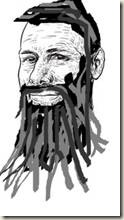
Is mine that much different than Knox’s? I guess I’ll keep working on it. I have a lot of respect for men with beards. If I lived in Scotland and my wife would go for it I would probably try to give Knox a run for his money.

------

Thanks for taking the time on these questions and may the Lord cause great growth in your life…both spiritually and in regards to your aspirations to have a Knox beard. 

You can follow William’s blog here: Life Reformation and you can find more information on his church here: Covenant Reformed Church.

Wednesday, May 18, 2011

Faithfulness Under Fire Reviewed

Our story of what God is doing and has done in our life is vitally important.  Our children need to know our story.  We see what happens when children don’t know our story in Judges 2:

When Joshua dismissed the people, the people of Israel went each to his inheritance to take possession of the land. And the people served the LORD all the days of Joshua, and all the days of the elders who outlived Joshua, who had seen all the great work that the LORD had done for Israel. And Joshua the son of Nun, the servant of the LORD, died at the age of 110 years. And they buried him within the boundaries of his inheritance in Timnath-heres, in the hill country of Ephraim, north of the mountain of Gaash. And all that generation also were gathered to their fathers. And there arose another generation after them who did not know the LORD or the work that he had done for Israel.   (Judges 2:6-15, emphasis mine)

Wouldn’t you think that God parting a sea would be a story you’d want to tell?  Seriously.  Hollywood decided it was good enough to tell and they told it ala Prince of Egypt.  It is an awesome story.  Wouldn’t you think this would be one of those stories you would want to tell your children and their children?  Nope, not Israel.  They are living in the comfort of the promised land. 

But there are a million little stories that may actually be cooler than God parting the Red Sea.  These stories are the lives of believers that have been brought from death to life.  Those of us that are believers are actually resurrected from the dead.  Our children need to hear those stories.

They also need to hear the stories of other people.  They need to hear stories like Polycarp laying down his life in the early church.  They must hear that God left a remnant even in the dark middle ages.  Our children need to know Bernard of Clairvaux.  They need to know the Reformers.  They should be taught about Spurgeon, Whitefield, Wesley, Newton, Luther, Edwards, etc. at the same time they are learning of Washington, Jefferson, Adams, and Franklin. 

That is why I am very excited about the series of children’s book from Reformation Heritage Books.  The first one that I was able to get my hands on was Faithfulness Under Fire: The Story of Guido de Bres.  These books are geared towards being read to 2-5 year olds and 5-10 year olds reading them on their own. 

Summary

I had personally never heard of de Bres before getting this book from RHB for free in exchange for a review.  Little did I know that he was the author behind the famous Belgic Confession.  He was also a martyr for the cause of Christ.  He was hanged in May 1567. 

This little book of his life story isn’t much longer than twenty pages and is filled with illustrations.  It is compelling enough to keep the attention of my three year old and the pictures are flashy enough to keep him engaged as well.  They are not overtly flashy and they relate well to the story at hand. 

Guido’s story is very sad but it relates the gospel clearly.  The main emphasis of this children’s story seems to be that “strongly held convictions will produce conflict” but that the gospel is worth it.  It also helps little children to see that God is more important than even our own lives.  These are helpful lessons for children to learn.  And children need to hear the stories of how the gospel spreads through suffering. 

Reflections

On the front cover is a picture of a man climbing a ladder with the threat of being torched.  One particular illustration portrays and angry mob burning a life-size figure of de Bres.  There are a few other pictures that may cause parents of very young children to dismiss this book.  However, I do think that the publishers make a valid case for using this book when they say:

…the reader should know that every reasonable attempt has been made to avoid gratuitous, unsavory detail.  It would be impossible, however, to tell the story of de Bres apart from the theme of suffering…secondly, we don’t believe it is necessary to shield even young children from the ugliness of life as long as we also provide a context in which this life can be lived victoriously.”

I tend to agree.  There is much to be learned from the life of de Bres.  But each parent hopefully knows their own child.  You may find this material a little too sensitive for your youngster.  If you do that is okay there are other books that will serve the same purpose.  However, this book is helpful and the story of Guido de Bres and others like him need to be told.  And eventually, they need to be told to your child. 

If you are interested in this book you can buy it for only $7.50 for your child. 

Monday, December 13, 2010

Our Super Adorable Children

Thought I’d post these.  Nikki decided to do a little photo shooting today:

isaiah.1

This is Isaiah’s “Oops, I ripped my pants pose”

isaiah.2

isaiah3 

The ones of Hannah did not turn out very good, we’ll try to get some better ones soon.  Here is one:

hannah.1

Tuesday, June 29, 2010

Should Mommy Work?

My wife often struggles with not working outside the home.  I am confident that she puts in more difficult days than I do while working outside the home.  Some of our financial strain could be alleviated by my wife taking a part-time or full-time job.  But at the end of the day we have decided that the most important thing that we can provide for Isaiah (and the forthcoming baby Hannah) is for mommy to be at home and pour her life into them.  That’s why what John Piper says here resonates with us:


Thank you Nikki for being so faithful to your glorious ministry!  Our children’s passion for Jesus will be a reflection of yours. 

Wednesday, January 27, 2010

Monday’s Ministry Musing: Should We Serve Our Own First?

Yeah I know it’s Wednesday but I just could not let this go until next Monday.  So pretend that I wrote this on Monday and it got stuck in some cyber filter, wound up in a parallel world, and somehow just posted today. 
I am beginning to see rumblings of people frustrated with the American government providing relief to the Haitian people, “when we have hurting people over here.”  I’ve even seen this little jewel pop up on several people’s Facebook status:
Shame on you America: the only country where we have homeless without shelter, children going to bed without eating, elderly going without needed meds, and mentally ill without treatment - yet we have a benefit for the people of Haiti on 12 TV stations. 99% of people won't have the guts to copy and and paste this...
First of all that is one of the most uninformed and narrow minded statements I have ever read.  If you are my friend on Facebook and you thought this would be cool to cut and paste—then I am sorry if I offend you, but this statement is just plain wrong and outright irresponsible.  Do a little fact checking.  Are we really THE ONLY COUNTRY where homeless are without shelter, children go to bed without eating, etc.  Seriously?  Have you seen Africa?  Do you know about North Korea?  starving_child-sudan2
There are numerous places in much worse shape than we are.  But that is not my main issue.  Let’s just pretend for a moment that this statement IS true.  Should we “serve our own” before we serve the needs of others? 
This way of thinking within Christian circles I just do not understand.  Yesterday morning on a Christian radio station I heard an advertisement for some spa/resort business that said something like this, “In 2010 you should finally do something for yourself…come in to blah blah blah and we’ll give you the care that you deserve.”  These advertisers are not stupid.  They are appealing to something within us that wants to say…”Yeah, you’re right, I’ve been always giving—it’s about time I start taking.” 
The  principle is the same as the Haiti response.  Why should I take care of someone else when I myself am hurting? 
As a side note I do understand there are times when you are absolutely burnt out and you have nothing more to give anyone.  You do need to get away for a little while and retreat.  Even Jesus did this (Matt. 14:23).  But notice that Jesus “went up on a mountainside to pray”.  He got His refreshment by spending time with the Father.  He did not get his refreshment by going to a health resort, or calling up his disciples and saying, “hey guys why don’t you serve me for awhile.” 
So, why should you take care of someone else when you are hurting yourself?  Why should our nation send relief to Haiti when we have homeless people and orphans here?  Because that is exactly what Jesus would do.  Jesus would not refuse to serve a Samaritan because the Jews were under Roman oppression.  You look at the Cross and compare that to this “I need to care of my own needs first”, New-Age, Oprah-driven, egocentric junk.  I do not see my bleeding Savior climbing down off the cross and saying, “someone else will have to serve for awhile…I have my own needs”.  You find me one explicit place in Scripture where Jesus put His humanly needs above other people and I will delete this post and copy and paste that silly little shame on you America thing myself. 
Now if you want to point out American duplicity I’ll show you were it is found.  It is not in America helping Haiti.  I fully support our nation in supporting the people of Haiti.  Where you can see American duplicity has its roots in this “serve my needs first attitude”; and we see the fruit in this attitude in the atrocity that is abortion. 
Shame on you America for fighting the genocide of other nations while neglecting to address your own infanticide.  Shame on you America for waving a flag that says we fight for freedom but refusing to fight for the freedom of the unborn.  Shame on you America for exalting a woman’s right to choose while neglecting the much smaller and less developed woman’s right to choose.  Shame on you America for exemplifying an attitude that says, “me first and then I’ll serve you.” 

Friday, April 18, 2008

Borrowed Light: This Week in Blogworld

Perhaps you've noticed the change in title. Instead of doing a "Today in Blogworld" we will now be moving to a "This Week". If something is pressing then I will provide a link throughout the week. As of now, we will be posting all of our links on Friday or Saturday of every week.

Michael Patton charts four views of God's sovereignty? Where are you on the chart? I am in between meticulous sovereignty and providential sovereignty. I'm probably a little to the right of John Piper.

Pulpit Magazine offers us a series on ministry to children. They consider When to Baptize Your Children, Proverbs and Parenting, Evangelizing Your Children Part 1 and 2.

Jared hits the nail on the head with his post on The New Legalism

Erin Sutherland continues the New Attitude series on applying the gospel to every day life. She discusses The Gospel and Relationships (for Girls)

Phil Johnson's final entry on Acts 17: Paul and Charitableness

Many bloggers went to the Together 4 the Gospel Conference (Hence, the small number of links). I was not one of them. I could link to all of their notes, but instead I will only point you to the audio for all the sermons. This should keep you busy.

This is also from T4G:
(HT:Challies)

Friday, March 7, 2008

Borrowed Light: Today in Blogworld 03/07-09

Brian Thornton has an intriguing quote. Who do you think said it?

This could be a watershed decision by an appeals court in California. The court has ruled that parents have no constitutional right to homeschool their children. I can not articulate a comment on this as effective as Dr. Mohler. I would simply say, "that is just dumb". Dr. Mohler is a little more articulate, read his take here.

Great story of witnessing and faithfulness to the gospel by Timmy Brister: The Cross Isn't Sexy.

Michael Spencer, the IMonk, has compiled a list of 10 Reasons He Doesn't Read Your Blog. It would very helpful to me if my readers would read this article, and e-mail me any suggestions in how I may improve this blog.

I failed to mention this last week. Abraham Piper has a new blog called 22 Words. It is very intriguing. And it takes about 15 seconds to read each post.

There is a very important discussion going on between Rick Love, John Piper, Justin Taylor and a few others. The eye of this hurricaine is found in Love's signing of A Common Word. He gives reasons why, Piper, Taylor, and others do not quite buy it. Here is Love's latest explanation. Here is Frank Turk's (of Team Pyro) response to Love.

Trevin Wax points us to a phenomenal Spurgeon quote admonishing pastors and people alike, to read.

This is a phenomenal post by Ray Ortlund. His central thesis is this: "In the heart of God, moral fervor is beautiful. In the heart of a sinner, moral fervor is complicated." He then offers a few diagnostics to monitor whether or not he is slipping into moral fervor. Wonderful post.

There is a Real Preachers of Genius video floating around. I thought this one was pretty funny (and sadly true) also:

Wednesday, February 13, 2008

The Mystery of Providence Chapter 5

In this chapter Flavel hopes to show us the mighty Providence of God in directing our family affairs. Perhaps some would be negligent to thank Providence for their marriage or children. Flavel, shows us the ridiculous nature of such a proposition. He gives four evidences of Providence in family affairs:
  1. In appointing the parties for each other (the means in which they came together)
  2. In the harmony and agreeableness of temperaments and dispositions (how they compliment one another)
  3. In making one instrumental to the eternal good of the other (how they benefit each other)
  4. In children, the fruit of marriage

If you believe that you Providence has dealt you a raw hand, then Flavel urges you to consider the hand dealt to many others. Consider David's scoffing Michal. And patient Job's added affliction of his nagging wife. Even that you have a wife and children (if that be the case) is a gift of Providence.

Flavel also considers the care with which God gives to his children, and this in regards to the rearing of their own families. He again gives three evidences of Providence in this regard:

  1. The assiduity (close care) and constancy of the care of Providence for saints
  2. The seasonableness and opportuneness of its provisions for them (at times when we most need it God comes through for us)
  3. The wisdom of Providence in our provisions (giving needs over wants)

This chapter concludes with some of the most practical advice thus far. Flavel gives six exhortations to help us "walk suitabley to [our] experience of such mercies":

  1. Do not forget the care and kindness of Providence...
  2. Do not distrust Providence in future exigencies (that which is urgent)
  3. Do not murmur and complain under new straits
  4. Do not show the least discontent at the lot and portion Providence carves out for you
  5. Do not neglect prayer when straits (hard times) befall you
  6. Do not worry your hearts with sinful cares

Discussion:

How would you write this chapter if you were counseling a single person, widow, or barren wife?

In the six exhortations Flavel gives us at the end, are there any in which you find it most difficult to trust God in? It appears that Flavel is urging us to remember the past because that will dictate our response in the future. Therefore, remembering and rejocing in what God has done in the past will help us not worry our hearts with sinful cares.

Do you ever struggle with worry because you know that God is sovereign and does as He pleases? Do you ever find yourself doubting because you know that God's greatest aim is not merely our good but also His glory? Is it possible that Providence might so work that our greatest fears will become a reality so that Christ is magnified and we are filled with more joy? Do you, often, forget that God works all things together for our good? Even if we go through difficult times we know that in the end it will be for our greatest joy and God's greatest glory. Yet, knowing that do you sometimes find yourself concerned about what that might entail?

Stories that Flavel Uses:

Is a Yellow Horse Really that Bad?

LinkWithin

Related Posts Plugin for WordPress, Blogger...