Showing posts with label interviews. Show all posts

Tuesday, February 26, 2013

When Cancer Hi-Jacks Your Reunion

image A little over a year ago Jason Taber had supper with his sister, Tonya. This was no ordinary meal. This was the first time they had met. On Jason’s 38th birthday he reached out to his sister for the first time in his life.

Now, one year later Jason stands beside Tonya’s hospital bed as she is fighting complications from Hodgkins lymphoma*. Their story is a testimony of God’s grace and the uniting power of the gospel. Jason was kind enough to share his story with us.

Jason, can you share the back story to your relationship with Tonya? What inspired you to finally reach out to Tonya?

My birth father left me when I was a baby. I learned that I was adopted at the age of 12 or 13. I first learned that Tonya existed when she first got married about 13 years ago. I had always stayed away because I assumed that the family wanted nothing to do with me. In reality Tonya had known about me her whole life, and had prayed for the day that we would meet.

God had been working in my heart for awhile about my propensity to isolate when things get difficult. One Sunday a man from our church shared his testimony of reaching out to his estranged daughter. On November 22, 2011, my 38th birthday, I finally decided to contact Tonya. I feared that it would be awkward. It has been everything but that; it is as if we had known each other those 37 years.

Shortly after our reunion I met my dad for the first time. Or rather I saw him for the first time, he was lifeless on a hospital bed. Tonya’s relationship with him had been fractured. We were able to be there for one another during this time.

When was Tonya diagnosed with cancer?

Tonya was diagnosed with Hodgkin's Lymphoma in October of 2012, just under a year of our first meeting.

What was your initial reaction?

My first reaction was a mixture of fear, anger and confusion. I was terrified to lose this person that I had just found. We had quickly filled empty spots in each others lives and become extremely close. I was also very angry and confused with God. I could not understand why He would bring us together only to take her away from me. That along with other setbacks in my life made me pull away from God and those close to me. I was becoming bitter.

About a week ago Tonya had some major complications from the cancer. Can you tell us a little about this recent trial?

About two weeks ago Tonya experienced extreme fatigue from chemotherapy treatments. On February 10th she collapsed in the shower. She was admitted to the hospital the next day. At first the doctors assumed they were treating dehydration and other deficiencies due to her weakened immune system. Little did they know an infection had taken hold, with her body having no way to fight it. On February 15th, Tonya developed a fever and labored breathing. They quickly determined that she had fluid in her lungs and feared she could be septic. Within hours she crashed, with her blood pressure dangerously low and unable to breathe.

I received the call that she had been rushed to ICU, and I needed to come quickly. Shortly thereafter the decision was made to put her on a ventilator. Things looked very bleak. For three days she was under constant sedation as they tried to kill the infection in her body. On Monday the 18th they awoke her from sedation. It took me 2 hours to get her to open her eyes. She has steadily—actually quite miraculously—improved since then. From last Wednesday on she has improved leaps and bounds every day. (Tonya was actually released yesterday, to continue recovery at home).

How have you seen God's grace during this time? 

God's grace was evident in so many areas. Tonya's immune system was completely gone, medically speaking she should not have made it. The outpouring of prayer on Facebook and in churches all over the place was an act of grace. The cancer that had caused me to isolate from God and other unbelievers, had now by the grace of God drawn hundreds of believers to my side to encourage me. There is no way on my own volition I would have done that. God was gracious to draw me to Him, and believers to me when I needed it most. It was by God's grace that Tonya received amazing care. Doctors somehow made the correct choices without even knowing what they were fighting at first.

How has this trial of suffering strengthened your relationship with Tonya? with the Lord? 

My relationship with Tonya was very strong to begin with, but this situation has made it even stronger. We lived 37 years without being able to be there for each other. We both suffer from abandonment issues due to our history with our dad. He wasn't there for her much more than he was for me. Tonya knows now that even in the worst circumstances, I will never leave her side. Watching my sister through a window, many mornings at 3 or 4am, struggling to just take each breath, made me realize just how much that I love this person.

These same times alone in the morning, also strengthened my relationship with God. I was at a point where I was helpless to do anything. All I could do was cry out to God to save my sister. Sometimes I didn't even have words, just sobs or tears. In the beginning, I felt alone without my sister. By the end, it was obvious that God has carried Tonya and the family through. We had given everything, we were drained and weary. He picked us up each time that we felt like we couldn't go on. I feel ashamed for pushing God away while I attempted to fix all my problems on my own. I have no doubt that it was only by God that Tonya was healed. His grace and love was so great that at times it felt like being hit by a truck. It was overwhelming each time Tonya was able to do something she had no business being able to do. This is one of those markers in life I can look back on and say “look what God did!”

What is one thing that you would say to estranged siblings?

For those who know they have a sibling out there, don't ever give up. Tonya prayed for years to have a relationship with me, her brother. For those scared to reach out, take the risk, it is worth it. For years, I missed out on a relationship with an incredible woman, my sister. I was held back by fear. We have a God who forgives, and who heals broken relationships. Pray!!!  I can't say enough about Tonya praying and the faithfulness of God to hear that prayer.

Lastly, how can people get involved? How can we pray?

Pray for Tonya to continue gaining strength. Also, she does still have cancer. Pray that she can get rid of the cancer when her strength returns. Pray also for her three young children.

If you are interested in further updates to the story, or to know how to pray with more information, you are invited to join the Praying for Tonya Hief page.

--

*Tonya was actually released from the hospital yesterday to continue her recovery at home.

Thursday, October 4, 2012

4 Questions With Tim Challies

On September 25th, 2012 Tim Challies celebrated his 10 year blogging anniversary.  If you’ve read Christian book reviews in the past ten years chances are one of them was that of Challies.  He has been a staple in my blogging diet from the first day that I started tracking blogs daily.  Challies and Justin Taylor (JT) are foundational bloggers in the Young, Restless, and Reformed movement.  On that day Tim shared a little about the history of his  blog.  He also agreed to answer 4 questions about his blog and blogging in general.  If you are a blogger you’ll benefit from reading Tim’s answers. 

What have been some of your greatest joys in 10 years of blogging?

Let me give one that is personal and one that is outward.

On a personal level, the greatest joy has been the benefit of daily writing. Though I don't wake up every day just longing to sit down and write, in the end I'm always grateful that I've taken the time to pause, collect my thoughts, and write something. Anything. I can chart my personal and spiritual growth through blog posts; it really is a large part of my discipline of meditation. So personally, or selfishly, the joy has been in using blogging as a means to drive home truth.

In an outward sense, one of the greatest joys has been in meeting so many like-minded people. Some of those I've met face-to-face and others i've met only digitally. Whether I'm sending an email or traveling across town or traveling across the world, my life is much richer for having met so many interesting people and having begun so many friendships.

What has been one of your biggest disappointments?

I had to think about this one for a little while. I suppose the biggest disappointments are related to my  own sin. The biggest disappointments have consistently been related to readership. When I had 100 readers I wanted 1,000; when I had 1,000 readers I wanted 10,000. Perhaps the real disappointment is that I've often looked to what God hasn't given me rather than marveling at and enjoying what he has provided. Another disappointment has been seeing my own desire to use my site as a forum for gossip or a place where I neglect to tame my tongue (or keyboard, as the case may be). A public forum provides a place to sin publicly. I've misused this platform too often.

When and how did your blog take off?

I don't know that the site ever "took off" in the sense of suddenly surging in the number of regular visitors. Instead it has been a slow and gradual build over ten years.

I have often gotten bumps in the number of visitors when I've interacted with the big issues of the day. When The Purpose Driven Life was all the rage, I happened to be blogging through it day-by-day. When The Passion of the Christ was being pitched to churches as the greatest opportunity for evangelism since Pentecost, I wrote a review. The Shack, 90 Minutes in Heaven, Heaven is for Real--in so many cases I've tried to interact with what is popular in the Christian world and this has drawn in people who are interested in learning what these things are all about. Some of those people then stick around and become regular readers.

I guess the blog has been a parable of most things in life in that the growth has come through long hours and hard work. It has never come easily.

If someone were registering a blog for the very first time today, what advice would you give him/her? 

I would tell him that he should blog first and foremost for his own benefit. I don't mean for that to sound selfish! Here's the thing: blogging can be a great joy if you are content to keep writing regardless of whether anyone else reads along. When you can do this, you can avoid being driven by the numbers of visitors and you can avoid the allure of writing very pragmatically, choosing what you write about only because you think it will generate buzz. If you can be content with blogging for an audience of one, you will find much more contentment in blogging for an audience of one hundred or one million.

After all of this, I would tell him to identify a niche--an area where the blogosphere is underserved--and to work toward building authority in a narrow sphere rather than a wide sphere.

And then I would tell him to stop thinking about blogging and to just get writing. Too many people waste weeks perfecting a design and trying to get people to notice them when they should just be writing, writing and writing.

Very sound advice.  Thanks for doing the interview, Tim.  And I pray that the Lord continues to bless your ministry and that we get to enjoy reading from Challies every day until the Lord calls you home or returns. 

Saturday, September 8, 2012

7 Questions with Lee Eclov, Author of Pastoral Grace (Part 2 of 2)

Yesterday I posted the first four questions to my interview with Pastor Lee Eclov, author of Pastoral Graces.  Today I hope you enjoy his final 3 questions.  Notice his non-answer to the Mike Ditka question.  I think we might be on to something.  Da Bears!

5. Perhaps my favorite concept from the book is that there are "the people grace has invited to church". I love that. Can you tell us a little more about that statement? Where did it come from? How does seeing people that way influence how you do things as a church?

I’m glad you liked it. It was simply an observation. When you hear the stories of how people end up in church it is obvious. The effect on ministry, I think, is the assumption that no one is here by accident. (And the corollary: the measure of our church is not who or how many show up.) We don’t have to ‘win’ these people to our church. God brought them, and he can keep them with us. We need to be the church on a Sunday morning—in the authenticity of what we do, in the love we show, in exalting the Lord, in preaching the Word—and we’ll be just what each attendee needs, at least on that day.

6. What is the coolest thing that God is doing in your church right now?

Actually, I suspect that the coolest thing is something we haven’t really heard yet because most cool stories are happening in personal lives and it takes awhile before they come to light. I usually get more jazzed about those personal stories than things happening churchwide. Like Mae who came to see me last week to catch me up on things in her life. Out of the blue, she says, “On July 21 I accepted Jesus Christ as my Savior!” It happened in a Chinese-language Bible study when a visiting speaker she’d never met spoke specifically to her personal need.

7. I notice that the church you serve is close to Chicago. I also notice that you have a wonderful Mike Ditka mustache. Is that a prerequisite for ministering in Chicago? Do people ever refer to you as Pastor Ditka? Ever thought of wearing a Bears sweater and a whistle?

Really?! Really?!?

image image

---

Give the guy a cigar, a whistle, a frown, and a Ditka cut, and I think we’re on to something here.  So, if you’ve ever wanted a book on pastoral ministry written by one of the greatest coaches in history then you’ll certainly want to check out Pastoral Graces by Coach Ditka Lee Eclov. 

Thanks again to Lee for agreeing to do this interview and enduring my really horrible sense of humor. 

Friday, September 7, 2012

7 Questions with Lee Eclov, Author of Pastoral Graces (1 of 2)

Last week I had the opportunity to read and review Lee Eclov’s book Pastoral Graces.  It really is a helpful book for pastors and would probably be beneficial to anyone that loves Jesus.  Pastor Eclov was kind enough to answer 7 questions about his book, ministry, and Mike Ditka.  Here is part 1 of the interview:

1. I have several books on pastoral ministry in my office. Why should I buy one more? 

I’m not sure you should. But I don’t think many books help pastors simply remember how good it is to be a pastor—what a privilege it is to be dispensers of God’s grace in a thousand simple ways. I have had many pastors tell me already how my stories (which are not much different than other pastors’ stories) and a certain way with words God that has given me have encouraged them significantly. It’s pretty amazing, to tell you the truth.

2. Your book has been out for a few months now. Anything that you'd change or add to a second edition?

Caught a couple typos, but other than that, no. A writer friend told me, “When it’s done, don’t look back. It’ll never be perfect.”

3. In your book you mention that when given some crazy ideas you now default to a "yes" rather than a "no". Can you give us an example of a really crazy idea that you might have instinctively said no to, but it actually was something God used in a significant way?

To be clear, some are ideas are crazy, and the best plan is benevolent neglect. In the book I tell about the idea of a car cruise as an evangelistic outreach. I thought that was a crazy idea that worked like gangbusters. I thought when some folks got the idea of bringing their dogs to a local nursing home it was kind of goofy, but it turned out to be a winner.

4. On page 125 you say, "This can be a bruising business, and if we keep tying pillows around us we don't fell people's punches. Of course, we can't feel touches of love very well either". What are some disciplines that you have put into your life to keep you from tying pillows around yourself?

I don’t know that it is a discipline, but I have to stay authentic. I don’t have to be equally available emotionally to everyone, but I can’t hide behind my pastor-face or go plastic on people who will tax me. I also have to talk to Jesus about relationships that are tough on me. When I wrote about “punches” I wasn’t thinking so much about criticism as people that are draining and difficult. I think with some critical people we do have keep a certain emotional distance. That doesn’t mean we’re not loving.

--

Be sure to check out Part 2 tomorrow.  And don’t forget to purchase the book if you haven’t already.

Monday, July 2, 2012

7 Questions with Greg Dutcher: Author of Killing Calvinism (Part 2 of 2)

On Saturday I posted the first part to my interview with Greg Dutcher, author of Killing Calvinism.  Below is part 2

5. You mention in the book that some things about our theology make you uncomfortable. You also, and I love this point, encourage us to be real and acknowledge those difficulties. What is the biggest thing about Calvinist theology that makes you uncomfortable?

I try to show that every Christian, regardless of his theological stripe, has some emotional discomfort with at least something. I've never met a Christian who did not emotionally balk at the concept of an everlasting hell, for instance. Of course having some emotional reticence does not threaten the existence of a doctrine so there really is no danger in admitting that we may struggle with certain aspects of our theology. Has it EVER bothered me in some way that God does not choose everybody to be saved? At the risk of having my Calvinist card revoked, I would say have to say "yes- sometimes it has bothered me." A non-Calvinist friend of mine was very appreciative of me admitting that. He told me that too often Calvinists come across as "Stepford" wives who seem robotically at peace with emotionally difficult doctrines.

Of course it is difficult to come to terms with our inability to choose God on our own. We live in a culture where choice is king. We have already made countless free-will decision before our car keys are in the ignition. There is no reason we need to fear admitting that it can be hard to accept the fact that sin has wrecked our will beyond our worst nightmares.

6. How could this book benefit a non-Calvinist?

My hope is that non-Calvinists might scratch their heads and think, "Huh- maybe it's not as much the theology of Calvinists but the attitude of Calvinists that has bothered me so much." Once a distinction is made, maybe they won't throw the baby out with the bath water. Of course I'm not so naive to believe that our non-reformed friends will simply come to embrace Calvinism after one of its advocates admits a bunch of his blunders. But I do hope that they will sense genuine love and respect from a dude just trying to handle his Calvinism well.

7. All of Christendom has decided that the issue of Calvinism will be settled by a wheel-barrow race. You've been chosen to select the two racers for Team Calvin. Team Not-Calvin is championed by John Wesley and Billy Graham. Who do you pick to lead us to victory? And why?

Wow- that's a tough one. To be consistent with Team Non-Calvin, I'll pick a dead Calvinist and a live one too.

I hate doing this, but Spurgeon edges out Calvin to me. Even though I'm bypassing the guy my theology is actually named after, I just can't think of anyone who can beat Spurgeon in eloquence or passion.

Then I'd have to go with Piper as the modern Calvinist. Why? Because he's the 21st century Spurgeon in my opinion. Eloquence, passion- I just can't think of anyone else who can match him in today's pulpit.

GO TEAM!

---

Thanks for doing the interview Greg.  And I pray that the Lord blesses your ministry and your writing.  Thanks for this helpful little book.  It’s my prayer that many will read it and that the Lord will use it to expand His Kingdom. 

You can get the book here

Saturday, June 30, 2012

7 Questions with Greg Dutcher, Author of Killing Calvinism (Part 1 of 2)

One of the best books that I have read in 2012 is Greg Dutcher’s, Killing Calvinism.  I was very happy that Greg agreed to answer 7 questions about his book and his ministry. 

1. What means did God use to make you a more humble Calvinist?

Like many fresh-from-the-factory Calvinists, I never considered that there could be any deficiency in me. The problem was in other people's inability to embrace what I had discovered. When some of these folks got their feelings hurt or found me distasteful it all simply confirmed my belief that I was being attacked for standing up for the truth. Sadly (and I remember saying as much to reformed friends) I considered their negative reactions a badge of honor that I wore with pride. Of course, had I thought about that word "pride" just a little bit longer perhaps I would have been humbled a little bit sooner.

Like many Calvinists I learned in the school of hard knocks. There was not one stand-out experience per se but the aggregate effect of many experiences eventually caught up with me. At some point my heart changed, and I started seeing myself as the least common denominator in all of these unpleasant interactions. And at the risk of attributing too much to one man, John Piper and the long-term effect of his preaching powerfully effected me. He combined two things that I had rarely seen fused, unashamed Calvinism with uncommon humility. As I devoured his books and sermons, the Lord gradually showed me that true Calvinism leads to humility not pride.

2. Tell us a little about your church, some of the things the Lord is doing.  Also, what are you most excited about seeing God do there?

I absolutely love Christ Fellowship Church! By God's grace I planted it in the summer of 2003, so at 9-years-old it is really beginning to build some history. It is an independent, non-denominational church, and that has to do a lot with my own eclectic make up. We are probably most similar to an Acts 29  church, but when I planted it, we knew nothing of the Seattle-based movement. We average about 300 people each week, and we are really beginning to understand the implications of the gospel for missional living. Our community groups are increasingly becoming a more central part of our congregational life. My own goal (although I know that no church ever reaches it) is that each person would be intimately involved in a spiritual family where he is growing as a learner, servant and missionary. 

The majority of the attenders probably don't even know that the preaching/teaching they get each Sunday is "reformed." I rarely use any of the buzzwords (Calvinism, doctrines of grace, T.U.L.I.P.) from the pulpit. Those who are looking for it, can always tell (the running joke is "he must be getting a chunk of the royalties from those Piper quotes"), but I have been very intentional in teaching authoritatively from the text of Scripture itself.  The only "ist" label mentioned at CFC is "Biblicist." That is what I'm hoping my people become in increasing measure.

In the last year we have had several lost people come to saving faith in Jesus. In almost every case it has been in the context of suffering and death. Just last week I baptized a couple in their 70's who just came to faith in the past year. The doctrine of God's sovereignty (especially in difficult circumstances) has become especially precious to me.

3. How do you typically respond to an aggressive non-Calvinist?  Do you respond?

I do not always respond if the emotion is reaching fever-pitch level. I tell about a few such examples in the book. But if emotions are somewhat under control then I usually try to diffuse any negative emotion by talking about my respect for non-Calvinists like Billy Graham, John Wesley or D.L. Moody. I then ask if they knew of the friendship between Wesley and Whitefield and how they had a gentleman's agreement to not let their differences in soteriology keep them from partnering in the preaching of the gospel. I find that once the non-Calvinist knows that he is respected (as he should be!) as a fellow brother in Christ, then genuine conversation can begin. 

At that point I usually start from a total depravity angle. I find that most Bible-believing Christians readily accept the portrait of mankind's sinful state. What they often need help with is thinking through the implications of this portrait. When a Christian accepts that mankind does not submit to God's law because he cannot (Romans 8:7), then sovereign election and irresistible grace are almost necessary to make sense out of the salvation of any sinner. From there the issues of God's eternal decree, fairness, etc... become easier to discuss.

4. How would you disciple a young-Calvinist that is blowing all 8 of your points?

Easy. I would just invite him to learn from my mistakes! Seriously! I can easily furnish ample illustrations of how I killed my Calvinism. Of course all of that is a negative approach (don't do this), and I would seek to balance that with a (do this instead) positive approach.

I wish every Christian had the privilege of knowing Roscoe Adams. He was a fellow elder, equal to me on a leadership level but a father to me on a spiritual level.  He died on April 22 of this year, and he never got to see that the book was dedicated to him. It will take me a long time to move past my grief at his loss. He was a humble, gentle and joyful Calvinist.  I would suggest that each person find his own "Roscoe" and learn from his example.

----

Be sure to check back in on Monday for part 2 of our interview.  In the meantime you may want to check out my review and the TweetNotes for Killing Calvinism.  If the book seems interesting to you then you can get it on your Kindle for around $5

Thursday, June 21, 2012

7 Questions with @StephenAltrogge, Author of Create: Stop Making Excuses and Start Stuff

Last month I shelled out a whopping $3 to buy Stephen Altrogge’s latest offering into the world of books.  As I noted in my review this booklet not only gives permission to be creative it shows us that God commands it.  It’s a great read.  For a summary of it’s contents you may also want to check out the TweetNotes for the book

Stephen was gracious enough to answer 7 questions about his book.  Here are his answers:

1. Why this book? What motivated you to write it and what should motivate us to read it? 

I wrote this book because I believe that God has given creative gifts to every single person. However, we tend to think that only artists and poets are "creative". I wrote this book to inspire every person to use their creative gifts to bring glory to God. 

2. Why is the book so short and only in E-book format?

It's short because my thoughts on the subject were short! Plus I wanted it to be easy to read. It's in e-book format because it's much easier to publish something in e-book format rather than in paperback.

3. I love the cover. Who designed it? Any story behind it?

My friend Shepherd Ahlers designed the cover. He's great and I highly recommend him. Not really any story behind it other than the fact that I loved the photo.

4. What is the biggest piece of advice that you would give to the guy wasting his talents by eating cheetos and watching Matlock marathons in his mom's basement instead of being creative?

Get off your butt, pray for God to help you overcome your laziness, and get started on that project that has been lingering in the back of your mind. And watch something other than Matlock.

5. Let's pretend that I am a dude that is absolutely convinced that I don't have a creative bone in my body. All I can create are disasters and maybe finger-paints that monkey's would laugh at. Convince me that I'm wrong. 

You were created in God's image (Gen 1:27). Our God is an explosively creative God, and he put that same drive and impulse in you. Creativity may look different for you. You can be creative by organizing something, gardening, plumbing, etc. God has given us a desire to create and bring order out of chaos. You have it. Use it. 

6. You mention in your book that sometimes you read while running on a treadmill. Perhaps I am just not familiar with treadmills, but that seems like it would be vomit inducing. What device did you create that allows you to do such a thing?

I set my Kindle on the biggest font. Then I set my Kindle on this little ledge on the treadmill. Then I run. I don't vomit. 

7. You also mentioned in your book that you follow a bazillion blogs. I have to ask...is Borrowed Light one of those bazillion? And if not, what steps--apart from repenting in dust and ashes--will you put in place to acknowledge your error and change your ways?

I repent in dust and ashes. I'm ripping my clothing as we speak. 

Thanks for taking the time to answer these questions Stephen.  You can follow his blog, The Blazing Center, here.  You can also purchase Create for only $2.99

***I also should mention that I noticed that Stephen didn’t mention actually putting Borrowed Light on his feedreader as a sign of repentance.  Apparently, it is so bad and I am so uncreative that he would rather tear his clothing than have to endure scrolling through my nonsense everyday.  This clearly shows that Stephen is part of the man’s grand conspiracy to keep me down.

Tuesday, June 19, 2012

7 Questions with Dave Rohrer, Author of The Sacred Wilderness of Pastoral Ministry (Part 2 of 2)

A couple of months ago I was privileged to read and review Dave Rohrer’s book The Sacred Wilderness of Pastoral Ministry.  He was gracious enough to answer 7 questions, we looked at the first 3 yesterday and today we will consider the next 4. 

4. Who have been the most influential people in your life? (Both non-biblical historical and modern day friends).

Hands down, my wife Mary Ann, and my children Justin and Laura, are the most influential people in my life. Most of the big decisions I have made for the last 27 years have somehow been influenced by them. I’ve come to believe that covenant relationships are the most fertile soil for growing the fruit of the Spirit in us and my relationships with the members of my family have taught me this.

Beyond family, those next in line are the people who have influenced my journey as a disciple of Jesus and as a pastor. Apart from Eugene Peterson’s books and his willingness to answer my letters I would probably be doing something other than being a pastor. Apart from hearing Fr. Gregory Elmer (a Benedictine monk from St Andrews Abbey in Valyermo, CA) reflect on the scriptures I wouldn’t know very much about prayer and about allowing the scriptures to lead me into prayer. Apart from the life and lectures of Dr. James Loder I’m not sure I would live expecting to be a part of the work of the Holy Spirit. And apart from the teaching and friendship of Ian Pitt-Watson, my preaching professor at Fuller Seminary, I don’t think I would have ever had the ability to hear God’s call to pastoral ministry.

If you look on my bookshelf you would also be able to deduce that Wendell Berry, C.S. Lewis and Marilynne Robinson are authors who have had a major influence in my life.

5. In your book you encourage pastors to see their role as fundamentally being pointers to Jesus. What practices have you cultivated in life and ministry to make you a better pointer? Both to keep the focus off yourself and to help people see Jesus better.

The word mystic has very little appeal in the protestant world. In fact, I have traveled in some circles where the word is about as attractive as the words mass-murderer or pedophile. Yet I think there is in this word a key to being a pointer. A mystic at his or her best is simply one who chooses to stay awake and be an observer. A mystic, like a scientist simply wants to see what is and respond to it accordingly. A mystic is not one who transcends his/her body in order to attain some higher spiritual and non-material plane, but one who embodies faith in a time and place and seeks to stay away to the presence of God in that place. I would say in order to be a pointer to Jesus you have to stay awake and be willing to engage the disciplines of silence, observation, openness, humility and hospitality.

6. Pastors are to be pointers. But, how much should they polish their fingers?

Looking ahead to the next question I am going to assume that you are using a metaphor here and are not talking about regular manicures. The finger is important only to the extent that it grabs enough attention so that folks can follow it to where it is pointing. In the book I use the image of John in the crucifixion scene from the Isenheim altarpiece. Grunewald has depicted John’s finger with enough artistry to draw our attention to John, but not so much that we can’t also apprehend his message. That bony forefinger is edgy enough to get my attention but not so prominent that it keeps me from seeing of the figure of the Crucified Christ.

Similarly, I make the point in the book that John was actually quite popular in his day. The way he did what he did, played well among the seekers of his day. It caught people’s attention. But there was never any doubt about the core content of his message. The medium never became more prominent than the message. In short, we need to bring our whole self (our gifts, our unique personalities, our skills, etc.) to bear on the work of pointing.

We will each have unique ways of pointing that are developed according to who we are. The polish, if you will, is to play the role given to us by our office with “energy, intelligence, imagination and love.” (Those words are taken from one of the ordination questions we are asked in the PC(USA)). In short, the polish we use is the willingness to bring all of who we are to this work. That requires discipline and dedication, planning and preparation. It is hard work, but hard work to an end of drawing attention to someone other than ourselves.

7. Dave, I notice from your profile picture that you are not bearded. This confused me. John the Baptist certainly had a beard, right? When I picture John the Baptist I picture a guy similar to Grizzly Adams. So, two questions. First, why did you not include a chapter on beards? Secondly, have you found John the Baptist type ministry difficult while not also sporting a John-esque beard?

I feel about beards what I would also probably feel about wearing a camel hair cloak. I don’t like itchy things. Most married men I have talked to don’t grow beards because their wives don’t want them to. That is not my story. In fact, when I have grown a beard Mary Ann has loved it. The reason I don’t grow a beard is that the process of growing it drives me crazy. Getting through the itchy stage without the experience of wanting to cuss or kick the dog is always something that has eluded me. So no; no chapter on beards. I have no word from the Lord on beards… only my opinion.

In spite of this shame of a naked face, I have not found the John the Baptist type ministry to be difficult. But then I fear this is because I have perhaps done something similar with John that those 19th century “Life of Jesus” theologians have been criticized for doing when they wrote about Jesus. In many cases their quest for the historical Jesus often produced a figure that looked very similar to themselves. I fear that I may have done the same thing with John. Thus I feel no need to look like him, since he already looks so much like me…

----

Dave, thanks for taking the time to answer these question.  I pray that the Lord continues to bless your ministry efforts.  I know this book was a blessing to me and I hope that others are inspired to pick up their own copy

Monday, June 18, 2012

7 Questions with Dave Rohrer, Author of The Sacred Wilderness of Pastoral Ministry (Part 1 of 2)

A couple of months ago I had the opportunity to read and review an excellent book written by Dave Rohrer.  The book, The Sacred Wilderness of Pastoral Ministry, is gritty, honest, and helpful.  I was overjoyed to get an email from Dave Rohrer and also to secure a seven question interview with him.  We’ll do this in two parts, expect part 2 tomorrow.

1. What inspired this book?

For me the word “inspired” connotes a suddenness that was certainly not a part of creating this book. It’s not like I woke up one morning and said: “Gee, what a great idea to write a book about pastoral ministry using John the Baptist as an archetype.” I did not have a vision of John and hear God say: “Write what you see in a book.” What I do know is that ever since I have been a pastor I have struggled with what I am doing and why I am doing it. I have loved and hated this work; and as I have navigated the journey of being a pastor I have relished those opportunities I have had to reflect with other pastors about our common calling.

This book mainly grew out of the work of theological reflection I have done with interns at University Presbyterian in Seattle. Over a period of about seven years I developed this material on John the Baptist in the context of reflecting on the theology of ministry with these interns.

I started to think about John in this way because of the richness of the story in Luke 7. That expression of John’s doubt and Jesus’ subsequent affirmation of John arrested my imagination. I wanted to get to know John better and in seeing his doubt I saw him as a vulnerable person and a kindred spirit in ministry. The more I worked with John’s story and discussed it with these interns the more I began to feel like turning it into a book. When the idea for the book finally came it was like it had been gestating in me. Once it was ready to be born I had the energy to write it and that took about a year.

2. What do you hope the book accomplishes?

I hope that this book will start or continue conversations among pastors and church leaders about who pastors are and what the essence of their work is. In the face of a rapidly changing church, pastors are barraged with all sorts of material designed to help them to plant and grow or revive and stabilize congregations. What we don’t get as much of is an opportunity to think together about why we do what we do. So I hope this book can contribute to the discussion of what pastors ought to be doing to faithfully answer their call in the midst of these changes.

I am not proposing this book as an alternative to the books on leadership and congregational development. I see it as a completely different beast. It’s an attempt to reflect on the one necessary thing we need to keep close to us as we work to lead a congregation. It offers a set of lenses through which to see and evaluate that work of congregational leadership. Hopefully it sets our work in context. I don’t see it telling people how to do their work as much as offering people a reason to keep doing their work.

3. You are on a bus when a seminary student sits down next to you. You discover that within the week he will begin pastoring his first church. He asks you for advice on being a pastor. You have 3-5 minutes before he has to exit the bus. What do you tell him?

“Stay on this bus and get as far away from here as you can.”

But seriously folks….

First, I would tell the student to cultivate a listening heart and learn some practice of reflection that cultivates self- awareness. We pastors spend a lot of time wondering about whether or not we are effective and what God might be accomplishing through us. But the only thing we can ever be certain about is what God is doing in us. So pray for the eyes of your heart to be opened to the truth of who God knows you to be and let that awareness open your ears to the Spirit’s invitations to grow into the image of Christ.

Second, I would say, all of your work as a pastor is about participating in work that is already in progress. The most freeing thing about ministry is that God is inviting us to be a part of what he is doing. So start every pastoral encounter with this prayer: “Lord how are you at work here and how are you inviting me to be a part of it?”

Third, (if he’s still on the bus or hasn’t told me to mind my own damn business) I would quote two passages from St Paul, II Corinthians 4:1 and Romans 12:16: “Since it is by God’s mercy that we are engaged in this ministry….do not claim to be wiser than you are.” The ministry we have as pastors is God’s gift to us. It is an opportunity to experience God’s gracious mercy. So seek the way of humility: stay in touch with the truth of who you are and who you aren’t, and be on the lookout for the gifts God is wanting to give you.

---

Dave will answer 4 more questions tomorrow.  Stay tuned…

If you have not already you can, and should, pick up the book.

Tuesday, April 24, 2012

7 Questions with Joe Thorn Author of Note to Self

Last month I had the opportunity to review a great book by Joe Thorn titled Note to Self.  I found the book immensely helpful and one that I plan on purchasing a few copies of to hand out to people who may find it helpful.  Joe was kind enough to answer 7 questions for me about his book, his beard, and his church.

1. I love the idea for this book.  It's almost like selling your personal journal but it is so much more.  Where did the idea for this book come from?

It's a habit I've worked on for almost 20 years through journaling. A few years ago I posted a couple posts on my blog titled, "Note to Self." Someone from Crossway saw those posts and asked if I could write a book in the same vein. I was excited to do it, and working with Crossway has been amazing.

2. Who is the book written for?

In one sense it is written for any Christian who wants to explore what it means and looks like to "preach to themselves." It is definitely suited for a broad audience. It's been great to see young and old, men and women, responding so positively to it. In another sense I wrote it for myself and the church I pastor. The people of Redeemer are always first in my heart and attention in ministry.

3. For a few years now I have been working on training students to preach the gospel to themselves.  One of the obstacles that I run into (especially for baby Christians--like many of our teenagers) is that their lack of expansive gospel knowledge makes this discipline difficult.   When trying to apply the gospel to certain situations in their lives they often give blank stares and "uhmmm, baby Jesus" type of answers.  Any tips?  How do you help those that are newer believers grow in their ability to preach the gospel to themselves?

It's important to understand the gospel itself, and it's myriad of applications and implications. I think it's helpful to see the gospel as what God has accomplished in the life, death, and resurrection of Jesus. Christians need to be able to unpack what Jesus did in each of these aspects of his redemptive work. From there we can begin to apply his work to our various needs, experiences, desires, temptations, weaknesses, frustrations, fears, etc. What this really calls for is a commitment to grow in a Christ-centered systematic Theology. And, we are all growing as theologians. It takes time. So start wherever you are, learn from others who are farther along, dwell long in the word of God, stay hungry, and stay humble.

4. You pastor at Redeemer Fellowship in St. Charles, IL.  Tell us a little about your church and share with us one of the coolest things that you see the Lord doing in your church at this time.

We started Redeemer Fellowship almost 5 years ago. This is the healthiest church I have even been a member of, and it's a true honor and privilege to serve the people as Lead Pastor. Most recently we have had to move to two Sunday services to handle the number of people and our small space. Our goal is to return to a single service once we get the space issue figured out. What has been so encouraging in all of this is how everyone at Redeemer is stepping up to sacrifice and serve in new and necessary ways so that we, as a church, can function well and carry out the mission Christ gave us. We have amazing leaders and volunteers God is using to do it all, and I have so little to do with most of it.

5. Is preaching the gospel to yourself an exclusively personal discipline?  Or is there a way that this discipline can also be exercised corporately?

Well, by definition it is a personal discipline, but it certainly yields fruit that benefits the entire congregation, as we minister to one another out of what God is teaching us. If we are to exhort and encourage one another, this should be growing out of what we have been saying to ourselves. And while preaching to ourselves is something we do personally, we often do it together while sitting under the preaching of God's word.

6. You have started a new blog called Bearded Gospel Men.  What is your inspiration for this new website? 

Haha. Honestly, I started that blog as a venue to get the beard nerdity out of my system. No one really wants to hear me blather about pogonotrophy, so I started BGM to keep it all in one location. I think I finally have it worked out. The beard is going strong, but the blog is fading. maybe someone else will take it over for me.

7.  Personally, what are your beard goals?  Apart from preaching the gospel to it, do you have any beard growing tips?

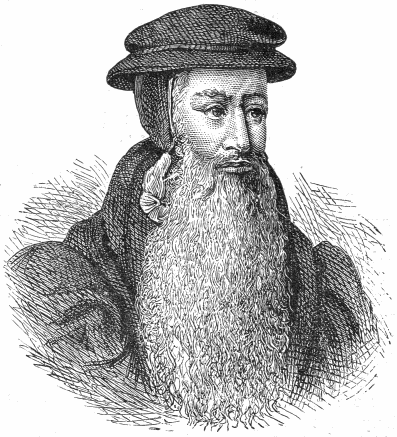
My goal is something of the mid range Knoxian longbeard. Some depictions of the Scottish Reformer have his beard hitting his stomach. Other have it hitting the bottom of the chest, which is, for now, my goal. But, it's just a beard, so I'm not taking it too seriously.

Tips? Stop shaving is a good place to start. Be patient. It takes time, months to get somewhere. Stay committed. If you're going long you will go through some rather unruly stages. In the end, any facial hair is better than none. So grow a handsome 'stache, goatee, or a full beard. But don't grow anything unless you are first willing to live as a man.

Check out Joe’s progress:

 joethornbeard

Thanks to Joe for conducting the interview.  May the Lord bless your beard growing but more than anything may he bless your walk with Christ and your ministry! 

Stay tuned to Borrowed Light as tomorrow we will give away a copy of Joe’s book Note to Self. 

Thursday, September 1, 2011

7 Questions with Rob Plummer: Author of 40 Questions About Interpreting the Bible

Yesterday I reviewed Dr. Plummer’s book.  In the review I noted that “Hermeneutics (biblical interpretation) should be accessible to everyone.”  I also noted that Plummer’s book is both “satisfying and accessible” to student and layperson alike.  If you aren’t convinced yet that you ought to purchase this book, Dr. Plummer’s first answer should convince you. 

1. How is this book different from other books that deal with biblical interpretation?

Each book has a $100 bill hidden inside it.  Readers should be sure to order one right away.  But seriously, the book deals concisely with all the major questions related to interpreting the Bible - canon, text transmission, inerrancy, the goal of interpretation, Christo-centric interpretation, interpreting various genres of Scripture, current trends in hermeneutics, etc.  I discuss each issue in a brief "bite size" chunk of five to ten pages.  Also, reflection questions conclude each chapter.  And, many additional free resources (powerpoint files, quiz questions, etc.) are available at www.robplummer.com

2. What was the most difficult aspect of writing this book?

Making the text both scholarly and accessible.  I wanted it to be used as a seminary textbook but also understandable to any curious layperson.

3. What is the most frequent mistake that people make in biblical interpretation?

Failing to respect the inspired author's intent.  In his day, Calvin spoke of misinterpreters of Scripture as persons who put a "wax nose" on Scripture and turned it whatever way they wished.  In our day, people continue to do the same.

4. In your opinion what is the most dangerous trend in biblical interpretation?

Within the Theological Interpretation of Scripture (TIS) movement, some interpreters openly embrace meaning which is not flowing from the inspired author's intent. Of course, TIS is quite diverse, so others aligned with this movement are doing good work.

5. Imagine that I am a high school student on a bus with you. I find out that you teach a class on Biblical Interpretation. With only about 3 minutes before I have to get off the bus, I ask “how do I understand the Bible?” How do you respond?

With only three minutes, I think I would want to challenge that high school student to read the Scriptures because it is there that God speaks to us.  I would likely tell the story of how my mom taught me to read through the Bible once a year when I was 13 years old and the huge difference it has made in every area of my life.  I might turn to Psalm 119 and read some portions.  Then, for more practical questions of interpretation, I likely would refer them to my book.

6. I know that bad exegesis is never funny, but pretend for a second that it is. What is the funniest…or should I say…worst experience that you have had with bad exegesis?

Ah . . . there are so many stories.  I once asked a prominent minister what he was going to preach on the next day.  He told me that he had all the jokes and stories worked out, but that he just had to add the other content. I laughed because I thought he was kidding.  But, the next day when I heard him "preach" on the passage, it was mainly a string of random jokes and anecdotes.  A.T. Robertson once said, "I've heard sermons that if the text had had a cold, the sermon would certainly not have caught it."  I can relate.

7. Since I am in your New Testament 1 class I have to ask…who is your favorite student in New Testament 1? Okay, you don’t have to answer that. Serious question—If your opponents weren’t “with the Lord” who would win in a wheel-barrow race on the seminary lawn--A.T. Robertson and E.Y. Mullins or Rob Plummer and Albert Mohler?

I'm definitely betting on the Mohler-Plummer team.  (that is, if Southern Baptist are allowed to bet)

Thanks to Dr. Plummer for agreeing to do this interview. 

In response to question seven: I know that Dr. Plummer is a runner, but Dr. Mohler is not known for his athletic prowess.  Furthermore, E.Y. Mullins had a pretty solid beard and we all know that beards give superpowers.  So, I’m thinking this race may be a close one.  If Southern Baptist’s bet I might take Dr. Plummer up on this one. 

Again be sure to check out Dr. Plummer’s website: robplummer.com 

Also if you do not have it yet you can purchase the book here: 40 Questions About Interpreting the Bible.

Tuesday, August 23, 2011

7 Questions with Author Kent Dunnington

Yesterday I reviewed Kent Dunnington’s book Addiction and Virtue: Beyond the Models of Disease and Choice.  Today he was kind enough to answer 7 questions about his book and his soul. 

1. What motivated you to write this book?

Three things motivated me to write the book. First, like most people, I have struggled with addictions. When I recommitted my life to God in graduate school, I was a smoker. I was amazed by how resilient and resistant my addictive desires were. I wanted to understand better what was going on there. Second, I did some work in really impoverished inner-city areas where addictions were just destroying people, families, whole communities. As a Christian I had this profound feeling of powerlessness, and I wanted to better understand and articulate the power of the gospel over against the power of addiction. Finally, I had a dear friend and adviser in graduate school who was a recovering alcoholic (the book is dedicated to him). I often attended AA meetings with him. Although he and many of those who attended were not Christian, I was overwhelmed by the kind of vulnerability and love on display in that fellowship. It is not a new thought, but I realized there how much the church had to learn from groups like that.

2. What is unique about this book, as compared to other books on addiction? And who did you write this book for?

The book is unique in trying to provide a philosophy of action that can ground claims about addiction. There has been a great deal written on the biology, psychology, and sociology of addiction, but many of these treatments lack an adequate philosophy of human action and therefore they end up making seemingly contradictory claims. For instance, the claim that addiction is a disease does not sit easily with the acknowledgment (which is as widespread as the disease concept) that addiction is best treated in nonmedicalized treatment settings like AA. There's something askew here, and I wanted to try to clarify and see if the phenomenon of addiction could be articulated in a noncontradictory way. So the philosophical grounding is what is most unique. And this leads, I think, to a unique theological take. Basically, I argue that addiction is the most powerful and successful alternative to worship available to human persons.

3. In the most basic terms you can offer for my readers how would you define addiction?

In the most basic terms, I'd argue that addiction is any obsessive and all-consuming orientation that leads a person into self-deception. Self-deception is crucial here since Christians aren't by definition opposed to being consumed by some object. Worship is an all-consuming orientation, and the mystics often speak of it in these ways. But because the goods of worship live up to their promises, right worship leads us into truth. Self-deception is what you get when addictive objects lead us away from what we know to be true goods. We must then disavow the addiction as truly part of us. This is denial, and it's why many addicted persons will say that denial is the essence of addiction.

4. There is an idea that I have been working with for a little while now concerning addiction and depression. Given your understanding of addiction do you think it is possible that a person can actually become addicted to depression?

That's an interesting question. It raises a nest of thorny questions about the neurological bases of depression. No doubt, persons can become attached to their depressive tendencies. The Romantics, for instance, thought you weren't a very interesting person unless you were deeply depressed. And I do think that there can be something tempting about depression (or, I might prefer to say, about melancholy) and that, moreover, melancholy can become part of an identity that we are wary of relinquishing. I don't know how helpful it would be to speak of persons becoming addicted to depression, though. Some persons may have dispositions to melancholy, but a disposition is quite different than an addiction.

5. You do not offer many practical suggestions for dealing with addiction; neither for the church to consider or for an addicted person. This does not appear to be your focus, why did you choose to do this? Will there be any sort of follow-up offering advice on ministering to those with addiction?

I just didn't feel all that qualified to make such suggestions. I think good practices flow out of good theology, and I was interested in trying to say something theologically substantive and suggestive about addiction. I don't foresee a follow-up. I suppose if there are a lot of requests for it, I could try. But honestly, I think other people who are more familiar with the current programming available to the church would be better placed to make such suggestions.


6. The chapter that I found most intriguing, and probably most helpful, was your chapter on Addiction and Modernity. Here you note that addicts are “unwitting modern prophets”. I am curious about any research you may have done on third-world countries and addiction. How would you explain addiction in third-world countries where their time is given to survival?

That's a terrific question. Although I did research on minority populations in "developed" countries (such as Native Americans here) I didn't do any work on addiction in the "developing" world. But now that you ask that question, I think I should have!

7. I noticed that you got your M.T.S. from Duke. As a fan of college basketball and one that has a perennial distaste in my mouth of all things Duke, I’ve always been curious about this one…How does it feel to not have a soul?

Oh, that's cold. You know, one of my professors at Duke used to say, if you want to see what worship looks like just go to Cameron Indoor for a Duke game. I'd just rephrase that and say that's what addiction looks like. Now that I'm back in the Midwest, I'm in recovery. But I still have to get my fix from time to time.

Much thanks to Kent for taking the time to answer these questions.  I’m glad to hear that he’s recovering from his days at Duke.  If you want to purchase Kent’s book, which I’d suggest, you can do so here: Addiction and Virtue: Beyond the Models of Disease and Choice

Tuesday, August 9, 2011

7 Questions with Mike McKinley: Author of “Am I Really a Christian?”

A couple weeks ago I had the opportunity to read and review Mike McKinley’s new book, “Am I Really a Christian?”.  I noted that McKinley does a phenomenal job of “walking the fine line between easy-believism and morbid introspection.  He does it with pastoral sensitivity, wit, wisdom, and engaging writing.”

Even in the midst of his wife giving birth to their fifth child Mike was kind enough to take the time to answer a few questions.  And he even manages to use awesome words like “canard” in the interview.

1. What motivated you to write this book?

Well, it's a question that comes up a lot in the course of my pastoral ministry. 

It's such a basic question.  Really, the book is about conversion.  We tend to focus so much in the church on getting people to convert that we don't talk very much about what conversion is and what it looks like in someone's life.  But a misunderstanding in that arena leads to problems in almost every other area of church life.

2. You probably could have gotten quite a few different people to write the foreword for such an important topic. I’m curious, why Kirk Cameron?

The book is not aimed at pastors or theologians, so it didn't seem to make a lot of sense to have a pastor or theologian do the preface.  It seemed like the themes of the books fit well with a lot of the themes of Kirk's ministry, and he is known and respected by Christians all over the country. 

Plus, my sister had a huge crush on him in the 1980's.

3. As I read through this book I could tell that you are a pastor. I’ve read books and heard sermons on assurance that seem to lack pastoral sensitivity. You seem to effectively walk that fine line between easy-believism and morbid-introspection. What were some of your helps in doing this? Do you have any pastoral experiences that either taught you to be more sensitive in your approach or also experiences that taught you to be more pointed?

The sensitive part is easier.  If you're a pastor, you're going to deal with people who love the Lord but struggle with assurance.  It's always a joy to point those people to kindness of Christ.  I always keep extra copies of Sibbes' A Bruised Reed on hand in my office for just such a purpose, and it seems like a go through a stack of them every year. 

But I've also dealt with a good number of professing Christians who are hardened in and even proud of their sin.  It's a sad kind of ministry, but love requires you to use the Bible a bit like a pinata stick.  You hope that God shows people their state and leads them to repentance.  

The old canard is that pastoral ministry requires you to afflict the comfortable and comfort the afflicted.  It's true.

4. In your book you list 5 things that the Bible says will accompany a true conversion. What if I get 3 out of 5?

The 5 things are:
1.  Belief in true doctrine.
2.  Hatred for sin in your life.
3.  Perseverance over time.
4. Love for other people.
5.  Freedom from the love of the world.

The Bible speaks of the absence of each of those 5 things in terms of being deal breakers.  So it may be that some of those things are stronger or weaker in specific Christians, but the total absence of any one of them is very concerning.

5. Some have suggested that books like this are not helpful because it causes true believers to doubt their salvation. It is their belief that we should never question our salvation. What is your response to that? (Really, I’m looking for what is your response to those in the free-grace-Lordship-salvation-is-the-devil camp).

The apostles Paul (II Corinthians 13:5) and Peter (II Peter 2:10) didn't seem to share that concern. 
My fear is that there are millions of people who are inoculated to the gospel because they prayed a prayer or were baptized when they were a child and received a false sense of assurance.  As a result, they never hear the call to repent and believe as directed to them.

So I guess I'd say that there are worse things than doubting your salvation.  Like thinking you're going to heaven and winding up in Hell. 

6. As an Eagles fan how excited are you about the upcoming season? How excited were you when you found out the Eagles had signed top free agent Nnamdi Asomugha?

Well, my heart tells me that this is our year.  But history makes me think that this is just another way for football to get my hopes up and then crush me.

I'm insanely excited about Asomugha.  I was sitting in the NICU with my newborn child when I got the text that they had signed him.  It was strange, my wife wasn't as excited as I was.  But when I explained that this meant we had three shut down corners and we could now dominate from our nickel defense, she understood.

7. Your book has been on the shelves for a couple months now. Many people have read it and you have probably gotten a good amount of feedback. Is there anything that you would change in a second edition?

I think I'd build upon chapter 9, where I talk about the role of the church in helping us determine whether we're Christians.  There's a lot more to say there than what I said.

8. This last one isn’t really a question. I just wanted to thank you for chapter 9. I think that what is lacking in many books on this topic is the relationship between assurance and the body of Christ. I would love to see somebody even build upon what you have written here. So, thank you!

Thanks.  I think people have really appreciated that chapter, and the credit goes to my good friend and editor Jonathan Leeman.  He read the first draft of the book and suggested that the role of the church needed to be much more prominent.  He was correct, I think.
----
Thanks again for taking the time to answer these questions.

If you think this book may be helpful to you or a friend you can buy it for around 10 bucks.

Friday, July 22, 2011

7 Questions with William Boekestein

A couple of months ago I had the pleasure to read and review an interesting children’s book written by William Boekestein: Faithfulness Under Fire.  I was intrigued by the concept and thought it would be fun and beneficial to interview William.  He graciously agreed to answer 7 Questions. 

1. I recently had the opportunity to review your children’s book on the life of Guido de Bres. I am a history nerd, but honestly until I picked up this children’s book I had never heard of him. So, I’m curious of all the historical figures that you could have picked why Guido de Bres?

The short answer to this is, I have young children, I love church history and our denomination (the URCNA) uses Guido de Bres’ Belgic Confession as a secondary standard of doctrine. From my vantage point the choice made a lot of sense. On the other hand, De Bres’ lived such a fascinating life that even without those three criterion he’d be worth writing about. In addition to this, it can be rewarding to “unearth,” so to speak, the history of an obscure personality from the past.

2. Some may consider the subject matter a little too intense for the books target audience. The cover is not one that you would typically see in a preschool section of the book store. Most parents shy away from books that have flames under a guy climbing up a ladder. Explain a little about your philosophy of not sheltering children from the realities of life and persecution.

De Bres’ story is a bit graphic. We did try to gear the language toward young children and modify some of the images so they wouldn’t be too scary. That said, some of the themes of the book might seem to be too mature for young children. I address that concern in a note to parents on the last page:

The life of Guido De Bres is not exactly a pleasant read. The story is sad, and, in our age of tolerance, at times it is uncomfortable. Yet we believe his story is important because it really happened. In fact, it happened a lot! In other words, De Bres was not all that extraordinary. He was one of countless Christians who spent their lives in devotion to the Lord and in commitment to His Word.

We should say a few things about the graphic details and references to historical religious conflict in this book. First, the reader should know that every reasonable attempt has been made to avoid gratuitous, unsavory detail. It would be impossible, however, to tell the story of De Bres apart from the theme of suffering. We have also tried carefully to avoid unnecessarily inflammatory religious rhetoric. However, the fact remains that right up to the present, strongly held convictions will produce conflict. Even young children experience this.

Second, we don’t believe it is necessary to shield even young children from the ugliness of life as long as we also provide a context in which this life can be lived victoriously. Guido de Bres thrived in tragedy because he was hoping in the gospel of Jesus Christ. The gospel (or good news) of Jesus is this: because of His perfect life and sacrificial death, those who repent of their sins and trust in Him have God’s promise of forgiveness and eternal life (John 3:16). As this promise is realized in our lives, we too will approach life with the same hope that De Bres had. We will be equipped and motivated to spend our lives for God’s glory as we look to an eternal reward of grace.

This is the value we see in teaching our children about Guido de Bres—not to glorify him, but to be drawn by his example to live to the glory of God.

In addition to this, Christianity is rooted in one of most graphic stories ever told. I wonder how many Christian parents would disallow their children from hearing the passion narratives read? When we hold up the story of Guido de Bres with other stories in Scripture it doesn’t look that extreme.

3. You have written a bible study on the life of Jonah and you have also written a couple of children’s books now. Which do you prefer? What is a unique joy that you have in writing children’s books as opposed to books geared towards adults?

I do enjoy both. But children’s books are really fun. I think it has actually been helpful to do both. I used to think that books for adults don’t have to be interesting; especially theological books. I know that’s not true but it still isn’t easy to remember the rule of “show don’t tell.”

4. How many more of these children’s books from RHB can we expect?

That’s hard to say. “The Quest for Comfort: The Story of the Heidelberg Catechism” (see the FB page for this book) is due to be released in early Fall. I would love to see RHB publish the final book in this “series” on the story of the Canons of Dort. Who says that the story of a 400 year old theological deliberative assembly meeting can’t be engaging for young children?

5. I noticed that you recently had your third annual Life Reformation conference. Can you explain a little about the vision behind these conferences? Where are they located?

Our area (northeast Pennsylvania) has a very small evangelical population (it has been estimated at under ten percent. Our intention behind these conferences is to encourage those who do belong to evangelical churches and to offer robust, winsome theology in the Reformed/Presbyterian tradition. We would love to see more people attend these conferences but we are also aware that in the theological culture with which we are surrounded we need to be building for the future.

6. I can tell from much that you have written that you are passionate about families. How does your church minister to families?

We are still working on this one. One of the main ways we minister to families is through the preaching. One of the benefits of preaching in a small church is that you don’t lose sight of the “trees in the forest.” Each Sunday I’m preaching to 10-15 families. I need to communicate Scripture to them as fathers, mothers, children and siblings.

Our elders also have a commitment to visit every family in the congregation on an annual basis. This gives an opportunity to connect with, encourage, teach and if need be correct our families on a more personal level than is afforded during public worship.

7. Lets talk beards. I noticed that many of the books that clip_image002you have written have older Reformed guys with long and studly man-beards. Have you ever considered growing a beard like that of John Knox?

Is mine that much different than Knox’s? I guess I’ll keep working on it. I have a lot of respect for men with beards. If I lived in Scotland and my wife would go for it I would probably try to give Knox a run for his money.

------

Thanks for taking the time on these questions and may the Lord cause great growth in your life…both spiritually and in regards to your aspirations to have a Knox beard. 

You can follow William’s blog here: Life Reformation and you can find more information on his church here: Covenant Reformed Church.

Wednesday, June 22, 2011

7 Questions with Stephen Altrogge: Author of The Greener Grass Conspiracy

Stephen Altrogge has written a helpful book on contentment entitled The Greener Grass Conspiracy.  (I plan on reviewing this book on Friday).  You will certainly want to buy a copy.  You also will want to check out Stephen’s blog, The Blazing Center

Stephen was nice enough to answer 7 questions about himself and his book:

1. I have to be honest, for awhile I was not interested in purchasing this book because I thought it had something to do with the global warming conspiracy. I’m not sure why. Just in case I am not the only one, how would you sum up for my readers the main message of your book?

The main message of this book is that God has loads of joy and contentment for us right where we are, and that we don't always need to be on the search for something else to satisfy us.

2. Why this book on contentment?

Two reasons.  First, because I'm often a very discontented pig.  Several years ago I was going through a time when I just didn't like the way my life was shaping up.  My schedule was frenetic, I was tired, and I hardly had any time to be with my family.  In the midst of all this I found myself grumbling and complaining, rather than going to God for joy and contentment.  These circumstances prompted me to go to the Bible and see what it had to say about contentment.  What I found there, particularly in Philippians 4, was transforming, and prompted me to start writing this book.  The second reason I wrote it is because every Christian battles against discontentment.  We all have an idea in our heads of what a perfect life would like, and when we don't get that life, we battle discontentment.  I wrote this book in the hopes that it would help others find their contentment in Christ instead of circumstances.

3. I notice that you quote the Puritans quite often. What were some of the books that you drew most from in writing this book?

I drew primarily from "The Rare Jewel of Christian Contentment" by Jeremiah Burroughs and "The Art of Divine Contentment" by Thomas Watson.  Everyone should read those books.  Seriously. No, I mean drop what you are doing and go purchase those books right now.    (To follow Stephen’s advice you can do so here and here).

4. I love your writing style. You are funny, engaging, and yet always bring your humor around to make a really solid point. I know most of this is probably simply God-given talent, but I am curious who are your greatest influences in writing?

Hmm, that's tough.  Off the top of my head, I would say: John Piper, Dave Barry, with maybe a splash of Jon Acuff thrown in.  I read a ton so it's hard for me to nail down all my influences.  Anne Lamott might be in there somewhere too.

5. I love this statement, “complaining sucks the joy out of life”. I tend to agree with this statement but I do wonder about the Psalms. Something tells me that their “complaining” is much different than what we typically engage in. What is the difference between the complaints of the Psalmist and our typical complaining? Is there a…I’m not sure how to phrase this…redemptive way of complaining?

Yeah I think you're on to something.  I think that the posture of the heart makes all the difference when it comes to complaining.  We can complain in such a way that we are demanding something of God.  When I complain about having a cold, behind that complaint is the implicit demand that God owes me better health.  The Psalmists, however, voiced their complaints to God in a humble, trusting way.  Basically they would say, "God this is hard, I don't like this, please help me, but ultimately I trust you."  I think that we can tell God about our struggles in such a way that we are not demanding better treatment from him, but simply laying our burdens at his feet.

6. Many of my readers may not know that you also write music for Sovereign Grace Ministries. What are some of the most popular songs that you have written?

Let's see.  I've written "The Birthday Song", "The Alphabet Song", and "Thriller".  No, seriously, the one people might know the most is called "He Is Jesus".  I also wrote on called "How Deep" that people seem to do a fair amount. 

7. You state in your book that your favorite Christian rock group is dcTalk. First question, related to this. Are you serious? Second question. “Rock” group, seriously?

You had to bring this up, didn't you?  Yes, dcTalk is my favorite Christian rock group.  I liked other groups like Audio Adrenaline, Newsboys, and Pax 217, but in terms of pure creativity and songwriting, dcTalk is my favorite.  When they released "Jesus Freak" in 1995, that was a momentum shifting album for the entire Christian music industry.  And yes, they are a "Rock" group.  Now, granted, up until "Jesus Freak", I would say that they were a rap group.  But "Jesus Freak" was most definitely a rock album. 

Thanks for the interview!!!!

Thank you Stephen for your time and your helpful responses.  And I’m really sorry about the dcTalk thing.  Not asking the question…just sorry that you haven’t been discontent enough to search out better music. 

I know Stephen encouraged you to buy those books by Burroughs and Watson, but you should also seriously consider buying Stephen’s book.  It is funny, engaging, and probably just as helpful as the two books he suggests buying. 

You can buy Stephen’s newest book here

Tuesday, August 11, 2009

Q & A with Jared Wilson Author of “Your Jesus is Too Safe”

I am stoked that Jared asked me to review his book as well be a part of his blog tour.  You can check out the rest of the blog tour.  There are some great blogs that are part of this tour; and from what I have seen thus far there are great questions and answers.  Recently I had the opportunity to interview Jared.

1. In chapter 3, Jesus the Forgiver, you say that it’s not true “that you can’t forgive an unrepentant person”.  You then helpfully explain the difference between forgiveness and reconciliation. Would you say that God forgives everyone but is only reconciled to those that trust in Christ through faith and repentance?

No, I don't believe God forgives everyone. I am an old school Calvinist when it comes to the extent of the atonement, so I do affirm the "L" in TULIP. I believe Christ's work on the cross accomplished salvation for the elect. This has less to do with God forgiving all but only being reconciled with some as it does with God's forgiveness being a work begun that he himself is faithful to finish in reconciliation. I guess you could say that when it comes to the elect, I am a universalist. :-) God gets them all.
The logical question from this, of course, is "If God doesn't forgive everyone, why should we?" And there are several answers but the most important one is this: We are not God. We are not perfectly holy and perfectly just. We don't have the right, as God does, to love Jacob and hate Esau. It is our duty to love others as God has loved us: in spite of anything we've done, in the face of constant rebellion, and on the condition of Jesus Christ.

2. Is it possible that your book is the only one in print which contains the word “waaaaambulance”?

Quite possible. Also, I guarantee it's the only Christian book that employs the phrase "burninate the peasants" and suggests one listen to heavy metal when reading the minor prophets.

3. Your book is obviously written for those that are “hip” more so than those that need a “hip replacement”.  How do you speak the language of the culture without being guilty of creating a fad Jesus of your own?  Or to ask that another way: how do I as a youth pastor speak the language of teenagers without creating a Jesus that is merely "safe" for teenagers?

I think there is a line where context becomes content -- the medium becomes the message -- and we just do our darndest not to cross it. I was conscious throughout the book of the danger in the different profiles of Jesus in the chapters of crafting an array of different Jesuses myself, ironically undercutting the point of the book. I address this in the Conclusion. I think what I tried to do is make sure the humor, the sarcasm, the pop cultural references were part of the window dressing, not the furniture in the room. Someone else recently asked me if I was nervous about receiving some of the same criticism Mark Driscoll got from "Vintage Jesus" for being too humorous with Jesus, and while I don't think Mark crossed any lines, I do think my humor steers clear of pushing Jesus buttons.
So to make a long answer short, I think the way we do this is by consciously and conscientiously making sure our language does not obscure or replace our message. And the way you measure this is if your hearers/readers walk way with an unsafe Jesus. If they think Jesus is so cool he doesn't change them, it's cause for concern and evaluation. 

4. What was your favorite chapter to write and why?

My favorite chapters were "Jesus the Redeemer" because I am a storyteller at heart, and I got to play with narratives and the biblical narrative in that chapter, and "Jesus the King" because I got to present some material I have studied a long time and that reflects a paradigm shift in my own understanding of Jesus and the Gospels over the last ten years. I think it's stuff that the Church has neglected for a long time too, so I felt like that one was a really important chapter. (I have since heard that "Jesus the King" is a lot of people's favorite chapter, as well.)

5. The stated goal of your book is to “remove layers of dirt and grime” from twelve different aspects of who Jesus is.  What particular aspect of Jesus do you feel is the most need of “dusting off”?

There's two, and they represent the two extremes the Church vacillates between. Driscoll has been great at speaking against this false dichotomy too, and I quote him from the Piper/Taylor edited collection "The Supremacy of Christ in a Postmodern World" in my book on this subject. It's basically that we either so dwell on Jesus' incarnation -- Jesus' manhood -- that we suffer for lack of enjoying his exaltation, or we so dwell on his exaltation that we lose the joy of the incarnation. I think many churches favor one or the other and lose real pleasure and profit in who Jesus fully is.

I will provide a complete review of the book in late August/early September.  For now, let me encourage you to buy the book.  Thanks for the interview Jared!

LinkWithin

Related Posts Plugin for WordPress, Blogger...